Key takeaways
- Compare the best raised garden beds on legs: cedar, steel and self-watering elevated planters that lift planting to waist height on patios and balconies.
Disclosure: As an Amazon Associate, we may earn from qualifying purchases made through links on this page, at no additional cost to you.
A raised garden bed on legs does one simple thing that a ground-level bed cannot: it brings the soil up to you. Instead of kneeling on paving or bending double over a border, you tend herbs, salad greens and vegetables from a standing or seated position, with the planting surface around waist height. That makes elevated planters a practical choice for older gardeners, anyone with a bad back or knees, and anyone whose only outdoor space is a balcony, deck or patio where digging is not an option.
This guide covers only true legged beds — planter boxes held off the ground on legs or a stand — in wood, galvanized steel, coated metal and self-watering resin. Every pick below lists its overall height, footprint, soil capacity and load rating from its product page, because those four numbers decide whether a bed fits your space, holds the soil weight safely and sits at a height your body will thank you for.
Quick Picks
- Best cedar build: Boldly Growing Cedar Raised Planter Box with Legs (4×2) — naturally rot-resistant yellow cedar at a 33-inch working height.
- Best steel capacity: KING BIRD Large Raised Garden Bed with Legs — 8 cubic feet of soil and a 400 lb load rating in galvanized steel.
- Best long bed: Vego Garden Elevated Raised Garden Bed V Series 2′ x 6′ — a full six feet of planting length with a storage rack underneath.
- Best with liner included: Best Choice Products 48 x 24 x 30 Inches Raised Garden Bed — Chinese fir box that ships with a bed liner.
- Best self-watering system: EarthBox Raised Garden Bed with Legs — a reservoir-fed planter on a wheeled stand, made in the USA.
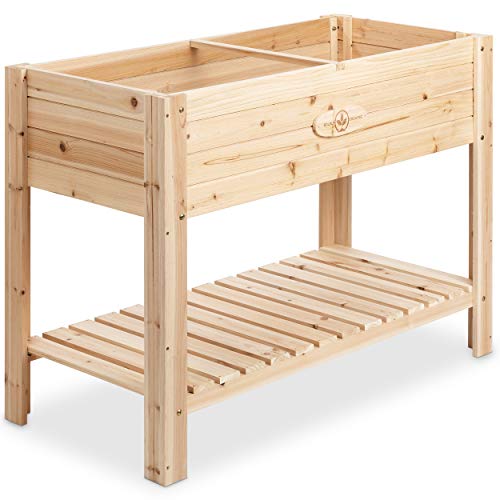
Boldly Growing Cedar Raised Planter Box with Legs, 4×2 (ASIN: B094N7ZP7L)
The Boldly Growing planter is built from yellow cedar, a wood used for elevated beds because it resists rot naturally without chemical treatment — important when timber sits in permanent contact with damp soil. The listing gives overall dimensions of 48 inches long by 24 inches wide by 33 inches high, and a soil capacity of 5 cubic feet: enough for herbs, salad crops, peppers and compact vegetables. The wood is supplied natural and unfinished, so it can be left to weather to a silvery grey or finished with an exterior oil or stain.
Construction is the selling point here: the maker describes an over-built, heavy-duty frame designed to carry the combined weight of soil, water and plants without flexing, and backs it with a one-year manufacturer warranty against failure. At 33 inches tall it sits at a comfortable standing working height for most adults, and the 4-by-2-foot footprint suits a patio corner or a sunny stretch of decking where a longer bed would crowd the space.
Highlights
– Yellow cedar construction with natural rot resistance and no chemical treatment
– 33-inch overall height for standing-height planting, weeding and harvesting
– Holds 5 cubic feet of soil across a 48 x 24 inch planting area
– One-year manufacturer warranty against product failure
Considerations
– Unfinished wood will weather and can develop surface cracks over time; the warranty does not cover that natural ageing
– Cedar is heavier than fir or resin, so pick the final spot before filling it with soil
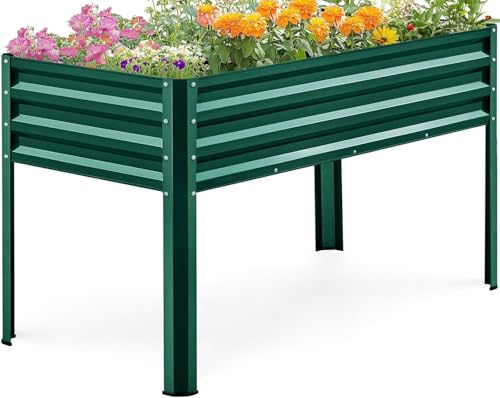
KING BIRD Large Raised Garden Bed with Legs, 48 x 24 x 32 in, Green (ASIN: B0FVVNYT83)
KING BIRD builds this bed from galvanized steel rather than timber, which removes rot from the equation entirely: the panels will not swell, split or feed insects, and the listing rates the finish as rust resistant for outdoor use. The measured footprint is 47.24 x 22.83 x 31.5 inches, and the box holds 8 cubic feet of soil — the largest soil volume in this guide — with a stated load capacity of 400 lb to support that soil once it is wet through.
The legged frame lifts the steel box to a 31.5-inch working height, and the whole unit is floor standing, so it can sit on a patio, balcony, deck or lawn without fixings. The green finish suits gardeners who want the bed to blend into planting rather than stand out as furniture. Because steel conducts heat, the soil also warms quickly in spring sun, which many growers treat as an early-season advantage for germination.
Highlights
– Galvanized steel panels that cannot rot, split or attract wood-boring insects
– 8 cubic feet of soil capacity with a 400 lb load rating
– Rust-resistant finish intended for permanent outdoor placement
– 31.5-inch height keeps planting close to waist level
Considerations
– Metal sides heat up in strong sun, so soil at the edges dries faster than in a wood bed
– The 8-cubic-foot fill is a lot of potting mix to buy and carry before you can plant
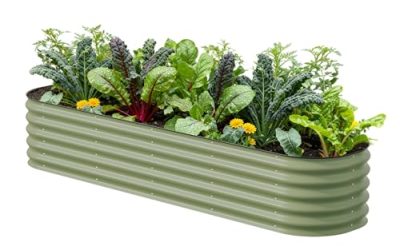
Vego Garden Elevated Raised Garden Bed V Series, 2′ x 6′, Olive Green (ASIN: B0F83RLVP8)

The Vego Garden V Series bed stretches the elevated format to a full 2 by 6 feet: 24 x 72 x 32 inches overall, giving you a long, narrow planting run that suits a fence line, the edge of a porch or a wide balcony. The listing states a weight capacity of 1,000 lbs, by far the highest figure here, reflecting a metal panel construction on a leg frame with powder-coated support tubes. Rot and rust resistance are both listed among its features, and the empty unit weighs about 63 pounds.
Underneath the box sits a storage rack, which earns its keep on a small patio: watering cans, hand tools and spare pots live directly under the bed instead of cluttering the floor. The olive green finish is one of several colour options in the range, and a wheeled version of the same bed exists if you need to roll the planter to follow the sun; this listing is the fixed-leg model with the rack. At six feet long it is the pick for gardeners who want a real vegetable row — succession sowings of salad, a line of peppers, or herbs in quantity — without giving up the standing-height format.
Highlights
– Six-foot planting length with a stated 1,000 lb weight capacity
– Storage rack under the bed for tools, cans and supplies
– Metal construction with rot and rust resistance for year-round outdoor use
– 32-inch height for comfortable standing work along the full length
Considerations
– Needs a full six feet of clear, level space — measure the balcony or porch first
– At roughly 63 pounds empty, it is a two-person lift to position before filling
Best Choice Products 48 x 24 x 30 Inches Raised Garden Bed, Acorn Brown (ASIN: B0BVGW128N)
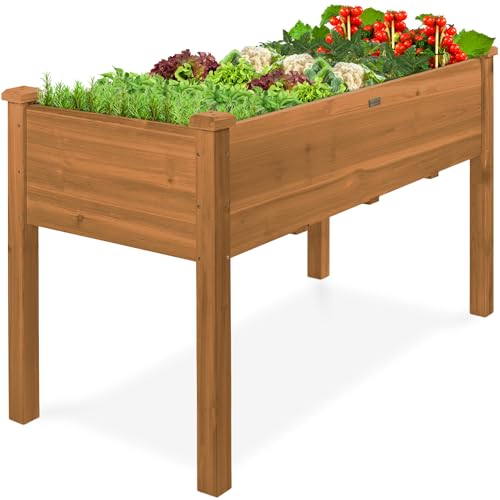
Best Choice Products builds this elevated bed from Chinese fir, a lighter softwood than cedar, in a 48 x 24 x 30 inch format with an Acorn Brown finish. The stated capacity is 200 pounds, and the planting area takes around 5 cubic feet of potting mix: herbs, greens, flowers and compact vegetables at a 30-inch height.
A detail that separates this listing from most wooden rivals is the included bed liner, which sits between the soil and the timber slats to slow moisture contact with the wood and keep mix from sifting through the base, where drainage holes let excess water escape instead of pooling around roots. The fir construction keeps the empty bed light enough for one person to move around a patio before filling.
Highlights
– Bed liner included in the box, protecting the timber from constant soil moisture
– Lightweight Chinese fir construction that is easy to position before filling
– 30-inch height works for standing use or seated gardening from a stool
– Around 5 cubic feet of planting volume for herbs, greens and flowers
Considerations
– The 200 lb capacity is the lowest here, so use a lightweight potting mix rather than heavy garden soil
– Fir is less naturally rot-resistant than cedar and benefits from the liner staying in place
EarthBox Raised Garden Bed with Legs, Dark Green (ASIN: B0G66PPRVC)

The EarthBox takes a different approach from the open soil boxes above: it is a self-watering growing system in UV-resistant polypropylene, paired with a stand that lifts the container to a little under three feet. The container holds 2 cubic feet of potting mix above a 3-gallon water reservoir, and the soil draws moisture up from that reservoir as the plants need it, which keeps watering consistent and stretches the time between refills. The kit includes pre-measured plant food applied once at setup.
The stand rolls on wheels with a locking mechanism, so the whole garden can be moved to chase sunlight across a patio or rolled aside for cleaning, and a storage shelf sits beneath the container. EarthBox makes the system in the USA, and the container is BPA-free and rated for indoor or outdoor use. The trade-off is volume: 2 cubic feet is a herb-and-greens sized garden rather than a bed for deep-rooted crops, and an optional staking system for tall plants is sold separately.
Highlights
– Self-watering reservoir system keeps soil moisture consistent between refills
– Wheeled stand with locking casters and a storage shelf underneath
– Complete kit including plant food; just add potting mix and plants
– BPA-free, UV-resistant polypropylene made in the USA
Considerations
– 2 cubic feet of mix is the smallest capacity here — best for herbs, greens and flowers
– The system needs potting mix rather than garden soil to wick water correctly
How to Choose
Start with height, because it is the whole point of a legged bed. Most elevated planters stand between 30 and 33 inches, which puts the soil surface near hip height for an average adult — comfortable for standing work and reachable from a stool. If you plan to garden seated, favour the lower end of that range and check that the rim sits at a height you can work over without reaching up.
Next, match footprint to the space. A 4-by-2-foot bed is the patio standard: big enough for a useful crop, small enough for a balcony corner. Six-foot beds like the Vego Garden suit long, narrow spaces along a wall or fence. Keep the width at or under about 30 inches if you can only access the bed from one side, so the far row stays within arm’s reach.
Then do the weight maths honestly. Wet potting mix is heavy — a cubic foot can weigh 40 pounds or more once watered — so multiply the bed’s soil capacity by that figure and compare it with the maker’s load rating. On a balcony or raised deck, the floor has a limit too, and the combined weight of bed, wet soil, water and plants must sit comfortably within it. Beds with a published load rating, like the KING BIRD and Vego Garden here, make that check far easier.
Finally, choose the material for your climate and patience. Cedar shrugs off rot for years untreated but weathers grey; fir is lighter and needs its liner to stay healthy; galvanized steel and coated metal ignore rot but heat the soil at the edges; resin self-watering systems trade soil volume for watering convenience.
Key Specifications Explained
Overall height. The distance from the ground to the top rim of the bed. On legged beds this is mostly leg, so a 32-inch bed does not mean 32 inches of soil — it means the working surface sits 32 inches up.
Soil depth versus capacity. Capacity in cubic feet tells you how much mix to buy; depth tells you what you can grow. Greens and herbs manage in 6 to 8 inches, while tomatoes, peppers and root vegetables want 10 to 12 inches or more. Legged beds are shallower than ground beds by design, which is why their listings emphasise greens, herbs and compact crops.
Load rating. The maximum combined weight of soil, water and plants the legs and frame are built to carry. Treat it as a hard ceiling, and remember that freshly watered soil is at its heaviest.
Drainage. Slatted bases, drainage holes and liners all aim at the same thing: letting excess water out so roots do not sit in a swamp. Self-watering beds instead hold water in a reservoir below the soil and let the mix wick up what it needs.
Setup and Use Tips
Assemble the bed where it will live, or at least fill it there: even a mid-size legged bed becomes effectively immovable once it holds several cubic feet of wet mix. Check the ground is level before you start, because a bed that rocks will twist its frame every time it is watered.
Fill with potting mix, not dug garden soil. Mix is lighter — kinder to the load rating and to balcony floors — and drains freely in a shallow box. Water the fill in stages as you add it, letting each layer settle, and top up after the first week when the level drops. If your bed has a liner, fit it before any soil goes in.
Plant tall crops at the back or the north end so they do not shade the rest. Elevated beds dry out faster than ground soil because air circulates underneath, so check moisture with a finger pushed an inch into the mix rather than watering to a fixed schedule; a layer of mulch slows that drying noticeably. In cold climates, timber beds last longer if they are not left holding saturated soil through repeated winter freeze and thaw.
Common Mistakes to Avoid
- Overloading the legs. Filling a bed past its load rating with dense, wet soil is the fastest route to bowed frames and failed legs. Respect the maker’s figure and use lightweight mix.
- Filling it in the wrong place. A filled legged bed can weigh several hundred pounds. Position first, fill second.
- Ignoring balcony limits. The bed’s rating is not the floor’s rating. On balconies and decks, keep the bed near a supporting wall where possible and stay conservative with size.
- Blocking drainage. Setting a bed over a sealed plastic sheet traps water and rots both roots and timber.
- Planting deep-rooted crops in shallow soil. Carrots and parsnips in eight inches of mix will fork and stunt. Match the crop to the depth the bed actually offers.
- Forgetting the sun moves. A bed positioned in spring shade may sit in full summer sun, or the reverse. Wheeled and lighter beds forgive this; heavy steel and cedar beds do not.
FAQ
How tall should a raised garden bed on legs be?
Most legged beds stand 30 to 33 inches high, which places the soil surface near hip height for comfortable standing work. If you plan to garden from a chair or wheelchair, look at the lower end of the range and check that there is clear space beneath the box for your knees.
How much soil does an elevated planter need?
It depends on the footprint: the 4-by-2-foot beds here hold around 5 cubic feet of potting mix, the steel KING BIRD holds 8 cubic feet, and the self-watering EarthBox holds 2 cubic feet. Check the listing’s capacity figure before ordering mix, and buy a little extra for topping up after settling.
Can a raised bed on legs go on a balcony?
Yes — balconies are one of the main reasons these beds exist — but total weight governs. Add up the bed, the wet soil at roughly 40 pounds per cubic foot, and the plants, and keep the total well within what the balcony can carry. Smaller 4-by-2-foot beds and lightweight mixes are the safer balcony choice.
Do legged beds need a liner?
Wooden beds benefit from one: a liner keeps damp soil off the timber and slows rot, and some beds, like the Best Choice Products model here, include one. Metal beds do not need a liner for protection.
What grows best in a raised bed on legs?
Herbs, salad leaves, radishes, spring onions, strawberries, peppers and compact bush tomatoes all suit the soil depth these beds offer. Deep-rooted crops such as long carrots and parsnips are the main poor fit, unless the bed offers a full 12 inches of soil depth.
Final Verdict
For most patios, the Boldly Growing cedar bed is the balanced pick: a rot-resistant timber box at a comfortable 33 inches, with a warranty behind the frame. For maximum soil volume in a frame that will never rot, the KING BIRD steel bed carries 8 cubic feet with a 400 lb rating, while the six-foot Vego Garden is the choice for long vegetable runs and the highest load capacity here. The Best Choice Products fir bed suits smaller spaces and seated gardening, and the EarthBox is the pick if watering discipline is your weak point — its reservoir and wheels make it the lowest-effort garden of the five. Whichever you choose, measure the space, respect the load rating, and fill it where it stands.