Key takeaways
- Compare raised vegetable garden beds in untreated cedar, coated steel and fir, with sizes, soil capacity and materials suited to organic growing.
A raised bed is the one part of an organic vegetable garden you choose once and live with for years, so the material it is built from matters as much as the soil you fill it with. Organic growing rules restrict what you can spray and feed, and a careful grower extends the same thinking to the bed itself: no pressure-treated lumber of unknown recipe against the soil, no mystery coatings, and no finishes you cannot identify. The good news is that the safest materials are also the most proven ones. Untreated cedar, food-safe coated steel and plain galvanized panels have long track records in vegetable beds.


This guide compares five raised beds that suit organic vegetable growing, across wood and metal, ground-level and elevated designs. None of them is sold with an organic certification for the bed itself, and this guide makes no such claim for any pick. What each one offers is a material story you can verify from the listing: untreated or chemical-free wood, a named food-grade coating, or galvanized steel with nothing hidden in the description.
As an Amazon Associate, we earn from qualifying purchases.
Quick Picks
| Product | Best for | Key point |
|---|---|---|
| Greenes Fence Premium Cedar Raised Garden Bed, 4 x 4 ft | Classic square-foot vegetable plots in untreated cedar | Chemical-free North American cedar with tool-free dovetail joints |
| Vego Garden Raised Garden Bed Kit, 17 in Tall 10-in-1 Jumbo | Growers who want one kit that rebuilds into many layouts | VZ 2.0 coated steel finished with food-grade, USDA certified paint |
| Best Choice Products 48x24x30in Raised Garden Bed, Elevated | Patio and balcony growers who cannot bend or kneel | Fir wood planter on legs with a bed liner and 200 lb capacity |
| Land Guard Galvanized Raised Garden Bed Kit, 4 x 2 x 1 ft | Small beds and first metal-bed trials on a modest scale | Double-layer galvanized Q195 steel in an open-base oval |
| Greenes Fence Premium Cedar Raised Garden Bed, 4 x 8 ft | Long rows of greens and root crops in a shallow profile | Untreated cedar across a full 4 by 8 ft footprint |
How to Choose
Put material safety first. For organic vegetable growing, the bed wall touches your soil for years, so choose materials with nothing to hide. Untreated cedar is the benchmark: it resists rot through its own natural oils, needs no chemical preservative, and Greenes Fence describes its cedar as chemical-free. Avoid older pressure-treated lumber and reclaimed wood of unknown origin, since historic treatments used compounds no food grower wants near roots. If a wood bed listing does not say untreated or chemical-free, treat that silence as an answer.
Read metal coatings carefully. Galvanized steel is widely used in vegetable beds and the zinc coating is stable in soil contact. Coated steel goes one step further when the coating itself is food-safe: Vego Garden finishes its VZ 2.0 steel with what the listing calls a food-grade and USDA certified paint, which is the clearest coating claim in this guide. Plain galvanized beds such as the Land Guard use a double-layer galvanized finish with no paint at all, which is also a simple, readable material story.
Match depth to the crop. Leafy greens and herbs grow happily in 7 inches of soil. Most fruiting vegetables want 10 to 12 inches, and carrots, parsnips and other long roots use the full depth of a 17-inch bed. The two Greenes Fence beds here cover the shallow and mid-depth cases, the Vego kit covers deep-rooted crops, and the elevated Best Choice Products planter trades depth for working height.
Count soil before you buy. A 4 by 8 ft bed holds far more soil than it looks like it should. The Greenes 4 by 8 is listed at up to 18.7 cubic feet, and the 4 by 4 at up to 14 cubic feet. Filling a bed is the hidden cost and effort of the whole project, so check the listed capacity, plan for a bulk soil delivery where possible, and consider filling the bottom of deep beds with plain branches and leaves before adding growing mix.
Think about assembly and lifespan. Dovetail cedar boards slide together with no tools and can be replaced board by board years later. Modular metal panels bolt together and can be rebuilt into a new shape if the garden layout changes. Elevated planters assemble once and stay put, so check the stated load capacity before filling one with wet soil.
Best Options
Greenes Fence Premium Cedar Raised Garden Bed, 4 x 4 ft (RC4T12B)
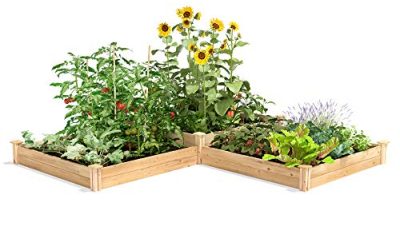
The 4 by 4 ft square is the classic vegetable plot, and this Greenes Fence version builds it from untreated North American cedar with 3/4-inch boards and 2.5-inch square corner posts. The boards join with dovetail joints, so the frame slides together without tools and can be stacked or expanded with further kits later. For organic growers, the headline is what the wood does not contain: no preservative treatment, just cedar’s natural rot resistance.
At 10.5 inches tall, the bed gives most vegetables a comfortable root run while keeping the soil bill moderate. The open bottom drains freely into the ground below, which suits in-ground placement on soil or lawn.
Specs
- Material: untreated North American cedar; dimensions 48 x 48 x 10.5 inches; boards 3/4 inch thick; corner posts 2.5 inches square; dovetail interlocking joints, tool-free assembly; soil capacity up to 14 cubic feet; open bottom; model RC4T12B
Best for: Classic square-foot vegetable plots in untreated cedar
Watch out for: Cedar weathers to gray and the boards will eventually need replacing after years of soil contact; the 10.5-inch depth is not the pick for long parsnips
Vego Garden Raised Garden Bed Kit, 17 in Tall 10-in-1 Jumbo (Olive Green)
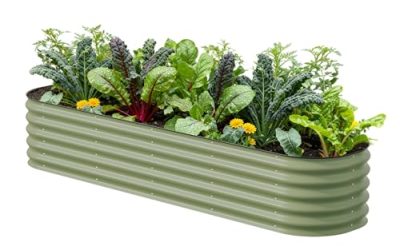
Vego Garden builds this kit from VZ 2.0 metal, a zinc, magnesium and aluminum coated steel, and finishes it with a food-grade, USDA certified paint according to the Amazon listing. That coating claim is exactly what an organic grower should look for in a metal bed: the soil touches a named, food-grade finish rather than bare or mystery-coated steel. The listing also notes the beds are designed to last over 15 years.
The modular panels assemble into 10 different configurations, with the most popular listed as 9.5 by 2.5 ft and 8 by 4 ft. At 17 inches tall, this is the deep bed of the guide, suited to carrots, potatoes and other crops that use real depth, and the oval form with a rubber safety strip keeps edges covered.
Specs
- Material: VZ 2.0 zinc, magnesium and aluminum coated steel with food-grade, USDA certified paint finish; height 17 inches; 10 possible configurations including 9.5 x 2.5 ft and 8 x 4 ft; listed capacity 21 cubic feet; oval shape with rubber safety strip; rust resistant; open bottom; sold by Vego Garden Official
Best for: Growers who want one kit that rebuilds into many layouts
Watch out for: Filling a 17-inch bed takes a lot of soil, and the configuration you choose changes the footprint, so measure your space against the layout you actually plan to build
Best Choice Products 48x24x30in Raised Garden Bed, Elevated Wood Planter (Natural)

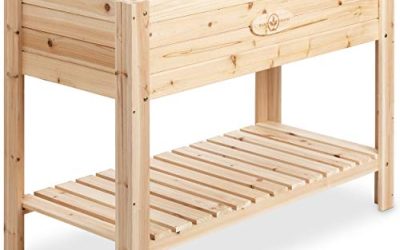
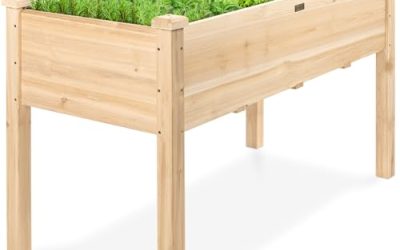
This elevated planter lifts the growing surface to 30 inches, which changes who can garden and where. It suits patios, balconies and decks where in-ground beds cannot go, and growers who cannot kneel. The box is Chinese fir wood, an untreated softwood, and the listing includes a bed liner that keeps soil in place above the drainage.
The planting area holds 5 cubic feet, enough for herbs, salads, peppers and compact vegetables in rotation. The stated capacity is 200 lb, which covers the planter filled with moist growing mix, and the 4 by 2 ft footprint fits corners and railings where a ground bed would crowd the space.
Specs
- Material: Chinese fir wood; overall dimensions 48 x 24 x 30 inches; planting capacity 5 cubic feet; load capacity 200 lb; bed liner included; elevated design on legs; model SKY2383
Best for: Patio and balcony growers who cannot bend or kneel
Watch out for: Fir is a softer wood than cedar and will age faster outdoors; the shallow soil volume suits compact crops rather than deep-rooted vegetables
Land Guard Galvanized Raised Garden Bed Kit, 4 x 2 x 1 ft
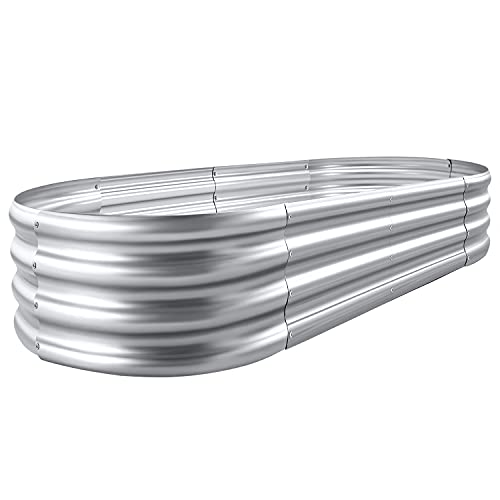
Land Guard’s oval bed is the simple end of the metal market: Q195 galvanized steel sheet with a double-layer anti-corrosion treatment, an open base, and no paint or coating to question. Galvanized steel has a long history in stock tanks and planters, and for a grower who prefers an uncoated metal wall against the soil, this is the readable option.
The 4 by 2 ft footprint with 12-inch walls holds about 7 cubic feet of soil, a good size for a herb and salad bed or a pair of tomato plants with support. The oval shape has no sharp corners, and the kit format makes it easy to add a second bed later in matching form.
Specs
- Material: Q195 galvanized steel sheet, double-layer anti-corrosion treatment; dimensions 4 x 2 x 1 ft; shape oval; open base; volume 7 cubic feet; kit assembly
Best for: Small beds and first metal-bed trials on a modest scale
Watch out for: The 12-inch wall gives mid-depth rooting only, and thin galvanized panels can flex before the bed is filled and settled
Greenes Fence Premium Cedar Raised Garden Bed, 4 x 8 ft (RC48967)

The second Greenes Fence bed stretches the same untreated cedar construction across a full 4 by 8 ft footprint with a lower 7-inch wall. That shallow profile is deliberate: it holds up to 18.7 cubic feet of soil spread across a large area, which suits greens, herbs, onions and succession sowing in rows, and it keeps the soil bill lower than a deep bed of the same footprint.
Construction matches the 4 by 4 model, with 3/4-inch chemical-free North American cedar boards and dovetail joints that need no tools. Placed side by side, two of these beds make a tidy market-garden block with a path between them.
Specs
- Material: chemical-free untreated North American cedar; dimensions 4 ft x 8 ft x 7 inches; boards 3/4 inch thick; dovetail interlocking joints, tool-free assembly; soil capacity up to 18.7 cubic feet; open bottom; model RC48967
Best for: Long rows of greens and root crops in a shallow profile
Watch out for: Seven inches of soil is too shallow for carrots and other long roots, and the wide footprint needs a level site to sit neatly
Which One Fits
- Choose the Greenes Fence 4 x 4 ft if you want the classic untreated cedar plot for mixed vegetables at a moderate depth.
- Choose the Vego Garden 10-in-1 Jumbo if you want deep soil, layout flexibility and a named food-grade coating on metal.
- Choose the Best Choice Products Elevated Planter if the bed must stand on a patio or deck and you need to garden standing up.
- Choose the Land Guard Galvanized Kit if you want a small, plain galvanized bed for herbs and salads with no coating involved.
- Choose the Greenes Fence 4 x 8 ft if your plan is rows of greens and herbs across a wide, shallow cedar bed.
Common Mistakes
Buying treated lumber by accident. Some wood beds and DIY boards are pressure-treated, and older treatments are a poor match for food soil. Every wood pick in this guide is untreated or described as chemical-free; if you build your own, ask for untreated cedar or fir by name.
Assuming a bed can be certified organic. Certification applies to farms, produce and inputs, not to a planter box. A listing that implies the bed itself carries organic certification is saying more than it can support. Judge the material, the treatment and the coating instead.
Ignoring the soil bill. The bed is the cheap part. A deep 17-inch metal bed can need more than 20 cubic feet of growing mix, so work out the listed capacity and the fill cost before ordering, and use plain organic matter in the bottom third of deep beds.
Placing the bed before checking sun and water. Vegetables need full sun and a reachable hose. A filled bed is effectively permanent, so live with the empty frame in place for a day, check the light across it, and only then fill.
Lining with the wrong fabric. A plastic sheet liner can trap water and defeat drainage. If you line a bed at all, use a breathable fabric, and keep the open bottom of ground beds clear so roots and worms can move through.
FAQ
Is galvanized steel safe for growing organic vegetables?
Galvanized steel is widely used for vegetable beds and stock tanks. The zinc coating is stable in normal garden soil, and the beds here are either plain galvanized or finished with a food-grade coating named in the listing. If you want the most conservative option, untreated cedar has no coating questions at all.
What wood should I avoid for a vegetable bed?
Avoid older pressure-treated lumber and reclaimed wood you cannot identify, such as old railway sleepers, which were treated with heavy preservatives. Untreated cedar and untreated fir are the common safe choices, and both appear in this guide.
How deep should a raised bed be for vegetables?
Greens and herbs manage in about 7 inches. Most fruiting vegetables do well in 10 to 12 inches. Carrots, parsnips and potatoes reward 17 inches or more. All raised beds here sit open-bottomed on the ground, so roots can also continue into the soil below the listed depth.
Can I grow organically in an elevated planter?
Yes. The organic part of the system is your soil, seed, feed and pest control, and an elevated fir planter with a liner works the same way as a ground bed. Choose untreated wood, fill with a growing mix you trust, and the planter simply decides the height you work at.
Final Verdict
For most organic vegetable growers, the Greenes Fence 4 x 4 ft in untreated cedar is the bed to build a garden around: verifiable material, tool-free assembly and a depth that suits mixed planting. The Vego Garden kit is the metal alternative with the clearest food-safe coating claim and the depth for root crops, while the Land Guard covers small galvanized beds and the Best Choice Products planter opens gardening to patios and standing growers. Pick the material you can verify, size it to the crop, and the bed will serve for years.