Key takeaways
- Compare three worm composting bins for home use, with tray design, harvest method, airflow, and size explained so you can pick the right vermicomposting system.
Kitchen scraps leave the house every week, and for gardeners that stream of peels, coffee grounds, and eggshells is raw material going to waste. A worm composting bin turns it into dark, crumbly castings that feed soil far better than anything from a bag, and it does so in a footprint smaller than a laundry basket. The catch is that the wrong bin makes the whole hobby feel like a chore: trays that jam, harvests that take an afternoon, or a unit that smells because air cannot move through it.

This guide is written for home gardeners, apartment dwellers with a balcony, and families who want to cut household waste without building a compost heap. The three bins below were chosen from their Amazon product page titles and listed specifications, so the tray count, harvest design, and ventilation details you read here come straight from the listing. Stacked trays suit a tidy indoor setup, while a fabric bag suits anyone who values the easiest possible harvest.
Quick Picks
As an Amazon Associate we earn from qualifying purchases
| Product | Best for | Key spec from title |
|---|---|---|
| Worm Factory 360 Black Composting System | A compact stacked tray system for the home | 4 trays, US made, for recycling food waste |
| Urban Worm Bag Version 2 | The simplest harvest with no zippers to fight | Fully removable zipper-free bottom |
| ecocultivatify 5-Tray Worm Compost Bin | The most tray space for larger households | 5 trays, indoor and outdoor use |
How to Choose
Tray count and household size
Tray count sets how much food a bin can process before it needs harvesting. A small household that cooks a few times a week can run happily on a two- or three-tray system, while a family that generates a full bucket of scraps every few days will fill those trays fast and end up with hungry worms and soggy bedding. More trays also mean more finished castings per harvest, which matters if several raised beds are waiting to be fed. Count the kitchen waste a household produces in a normal week before choosing, and leave room to grow: a system that can accept an extra tray later is worth more than one that is already full on arrival.
Harvest method and how much mess you accept
Harvesting separates finished castings from the worms, and the design of the bin decides whether that job takes ten minutes or an afternoon. Stacked tray systems rely on worms migrating upward toward fresh food, leaving the lowest tray ready to lift out. Fabric bags with a fully removable bottom let the finished compost drop out from below while the worms stay above. Think honestly about the space available for this job: a balcony harvest needs a design that contains the mess, while a garage or garden shed forgives a slower, manual method. The easiest harvest is the one that actually gets done on schedule.
Airflow, moisture, and odor control
Worms breathe through damp skin and need oxygen moving through the bin, yet too much airflow dries the bedding out. Good ventilation keeps the contents aerobic, which is the difference between an earthy smell and a sour one that drives a bin out of the house. Look for vented lids, airflow gaps between trays, or breathable fabric walls that let the system exchange air without letting pests in. Moisture matters just as much: bedding should feel like a wrung-out sponge, never dripping. A bin that makes airflow easy and moisture visible will forgive far more beginner mistakes than a sealed box.
Placement, footprint, and material
Where the bin lives decides much of its design. An indoor bin needs a small footprint, a lid that closes firmly, and materials that will not leak onto a floor. A garage or patio bin can be larger and heavier, with more trays and a sturdier frame. Recycled plastic trays are light and easy to wash, while fabric bags fold flat for storage when not in use. Measure the intended spot before ordering, including the height needed to lift a lid or pull a tray, and remember that worms prefer a shaded, stable temperature rather than a sunny windowsill or a freezing corner.
The 3 Best Options
Worm Factory 360 Black Composting System
The Worm Factory 360 is the stacked tray system many home vermicomposters start with, and its staying power comes from a simple idea executed well. Four trays stack upward as worms migrate toward fresh food, so the lowest tray finishes while the upper trays keep working. The compact black unit fits beside a kitchen door or in a garage corner, and the listing promises an easy assembly with no odor when the bin is fed and watered correctly. For a household taking its first step into vermicomposting, this is the most proven shape of the hobby.
Specs
- 4 trays for efficient vermicomposting
- Black finish
- US made
- Designed for recycling food waste at home
- Durable, space-efficient design
- Easy to assemble
- No odor when maintained as directed
Best for: First-time vermicomposters who want a compact, proven stacked tray system for a house or apartment.
Watch out for: Worms are not included, so order red wigglers separately and set up the bedding before they arrive.
Urban Worm Bag Version 2
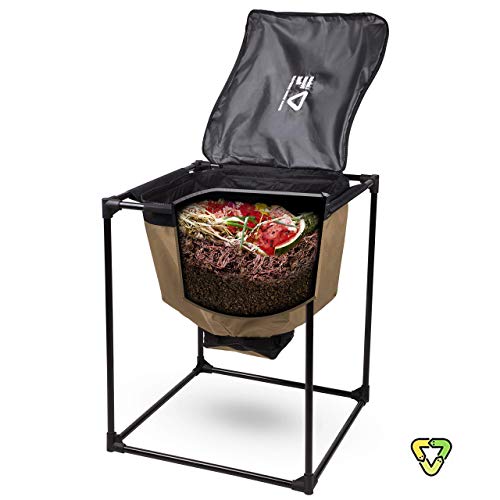
Where tray systems ask the owner to lift and sort, the Urban Worm Bag asks for almost nothing at harvest time. Its bottom removes entirely without a zipper, so finished castings drop out from below while the worms and fresh bedding stay in place above. That single design choice removes the most dreaded job in vermicomposting and makes regular harvesting realistic for busy households. The fabric body breathes, which helps airflow and moisture balance, and the bag format suits a laundry room, balcony, or garage shelf.
Specs
- Worm composting bin, Version 2
- Easy harvest design
- Fully removable zipper-free bottom
- Fabric body for airflow
Best for: Gardeners who want the fastest, least messy harvest and a bin that fits tight indoor spaces.
Watch out for: A fabric bin holds moisture differently from rigid trays, so check bedding dampness often during the first few weeks.
ecocultivatify 5-Tray Worm Compost Bin
Larger households need more working room, and the ecocultivatify system answers with five trays instead of three or four. The extra tray gives worms more space to process a heavy stream of kitchen scraps, and the increased ventilation stated in the listing keeps air moving through a taller stack. It works indoors or outdoors, which suits a household that wants the bin in the garden during warm months and under cover when the weather turns. For a family that composts seriously, the added capacity is the point.
Specs
- 5-tray worm compost bin
- Increased ventilation for air circulation
- For outdoor and indoor use
- Wormie’s Home Plus worm bin set
- Green finish
- For recycling household waste
Best for: Larger households and keen gardeners who generate a lot of kitchen waste and want maximum tray capacity.
Watch out for: A five-tray stack is taller and heavier than a small system, so confirm the floor space and a stable, level spot before ordering.
Which One Fits Your Situation
Starting vermicomposting in an apartment
Pick the Worm Factory 360 when space is tight and the bin must live indoors without drawing attention. Its compact stacked shape tucks into a corner, the lid keeps things contained, and four trays give a small household enough capacity to learn the routine. Start with a modest worm population and feed lightly until the colony grows into the system.
Hating the harvest more than the feeding
Pick the Urban Worm Bag Version 2 when the harvest is the part that worries you most. The removable bottom lets finished castings fall out cleanly while the worms keep working above, which turns a dreaded afternoon chore into a quick job. That ease is what keeps a bin in use for years instead of gathering dust after the first season.
Feeding a big family and several garden beds
Pick the ecocultivatify 5-Tray system when the kitchen produces a steady stream of scraps and the garden is hungry for castings. Five trays process more waste per cycle, and the added ventilation helps a taller stack stay aerobic. Keep the feeding balanced with dry bedding so the extra capacity does not turn into extra moisture.
Keeping the bin outdoors through the seasons
Pick the ecocultivatify 5-Tray system for a sheltered outdoor spot, since its listing covers both indoor and outdoor use. Place it in shade with protection from heavy rain, and move it under cover when temperatures drop hard. The Worm Factory 360 also works in a garage or covered patio, but a fully exposed position suits the sturdier outdoor-rated setup better.
Common Mistakes
- Overfeeding a new bin before the worm population has grown enough to handle the scraps.
- Adding meat, dairy, citrus, and oily foods that attract pests and turn the bedding sour.
- Letting bedding dry out or become waterlogged instead of keeping it as damp as a wrung-out sponge.
- Placing the bin in direct sun or a freezing corner where temperature swings stress or kill the worms.
- Skipping the harvest until trays are compacted and the worms have nowhere left to work.
Frequently Asked Questions
What kind of worms go in a worm composting bin?
Red wigglers are the standard choice because they live in the top layers of bedding, eat decaying food quickly, and reproduce well in a bin. Nightcrawlers prefer deep soil and do poorly in shallow tray systems. Buy worms from a reputable supplier, add them only after the bedding is damp and settled, and let them adjust for a few days before the first feeding.
How long does it take to get finished worm castings?
A new bin usually produces its first harvest in about three to four months, depending on feeding, temperature, and the size of the worm population. Established bins with healthy colonies can turn a tray in roughly two months. Harvest when the lowest tray looks dark, crumbly, and earthy, with most worms having moved upward toward fresher food.
Will a worm bin smell inside the house?
A healthy worm bin smells like damp earth, not garbage, because the contents stay aerobic and the worms process food before it rots. Odor usually means overfeeding, excess moisture, or food the worms cannot handle, such as meat and dairy. Fix it by pausing feeding, adding dry shredded paper or cardboard, and improving airflow through the trays.
What foods should never go in a worm bin?
Keep out meat, fish, dairy, fats, and oils, which rot slowly and attract pests. Citrus and onion in large amounts can harm worms, and spicy foods are best avoided. Safe staples include fruit and vegetable scraps, coffee grounds, tea bags without staples, crushed eggshells, and shredded newspaper or cardboard as dry bedding.