Our Short List of 3
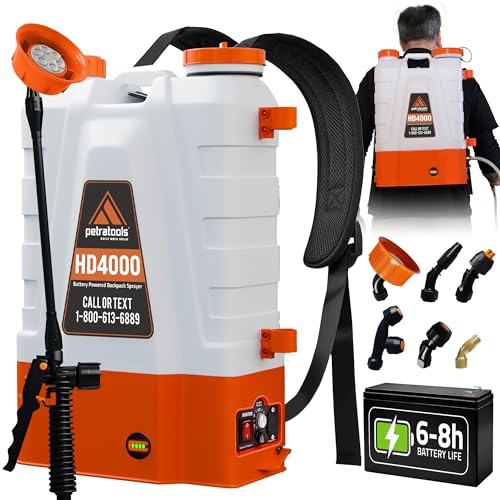
- Best for: Landscapers and property managers who spray for hours and want consistent pressure without manual pumping.
- 4-gallon tank
- 12V 8AH battery
- 40 to 90 PSI pressure range
- 6 nozzles included
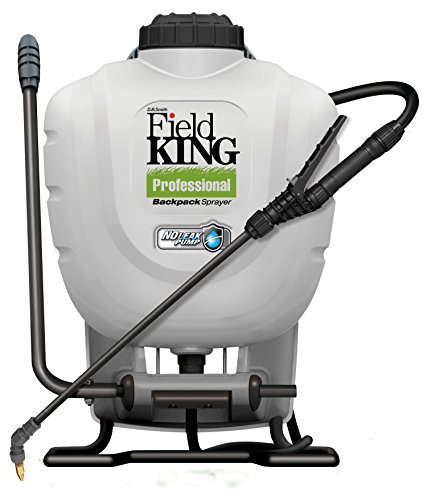
- Best for: Operators who need maximum manual pressure for stubborn weeds and large turf areas.
- 4-gallon tank
- Internal no-leak pump design
- Delivers up to 150 PSI
- 21-inch heavy-duty poly wand

- Best for: Tree, turf, and garden work where clean, clog-free spraying of mixed chemicals matters most.
- 4-gallon translucent poly tank
- 3-stage filtration system
- Stainless steel wand
- 3 nozzles included
All 4 Picks at a Glance
| Product | Specs | Action |
|---|---|---|
| PetraTools HD4000 Battery Powered Backpack Sprayer |
| Check price on Amazon |
| Field King 190328 Professional Backpack Sprayer |
| Check price on Amazon |
| Chapin 61900 Tree and Turf Pro Backpack Sprayer |
| Check price on Amazon |
 Solo 425 Piston Backpack Sprayer |
| Check price on Amazon |
Key takeaways
- Compare four commercial backpack sprayers for lawn, garden, and turf work, with tank size, pressure, pump type, nozzle choice, and comfort explained.
A crew that sprays all day lives or dies by the tank on its back. Too small a tank means constant trips back to the mix station, while a pump that fades after an hour turns a scheduled route into overtime. Commercial work adds another layer: the sprayer has to handle herbicides one morning, fertilizer the next, and a fungicide pass before the weekend, without leaking down the operator’s back or clogging on wettable powders. Choosing the wrong unit costs time on every single job, not just once.
This guide is written for landscapers, turf managers, orchard hands, and serious homeowners who treat a large property like a job site. Every sprayer below was picked from its Amazon product page title and listed specifications, so the tank size, pressure range, pump style, and nozzle count you read here come straight from the listing. Battery models suit operators who want steady pressure without pumping, while manual piston units suit crews who value simplicity and field repair.
Quick Picks
As an Amazon Associate we earn from qualifying purchases
| Product | Best for | Key spec from title |
|---|---|---|
| PetraTools HD4000 Battery Powered Backpack Sprayer | All-day battery spraying without pumping | 4-gallon tank, 6-hour runtime, 6 nozzles |
| Field King 190328 Professional Backpack Sprayer | High-pressure manual spraying on tough weeds | 4-gallon tank, internal no-leak pump, 150 PSI |
| Chapin 61900 Tree and Turf Pro Backpack Sprayer | Filtered spraying of mixed chemicals | 4-gallon tank, stainless steel wand, 3 nozzles |
| Solo 425 Piston Backpack Sprayer | Long-life piston spraying with a wide pressure range | 4-gallon tank, up to 90 PSI, piston pump |
How to Choose
Tank capacity and refill rhythm
Four gallons has become the working standard for commercial backpack sprayers because it balances coverage against the weight a person can carry for hours. A smaller tank forces more refills and more mixing, which eats into billable time on large lawns and orchards. A larger tank sounds better until the operator has to haul it up a slope in summer heat. Before buying, map a typical job: count how many tankfuls a property needs and how far the refill point sits from the far edge. If one tank covers most of a route, the standard size is right.
Pump type: battery power or manual piston
Battery sprayers remove the pumping arm from the job entirely, which matters when an operator sprays for six hours straight. Pressure stays consistent from a full tank to the last drops, so coverage stays even and the operator’s shoulders do the only real work. Manual piston sprayers, on the other hand, never run out of charge and can be repaired in the field with basic parts. They suit crews working far from power outlets or operators who distrust electronics around chemicals. The honest trade is comfort against independence: battery units ask for charging discipline, while manual units ask for physical effort on every pass.
Pressure range and nozzle choice
Pressure decides how far droplets travel and how finely they break up, and different jobs need different settings. Low pressure suits delicate foliar feeding and drift-sensitive beds near ponds or vegetable rows. High pressure pushes spray into dense turf, tall weeds, and tree canopies where a gentle mist would never arrive. A wide pressure range plus several nozzles gives one sprayer many jobs: a fan nozzle for broad lawn passes, an adjustable cone for shrubs, and a foaming tip for marking treated strips. Check the listing for the nozzle count before ordering, since buying extra nozzles later costs more than choosing a well-kitted model now.
Comfort, weight, and durability
A sprayer that hurts after an hour will be left in the truck, no matter how good its pump is. Padded shoulder straps, a waist belt, and lumbar support spread a full tank across the body instead of hanging it from the shoulders. Seals matter just as much: chemical-resistant seals survive seasons of herbicides, while cheap seals swell, leak, and fail mid-route. Look for a translucent tank that shows the liquid level at a glance, a wide opening that accepts a measuring cup without spilling, and a wand long enough to reach under shrubs without bending. A warranty of several years signals a maker that expects its sprayer to last.
The 4 Best Options
PetraTools HD4000 Battery Powered Backpack Sprayer
- Best for: Landscapers and property managers who spray for hours and want consistent pressure without manual pumping.
- 4-gallon tank
- 12V 8AH battery
- 40 to 90 PSI pressure range
- 6 nozzles included
Landscapers and property managers who spray for hours and want consistent pressure without manual pumping.
The battery needs a full charge before a long route, so confirm the charging routine and keep the charger with the unit.
For operators who want to stop pumping and start walking, the HD4000 turns a long spray day into steady forward motion. Its battery drives the pump for hours, holding pressure constant while the operator focuses on coverage instead of rhythm. Six nozzles cover everything from a fine mist for ornamentals to a focused stream for fence lines, and the long wand reaches into beds without forcing the operator to crouch. Crews running weed control across multiple properties will notice the difference by the second stop of the day.
Watch out for: The battery needs a full charge before a long route, so confirm the charging routine and keep the charger with the unit.
Field King 190328 Professional Backpack Sprayer
- Best for: Operators who need maximum manual pressure for stubborn weeds and large turf areas.
- 4-gallon tank
- Internal no-leak pump design
- Delivers up to 150 PSI
- 21-inch heavy-duty poly wand
Operators who need maximum manual pressure for stubborn weeds and large turf areas.
Sustained high-pressure pumping is tiring, so test the pump action and strap fit before committing to full-day use.
Built around an internal pump that stays dry inside the tank, the Field King 190328 aims at the oldest complaint in manual spraying: leaks. Its high-pressure output cuts through tall weeds and dense turf that low-pressure units merely dampen, and the four included nozzles let an operator switch from a broad fan to a foaming tip without a trip to the parts bin. The padded straps and lumbar support show this is a tool meant to be worn all day, not carried for ten minutes. For crews who trust muscle over batteries, it is a straightforward workhorse.
Watch out for: Sustained high-pressure pumping is tiring, so test the pump action and strap fit before committing to full-day use.
Chapin 61900 Tree and Turf Pro Backpack Sprayer
- Best for: Tree, turf, and garden work where clean, clog-free spraying of mixed chemicals matters most.
- 4-gallon translucent poly tank
- 3-stage filtration system
- Stainless steel wand
- 3 nozzles included
Tree, turf, and garden work where clean, clog-free spraying of mixed chemicals matters most.
Check the chemical label before use, since the steel wand may not suit every formulation.
The Chapin 61900 earns its place through filtration and build quality rather than raw power. Three stages of filtration catch grit before it reaches the nozzle, which matters when mixing wettable powders or drawing from a less-than-clean water source. The translucent tank shows the level without opening the cap, and the stainless steel wand resists the chemicals that corrode lesser materials. With a long warranty behind it, this is the sprayer for operators who would rather prevent clogs than clear them in the field.
Watch out for: Check the chemical label before use, since the steel wand may not suit every formulation.
Solo 425 Piston Backpack Sprayer
- Best for: Professional users who want a repairable, long-lasting piston sprayer for fertilizers, herbicides, and pesticides.
- 4-gallon tank
- High-performance piston pump
- Wide pressure range up to 90 PSI
- 4 interchangeable nozzles
Professional users who want a repairable, long-lasting piston sprayer for fertilizers, herbicides, and pesticides.
Confirm the seal and nozzle compatibility with the specific chemicals on your route before the first fill.
Few sprayers have stayed in professional use as long as the Solo 425, and the reason is the piston pump at its core. It delivers a wide pressure range with durable seals built to resist the chemicals that wear out lesser units, and the four interchangeable nozzles adapt it to nearly any application. Deluxe shoulder straps and a waist belt spread the load, while the ergonomic tank shape keeps the unit stable on the move. This is the pick for buyers who want a sprayer that can be serviced, not replaced, after years of work.
Watch out for: Confirm the seal and nozzle compatibility with the specific chemicals on your route before the first fill.
Which One Fits Your Situation
Running a lawn care route with many stops
Pick the PetraTools HD4000 when the day means property after property with little time between them. Battery power keeps pressure even from the first lawn to the last, and the six nozzles handle the shift from turf to beds without swapping equipment. The main habit to build is charging the battery every night so the first job never starts on a half charge.
Clearing tall weeds and dense turf
Pick the Field King 190328 when the job is brute-force coverage of overgrown ground. Its 150 PSI output drives spray where low-pressure units stall, and the no-leak pump keeps chemical off the operator’s back during long passes. The foaming nozzle also helps mark treated strips so nothing gets sprayed twice.
Spraying trees, shrubs, and mixed chemicals
Pick the Chapin 61900 when the route mixes trees, turf, and garden beds with different formulations. Three-stage filtration protects the nozzles from grit, the translucent tank makes mixing ratios visible, and the stainless wand stands up to daily chemical contact. The long warranty adds confidence for a tool that will see constant use.
Buying one sprayer to last for years
Pick the Solo 425 when longevity and field service matter more than battery convenience. Its piston pump and chemical-resistant seals are built for seasons of hard use, and the wide pressure range covers most jobs a commercial operator faces. Keep spare seals and nozzles on hand and this unit can stay in service far longer than disposable alternatives.
Common Mistakes
- Buying a tank that is too small for the property and losing an hour a day to refills and remixing.
- Choosing a sprayer by its maximum pressure alone without checking whether the nozzles suit the actual job.
- Ignoring strap and waist-belt fit, then discovering after one long day that the unit cannot be worn comfortably.
- Mixing chemicals in a dirty tank and blaming the sprayer when the nozzle clogs mid-route.
- Storing a sprayer with chemical residue inside, which attacks seals and shortens the pump’s life.
Frequently Asked Questions
What tank size works best for commercial backpack spraying?
Four gallons is the practical standard for most commercial routes because it covers a large area while staying carryable for hours. Smaller tanks mean more refills and lost time, while larger tanks add weight that tires the operator. Match the tank to the property: a single four-gallon fill should cover most of a typical lawn or orchard block before a refill is needed.
Are battery backpack sprayers better than manual ones?
Battery sprayers hold pressure steady and remove pumping effort, which helps on long days with many properties. Manual sprayers never need charging and are simpler to repair in the field. The better choice depends on the work: choose battery power for long, steady routes near charging points, and manual power for remote jobs or crews that value simple field repair.
How much pressure do I need for weed control?
Most lawn and garden weed work falls between 40 and 90 PSI, which covers foliar sprays and turf applications. Dense weeds, tall brush, and tree canopies benefit from higher pressure that drives droplets deeper into the foliage. Low pressure suits delicate plants and drift-sensitive areas near water or food crops, so a sprayer with an adjustable range is more useful than one fixed setting.
How do I keep a backpack sprayer from clogging?
Filtration is the first defense, so use the in-tank filter and keep the cap basket clean. Mix powders fully before pouring them in, and rinse the tank, hose, and nozzles with clean water after every use. Never leave mixed chemical sitting in the sprayer overnight, since residue settles, hardens, and blocks the narrow passages in the pump and nozzle.