Key takeaways
- Compare flower bed edging ideas: no-dig plastic, steel, aluminium, brick, stone, wood and the trench edge, with checks for curves, soil and mowing.
A flower bed rarely looks untidy because of the plants. It looks untidy because the border between bed and lawn has blurred: grass creeps in, mulch spills out, and the bed’s shape dissolves a little more every season. Choosing an edging idea is really choosing how you want to hold that line — with a strip you bury, a material you set, or a trench you cut — and each choice trades looks against installation effort, lifespan and how it behaves under your mower.
This guide works through the main edging ideas a home gardener actually chooses among: manufactured strips in plastic, steel, aluminium and rubber; masonry in brick, stone and concrete; wood; and the zero-product trench edge. They are grouped for the readers who use them most — beginners wanting a weekend fix, gardeners after a crisp formal line, and those who prefer a natural look — and each is named with the places that actually sell it.
Quick Picks
As an Amazon Associate we earn from qualifying purchases.
How to Choose
Measure the Run Before You Pick a Material
Edging is sold by the pack, the strip or the piece, and almost every project stalls because the gardener underestimated the bed’s perimeter. Walk each bed with a tape or a garden hose laid along the border and add the runs together, then add a margin for corners, mistakes and the pieces you will cut. Pack coverage figures assume straight runs, so a curvy bed consumes more than the headline length suggests. Measuring first also settles the budget honestly: a material that looks affordable per pack can become the expensive option across a long boundary, while a pricier strip may cover the whole garden in one purchase.
Match Depth to Your Grass and Soil
What happens underground matters as much as the visible line. Running grasses such as Bermuda and St. Augustine spread on runners that dive under shallow edging, so lawns with those grasses need a deeper barrier that sits well below the surface. Clay soil holds edging firmly but heaves in freeze-thaw cycles, gradually pushing strips and stones upward; sandy soil drains well yet lets lightweight edging wander. Frost-prone gardens should favour materials that can be re-seated easily, or set masonry on a compacted base. If your beds sit in heavy, wet ground, avoid ideas that rely on short spikes alone to stay put.
Decide the Profile: Mow-Over or Raised
Edging sits either flush with the lawn or raised above it, and the choice changes your weekly mowing. A flush or mow-over profile — a trench edge, low brick laid flat, rubber strips — lets the mower wheel ride along the border and cuts trimming to almost nothing. A raised profile — soldier-course bricks, timber, stone — gives beds a deliberate, architectural look and holds mulch back better, but every raised edge becomes a line you must trim by hand. Decide per bed rather than per garden: front beds viewed from the street often earn a raised profile, while side beds you maintain quickly usually suit a flush one.
Plan Separately for Curves and Straight Runs
Materials have a natural geometry. Steel and aluminium strips, bricks and pavers excel on long straight runs and gentle sweeps; forced into tight curves they kink, gap or demand many cuts. Flexible plastic and rubber edging, loose stone and the trench edge follow serpentine beds without complaint. Most real gardens mix both, so plan the material per bed shape instead of forcing one product around the whole plot. Where a straight run meets a curve, end one material cleanly at a corner or a feature plant rather than bending it past its comfortable radius and leaving a wavy line.
The Edging Ideas Worth Considering
No-Dig Plastic Edging
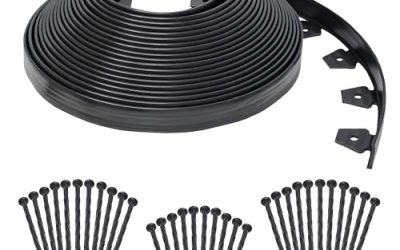
The beginner default: a flexible strip of recycled plastic that unrolls along the bed and is pinned down with landscape spikes, no trench required — the EasyFlex and Dimex no-dig families are the familiar names. It follows curves easily, disappears visually once mulch is tucked against it, and can be lifted and re-laid when you reshape a bed. The trade-offs are a plain look up close and a tendency to heave or lean in frost and soft soil. Sold at Amazon, Home Depot, Lowe’s and Walmart, usually in long rolls with spikes included or sold alongside.
Galvanised and Powder-Coated Steel Edging
Steel strip edging is the crisp line you see in professionally landscaped gardens: thin, rigid bands — the Colmet class is the reference point — that sit almost flush and hold a dead-straight edge for years. Galvanised and powder-coated finishes resist rust, and the near-invisible profile suits modern and formal beds alike. It asks more of the installer: a shallow trench, careful levelling and stakes, plus gloves for the sharp edges. Curves are possible only as gentle sweeps. Sold at Home Depot, Lowe’s and Amazon, and stocked by landscape suppliers for longer commercial lengths.
Aluminium Edging
Aluminium does most of what steel does — a slim, durable, nearly invisible line — while being noticeably lighter to carry, cut and bend. It never rusts, which makes it a sound choice for coastal gardens and persistently damp beds, and its flexibility handles moderate curves that would kink a steel strip. It costs more per length than steel and can dent if struck by heavy equipment, so it suits tended gardens better than rough utility areas. Sold at Home Depot, Lowe’s and Amazon, typically in interlocking strip lengths with stakes, in mill, black and green finishes.
Corten Steel for Modern Gardens
Corten is the weathered, rust-orange steel specified in contemporary garden design, where the patina itself is the decoration. It is sold as heavier-gauge strip or panel edging that forms its protective rust layer outdoors and then stabilises, giving strong, sculptural lines around gravel, lawns and minimalist planting. It is a deliberate aesthetic commitment — the orange tone dominates pale planting schemes — and early runoff can stain adjacent pale paving while the patina forms. Sold through Amazon and specialist landscape suppliers rather than every big-box shelf, in straight lengths and pre-formed corners.
Brick and Paver Edging
The classic cottage-garden idea: bricks laid as a soldier course — upright, shoulder to shoulder — or concrete pavers set in a shallow trench along the bed. Laid flat with the top flush to the lawn, brick makes an excellent mow-over edge; stood upright it becomes a raised, traditional border that holds mulch well. It is heavy, slow work, and individual bricks can rock or heave unless the trench base is level and compacted. Sold at Home Depot, Lowe’s and masonry yards, where reclaimed bricks also appear for gardeners who want an aged look from day one.
Natural Stone and Rock Edging
Fieldstone, river rock and cobbles give beds an informal, settled look that manufactured edging cannot imitate. Stones are simply bedded into a shallow trench and butted together, so the edge follows any curve and individual pieces can be lifted to weed behind or adjust the line. The informality cuts both ways: gaps invite grass through, and the edge reads as a feature rather than a barrier. Rock is sold by the piece or the bag at landscape suppliers, Home Depot and Lowe’s, and gardeners with stony ground often gather their own at no cost.
Concrete Edging Stones
Precast concrete sections — straight, curved and scalloped profiles — are the set-and-forget masonry option. They are heavier and more uniform than brick, interlock or butt together along a levelled trench, and shrug off mower bumps and frost better than thin plastic. The scalloped styles suit traditional front gardens; plain rectangular sections look cleaner in modern ones. Because each piece is short, long runs take time to level, and a wobbly base shows as a wavy line. Sold at Home Depot, Lowe’s and Walmart, usually by the individual piece, so measure your run before loading the car.
Wood Edging
Wood brings a raised, rustic warmth: cedar edging rolls and half-log borders for low beds, landscape timbers and sleepers where you want height and structure. Cedar resists rot better than most timbers, and rolls of connected half-logs follow gentle curves that rigid sleepers cannot. The honest caveat is lifespan — wood in ground contact eventually rots, whatever the treatment, so treat wood edging as a medium-term choice you will renew rather than a permanent one. Sold at Home Depot, Lowe’s and Amazon, as rolls, individual half-log sections and full timber lengths.
Rubber Edging
Recycled-tyre rubber edging mimics a dark mulch border: flexible strips that pin or stake along the bed and flex instead of cracking when the mower catches them. That mower-friendliness is the whole appeal — wheels can bump or partly ride the edge without damage — along with easy curves and simple cutting to length. The look is subdued rather than decorative, and pale-floored modern gardens may find it too plain. Sold at Amazon, Walmart and Home Depot, in rolls and strip packs, often with a faux-mulch texture on the visible face.
The Trench Edge: No Product at All
The oldest idea costs nothing: a spade-cut trench, a few inches deep with a vertical face on the lawn side and a sloped face into the bed, maintained as a clean air gap that grass runners hesitate to cross. It is the edge on most established country gardens, it follows any shape, and it suits gardeners who would rather spend time than money. The catch is upkeep — the trench softens and must be re-cut, typically each spring and sometimes mid-season in vigorous grass. Nothing to buy beyond a half-moon edging spade, which most garden sheds already hold.
Which One Fits Your Situation
You Want a Weekend Fix With No Digging
Start with no-dig plastic or rubber edging. Both pin down with spikes along a line you can mark with a hose, follow curves without cutting, and can be finished around several beds in a day. They are also the easiest ideas to undo, which matters if the bed shapes are still evolving. If even that feels like too much commitment, cut a trench edge first and live with it for a season before spending anything.
Your Beds Run Straight Against a Formal Lawn
Choose steel or aluminium strip for the sharpest line, or soldier-course brick if you prefer a traditional face. Straight runs are where rigid materials earn their keep: they hold a true line for years and read as intentional from the street. Aluminium is the pick for damp or coastal plots; steel suits long runs where its stiffness keeps the line honest between stakes.
You Mow Right Up to Every Bed
Build the edge flush: a trench edge, flat-laid brick, or rubber strips. A mow-over profile lets one wheel ride the border so the trimmer stays in the shed, which saves real time across a whole garden every week. Avoid raised timber, upright brick and tall stone here — each becomes a hand-trimmed line, and mower decks will chip and scar their faces over a season.
You Want a Natural, Informal Look
Reach for stone, wood or the trench edge. Fieldstone and river rock settle into planting and look better slightly irregular; cedar rolls and half-logs warm up cottage-style beds; a clean trench disappears entirely, leaving the plants to define the bed. These ideas forgive imperfect lines, mix happily within one garden, and age gracefully rather than looking tired when they weather.
Common Mistakes
- Buying edging by the pack without measuring the total run, then running short mid-bed and mixing batches or profiles to finish the line.
- Setting edging too shallow, so running grasses such as Bermuda and St. Augustine simply root underneath and appear inside the bed.
- Choosing a raised profile on beds you mow weekly, creating a permanent hand-trimming chore and mower scars along the edging face.
- Forcing rigid steel, brick or concrete sections around tight curves, which produces kinks, gaps and a wavy line instead of a clean sweep.
- Treating wood edging as permanent: ground-contact timber rots eventually, so plan its renewal instead of being surprised by a collapsed border.
Frequently Asked Questions
What Is the Cheapest Way to Edge a Flower Bed?
The trench edge costs nothing beyond a spade you probably own: cut a vertical face on the lawn side, slope the bed side, and keep the gap clear. Among bought options, no-dig plastic rolls cover the longest runs for the least outlay, especially across several beds. Either way, cheap edging is paid for in upkeep — re-cutting trenches or re-seating heaved plastic each spring.
How Deep Should Flower Bed Edging Be?
Deep enough that grass roots and runners cannot pass underneath. Shallow decorative strips only a couple of inches tall are mostly visual; against running grasses such as Bermuda or St. Augustine, choose edging that extends several inches below the surface, or rely on a trench whose air gap interrupts the runners. In frost-prone soil, extra depth also helps the edge stay seated through freeze-thaw cycles.
Does Edging Actually Stop Grass Creeping Into Beds?
It slows grass considerably but never abolishes weeding. A continuous barrier with no gaps — well-joined strips, tightly butted stone or brick, or a maintained trench — blocks most surface runners and makes the creep that does occur easy to spot and pull. Gaps at joints are where grass gets through, so the quality of the installation matters more than small differences between materials.
Which Edging Lasts the Longest?
Metal and masonry outlast everything else: galvanised steel, aluminium, brick, stone and concrete can serve for decades with only occasional re-levelling. Plastic and rubber strips last years but may heave, fade or turn brittle; wood in ground contact has the shortest life and should be chosen for its look with renewal in mind. Match the material’s lifespan to how permanent the bed layout is.