Key takeaways
- Compare five low cost raised garden beds for small yards, balconies and deep-root crops, from starter metal kits to a self-watering patio planter.
A raised garden bed changes the real decision a gardener faces: how much soil, depth, and workable space can a modest budget actually buy. Low cost beds are not all the same, and the cheapest kit on a listing page can turn out too shallow for carrots, too narrow for a row of lettuce, or too flimsy for a full season of wet soil pressing against its walls.

This guide is for first-time growers filling a small yard, renters working with a patio or balcony, and anyone replacing a tired wooden frame with something that lasts longer. Every bed below was picked from its Amazon listing name and specifications, with an eye on depth, footprint, coating, and how much assembly the design asks of you.
Quick Picks
As an Amazon Associate we earn from qualifying purchases
| Product | Best for | Key spec from title |
|---|---|---|
| Land Guard Galvanized Raised Garden Bed Kit | A starter bed for herbs and shallow greens | 4 x 2 x 1 ft galvanized kit, 1 pc, silver |
| Best Choice Products Outdoor Metal Raised Garden Bed | Deep-root vegetables in a full-size bed | 6 x 3 x 2 ft outdoor metal bed, Gray |
| Vego Garden 17″ Tall 9-in-1 Modular Metal Raised Garden Bed | Reshaping one bed into several layouts | 17 in tall, 9-in-1 modular metal bed |
| Vego Garden 17″ Tall 10-in-1 Jumbo Modular Metal Raised Garden Bed | A large planting area in a single bed | 17 in tall, 10-in-1 jumbo modular bed, Modern Gray |
| Keter Urban Bloomer Raised Garden Bed | Balconies and small patios | 12.7 Gallon raised garden bed, Dark Grey |
How to Choose
Match depth to what you grow
Depth decides which crops a bed can honestly support. A one-foot bed suits herbs, salad leaves, radishes, and other shallow-rooted plants, while deeper beds give carrots, potatoes, and tomatoes room to develop below the surface. Before ordering, list the two or three crops you most want to grow and check their root depth against the bed you are considering. Buying a shallow kit for deep-root vegetables leads to stunted plants and a second purchase later, which wipes out any saving from the lower starting outlay.
Check the coating and the metal
Metal beds live outdoors in damp soil, so the coating matters as much as the steel underneath. Galvanized finishes, powder coatings, and zinc-aluminum-magnesium coatings each resist rust in different ways, and a scratched or thin finish will show wear first at the joints and the soil line. Look for details about the coating in the listing, and treat bare edges or uncoated hardware as a warning sign. A bed that keeps its finish intact will hold its shape and appearance far longer than one that starts corroding in its first season.
Measure the footprint honestly
A bed that looks compact in a product photo can dominate a small yard once it is assembled and filled. Measure the spot where it will sit, leaving room to walk around it and to reach the middle from either side without stepping into the soil. Long beds are easier to work when they are no wider than four feet, since most gardeners can reach the centre from both edges. Also confirm the ground underneath is reasonably level, because a tilted bed puts uneven pressure on its walls and makes watering unpredictable.
Weigh open bases against contained planters
Most metal beds in this guide have an open base, which lets roots reach the ground below and lets excess water drain away freely. That design suits yards with decent soil underneath, and it keeps the bed from holding standing water after heavy rain. A contained planter, by contrast, holds its own soil and water, which makes it practical on a balcony, deck, or concrete patio where drainage onto the surface below would be a problem. Choose the base style that matches where the bed will actually sit, not the one that looks tidiest in a photograph.
The 5 Best Options
Land Guard Galvanized Raised Garden Bed Kit
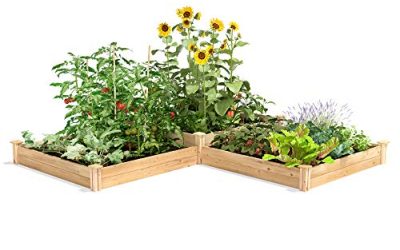
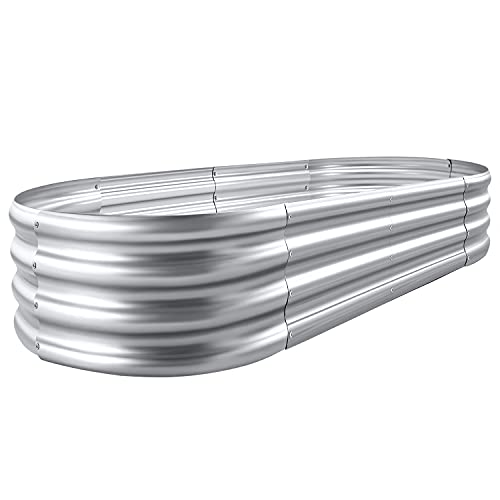
This compact kit is the most straightforward starting point in the group, giving a new gardener a defined patch of soil without a large footprint or a complicated build. Its four-by-two-foot rectangle fits against a fence or along a path, and the one-foot depth handles herbs, lettuce, and other shallow crops without demanding a huge volume of soil to fill. The oval shape softens the look of the bed, and the galvanized finish suits outdoor use. For anyone testing whether raised-bed gardening fits their routine, it is a low-commitment way to begin.
Specs
- Q195 galvanized metal sheet
- Double-layer galvanized finish
- Oval shape
- 7.14 cu ft capacity
- Open base
- 5 lb
- Sold by Cyantor-US
Best for: A first bed for herbs and shallow greens in a small yard.
Watch out for: Check the listing is still available before ordering, since older records showed conflicting availability for this model.
Best Choice Products 6 x 3 x 2 ft Outdoor Metal Raised Garden Bed
Size is the defining feature here: at six feet long, three feet wide, and two feet deep, this bed holds a serious volume of soil and gives deep-root crops the room they need. That depth suits carrots, potatoes, and tomatoes, and the width still lets a gardener reach the centre from either side. Powder-coated alloy steel forms the walls, and the listing notes non-toxic materials tested to FHSA standards. Tool-free wingnut and bolt assembly, rubber edging, ground stakes, and stabilizing rods are all part of the package, which helps a bed this large stay square once it is filled.
Specs
- 24 in depth
- 269-gallon capacity
- Powder-coated alloy steel
- Non-toxic materials tested to FHSA standards
- Tool-free wingnut and bolt assembly
- Rubber edging
- 4 ground stakes
- 2 stabilizing rods
- No bottom panel
- 35 lb
Best for: Deep-root vegetables and a full season of planting in one large bed.
Watch out for: Filling a bed this size takes a large volume of soil, so plan the fill before delivery day.
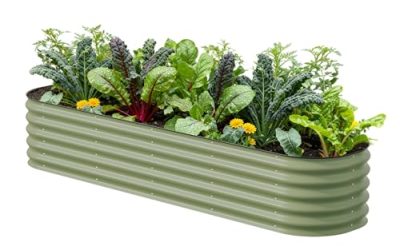
Vego Garden 17″ Tall 9-in-1 Modular Metal Raised Garden Bed
Modularity sets this Vego Garden bed apart, because its panels can be rearranged into nine different configurations instead of locking you into one rectangle. The listed eight-by-two-foot layout is a long, narrow option, and the seventeen-inch height sits between the shallow starter kits and the deepest beds in this guide, which covers most common vegetables. Zinc-aluminum-magnesium coated steel with AkzoNobel paint forms the walls, and rubber safety edging plus rounded corners make the bed friendlier to work around. Gardeners who like to redesign their layout each season will get the most from this design.
Specs
- 17 in tall
- 8 x 2 ft layout
- 23 cu ft
- 9 configurations
- Zinc-aluminum-magnesium coated steel (VZ 2.0)
- AkzoNobel paint
- Rubber safety edging
- Rounded corners
Best for: Gardeners who want to reshape their bed into different layouts across seasons.
Watch out for: Decide on a configuration before filling, since moving a full bed is far harder than moving empty panels.
Vego Garden 17″ Tall 10-in-1 Jumbo Modular Metal Raised Garden Bed

The jumbo version of the Vego Garden modular bed trades the long narrow layout for a much larger planting area, holding thirty-four cubic feet of soil across ten possible configurations. That extra capacity suits gardeners who want one big bed rather than several small ones, and the seventeen-inch height gives most vegetables enough depth without demanding the soil volume of a two-foot-deep bed. Aluzinc metal with a powder-coated finish resists rust, and the modular panels let the bed be split or reshaped if plans change. For a household that grows a wide mix of crops in one place, this is the most flexible large option here.
Specs
- 17 in tall
- 34 cu ft
- 10 configurations
- Aluzinc metal
- Rust resistant
- Powder coated
Best for: A large single bed for a wide mix of vegetables.
Watch out for: Older records showed conflicting availability for this listing, so confirm it is in stock before ordering.
Keter Urban Bloomer 12.7 Gallon Raised Garden Bed

Where the metal beds in this guide need a patch of ground, the Keter Urban Bloomer is built for a balcony or small patio. Its resin body stands at waist height, so planting and harvesting happen without kneeling, and the contained design keeps soil and water off the surface below. A self-watering reservoir with a built-in water gauge takes some of the guesswork out of watering, and a drainage plug opens or closes depending on conditions. It holds far less soil than the metal beds, so it suits herbs, salads, and a few compact plants rather than a full vegetable patch.
Specs
- Resin
- 32.3 x 14.7 x 30.7 in
- 12.7-gallon soil capacity (22.4-gallon listing capacity field)
- Self-watering reservoir with built-in water gauge
- Drainage plug opens/closes
- Seed starting tray
- 2-year limited warranty
Best for: Balcony and small-patio growing at waist height.
Watch out for: Older records showed conflicting availability for this listing, so confirm it is in stock before ordering.
Which One Fits Your Situation
You are starting your first vegetable patch
Begin with the Land Guard kit if your space is small and your ambitions are modest, since it needs the least soil and the least assembly of any bed here. Its shallow depth is honest about what it can grow, and herbs plus salad leaves are forgiving first crops. Once you know how much time you actually spend in the garden, you can add a deeper bed rather than guessing wrong on the first purchase.
You want deep-root crops in one big bed
Choose the Best Choice Products bed, because its two-foot depth and two-hundred-sixty-nine-gallon capacity are the most generous in this group. Carrots, potatoes, and tomatoes all benefit from that extra room below the surface, and the stabilizing rods help the long walls hold their shape under the weight of wet soil. Budget for the soil fill as part of the purchase, since a bed this size needs a lot of it.
You like to rearrange your garden layout
Pick one of the Vego Garden modular beds. The nine-in-one model suits a long narrow strip, while the jumbo ten-in-one version gives a larger area for a bigger mix of crops. Both use the same seventeen-inch height, so the choice comes down to footprint and soil volume. Either way, settle the layout before filling, because empty panels move easily and full beds do not.
You only have a balcony or a small patio
The Keter Urban Bloomer is the only option here designed for that setting. Its contained resin body keeps soil off the floor, the self-watering reservoir stretches the time between waterings, and the waist-height design removes kneeling from the routine. Keep expectations realistic about volume: it is a herb and salad planter, not a replacement for a ground-level vegetable bed.
Common Mistakes
- Buying a shallow bed for deep-root vegetables, then wondering why carrots and potatoes stay small.
- Skipping the soil calculation and discovering on delivery day that filling a large bed takes far more soil than expected.
- Placing a bed where you cannot reach the middle without stepping into it and compacting the soil.
- Ignoring the coating and hardware, which are the first places rust appears on a metal bed.
- Choosing a contained planter for a yard bed, or an open-base bed for a balcony, where the drainage works against you.
Frequently Asked Questions
How deep should a raised garden bed be?
Depth depends on the crops. Shallow beds around one foot suit herbs, lettuce, and radishes, while carrots, potatoes, and tomatoes need more room below the surface. A seventeen-inch bed covers most common vegetables, and a two-foot bed handles the deepest-rooted crops. Match the bed to the two or three crops you most want to grow, and buy deeper than you think you need if you plan to grow root vegetables.
Do raised garden beds need a bottom?
Most ground-level metal beds have an open base, which lets roots reach the soil below and lets excess water drain away. That works well on grass or bare earth. A bottom or contained design matters on a balcony, deck, or concrete surface, where water and soil would otherwise run onto the floor below. The Keter planter in this guide is contained, while the metal beds here are open-based.
What keeps a metal raised bed from rusting?
The coating does most of the work. Galvanized finishes, powder coatings, and zinc-aluminum-magnesium coatings all protect the steel from damp soil, and the quality of that coating matters more than the thickness of the metal. Inspect edges and joints when the bed arrives, since scratches and uncoated hardware are where rust usually starts. Keeping the bed filled and the soil level below the top edge also helps.
How much soil does a raised bed need?
Soil volume follows the bed’s dimensions, and large beds need a surprising amount. The Land Guard kit in this guide holds just over seven cubic feet, while the jumbo Vego Garden bed holds thirty-four, and the largest bed here measures its capacity in hundreds of gallons. Work out the volume before ordering, then order the soil before the bed arrives.