Key takeaways
- Compare cedar, fir wood, coated steel and galvanized metal raised garden beds to find the material that suits your soil, climate and garden layout today.
Choosing a raised garden bed is really choosing a material. Wood feels natural and blends into a backyard, yet it slowly breaks down in damp soil. Coated steel and galvanized metal last far longer, but they warm up fast in strong sun. Depth matters too: shallow beds suit lettuce and herbs, while deep beds suit tomatoes and carrots. The five options below cover the main materials sold as ready-made kits, so you can match the material to your climate, your soil and how long you want the bed to last.


This guide is for first-time growers setting up a single bed, for gardeners replacing rotted timber with something longer lasting, for patio and balcony growers who need a compact footprint, and for households planning a larger food garden. Each product below was chosen from its name and listed specifications on its Amazon page, with the material, footprint and height checked against the listing.
Quick Picks
As an Amazon Associate we earn from qualifying purchases.
| Product | Best for | Key spec from title |
|---|---|---|
| Vego garden 17″ Tall 9-in-1 Modular Metal Raised Garden Bed Kit | Tall beds for deep-rooted vegetables | 17-inch tall modular metal kit |
| Greenes Fence Premium Cedar Raised Garden Bed | A long-lasting natural wood bed | 4 x 12 ft cedar kit, 3/4-inch thick boards |
| Yaheetech 8x2ft Wooden Raised Garden Bed | A divisible wood bed for patios | 8 x 2 ft divisible wood planter, 95 x 25 x 11 in |
| Land Guard Galvanized Raised Garden Bed Kit | A compact oval metal bed | Oval galvanized kit, 4 x 2 x 1 ft |
| FOYUEE Galvanized Raised Garden Beds | A wide rectangular metal bed | Galvanized steel bed, 8 x 4 x 1 ft |
How to Choose
Lifespan and rot resistance
Wood and metal age in very different ways, so think in years rather than seasons. Untreated cedar resists rot naturally and often outlasts softer woods by a wide margin, while fir and pine boards need more care and may soften after a few wet winters. Galvanized and coated steel do not rot at all, though their protective coating can wear at cut edges and bolt holes over time. If you plan to keep the same beds in place for many years, lean toward cedar or coated metal. If you expect to rearrange the garden or move house, a shorter-lived wood bed is a reasonable trade.
Soil warmth and drainage
The material of the walls changes how warm the soil gets and how quickly it dries. Metal beds warm up early in spring, which can give seedlings a head start, yet the same beds can dry out faster during hot spells and may stress shallow-rooted crops in full sun. Wood insulates better, so soil temperatures stay steadier through warm afternoons and cool nights. Whatever the material, check that the bed has an open base or drainage gaps so heavy rain can escape, and plan to water metal beds more often in summer than timber ones of the same size.
Food safety and treatments
Because the walls sit against the soil your food grows in, the treatment of the material deserves a close look before you buy. Untreated cedar and other untreated woods are a straightforward choice for edible planting, since nothing has been added to the timber. For metal beds, look for a food-safe coating on the steel and a galvanized finish that is described for garden use. Avoid beds made from old treated lumber or mystery timber, and skip any kit whose listing does not state the material clearly. When in doubt, line the inside walls and keep the soil itself clean and well fed.
Size, depth and assembly
Measure the space first, then match the bed to the crops you actually plan to grow. A bed around 11 to 12 inches deep handles salads, herbs and most leafy greens, while root vegetables and tomatoes do better with 17 inches or more of soil. Leave enough room between beds to walk with a wheelbarrow and to kneel comfortably. Assembly varies as well: some kits slot together without tools, some need bolts and a spanner, and some arrive as flat panels you join yourself. Check the listed dimensions and the assembly method on the listing before ordering.
The 5 Best Options
Vego garden 17″ Tall 9-in-1 Modular Metal Raised Garden Bed Kit
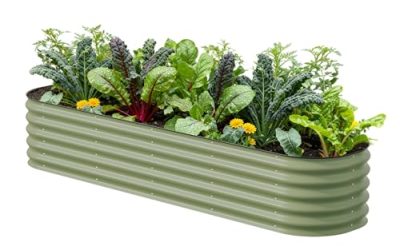
This tall modular kit suits gardeners who want one bed that can change shape as plans change. The 17-inch height gives deep-rooted crops such as tomatoes, carrots and peppers plenty of room, and the modular panels rearrange into several layouts, so a long straight bed can become an L-shape or a pair of smaller beds later. The metal build holds its shape under a heavy soil load and suits a permanent vegetable patch. It is a strong pick for a main food garden where depth and flexibility matter more than a natural timber look.
Specs
- 17-inch tall metal raised garden bed kit
- 9-in-1 modular design with multiple layout configurations
- Metal planter box for vegetables, flowers and herbs
- Rust-resistant coated steel panels
Best for: Gardeners who want a tall, reconfigurable metal bed for deep-rooted vegetables.
Watch out for: Measure your plot before ordering, since the tall panels and modular layout need more floor space than a low single bed.
Greenes Fence Premium Cedar Raised Garden Bed
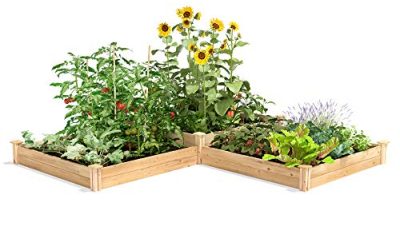
This cedar kit is the natural-wood choice for gardeners who want a bed that looks at home in the garden and lasts. North American cedar resists rot without chemical treatment, which makes it a comfortable pick for growing food, and the thick boards give the frame a solid feel once assembled. At 4 feet by 12 feet it covers a generous planting area, enough for a full row of vegetables with paths between crops. Tool-free assembly and a stackable design mean extra kits can extend the bed later. It suits a settled backyard garden where appearance and longevity both count.
Specs
- 4 ft x 12 ft x 7-10.5 in raised garden bed
- 3/4-inch thick North American cedar boards
- Made in USA
- Tool-free assembly
- Stackable and expandable with additional kits
Best for: A permanent backyard vegetable garden where natural, untreated cedar matters.
Watch out for: Check the soil volume the finished bed needs, since a 4 x 12 ft frame takes a large amount of fill before planting.
Yaheetech 8x2ft Wooden Raised Garden Bed
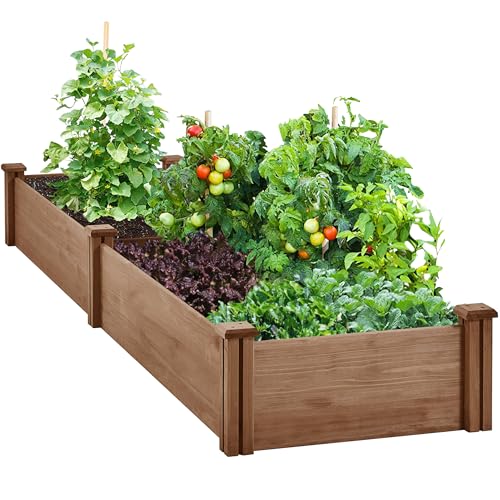
This divisible wood bed fits gardeners who want a long planting strip that can also split into smaller sections. The 8-foot length suits a row of vegetables or a herb border along a fence, while the divisible design lets you separate it into two shorter beds for a patio or a narrow side yard. Dark brown wood gives it a tidy, finished look without the industrial feel of metal, and the 11-inch depth handles most salads, herbs and flowers. It is a practical middle ground for renters and small-space growers who want real wood at a modest footprint.
Specs
- 8 x 2 ft wooden raised garden bed
- 95 x 25 x 11 in overall dimensions
- Divisible design splits into separate sections
- Dark brown wood finish
- For flowers, vegetables and herbs in backyard or patio
Best for: Patios and narrow yards where one long wood bed may need to split into two.
Watch out for: Confirm the divisible sections and their fixings on the listing, since the split layout changes how the bed is anchored.
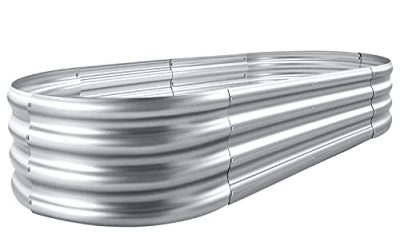
Land Guard Galvanized Raised Garden Bed Kit
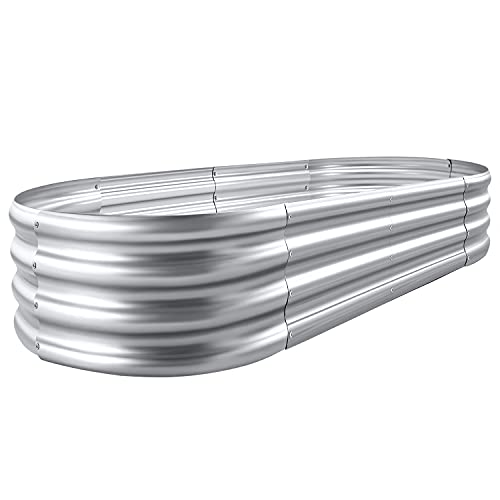
This compact oval kit is the easy starting point for a first metal bed. The galvanized finish resists rust, the oval shape has no sharp corners to catch a hose or a shin, and the 4 x 2 ft footprint fits a small yard, a side strip or a sunny corner that would be wasted otherwise. One foot of depth is enough for lettuce, herbs, strawberries and other shallow crops, and the kit format keeps assembly simple. It works well as a trial bed for new growers and as an extra bed for herbs beside a larger main garden.
Specs
- Galvanized metal raised garden bed kit
- Oval shape, 4 x 2 x 1 ft
- Galvanized planter boxes for outdoor use
- For vegetables, flowers and herbs
- Item model number Qst-25N080072-1SR
Best for: A first compact metal bed for shallow crops in a small yard.
Watch out for: The 1-foot depth limits deep-rooted crops, so plan shallow plantings or pair it with a taller bed for tomatoes and carrots.
FOYUEE Galvanized Raised Garden Beds
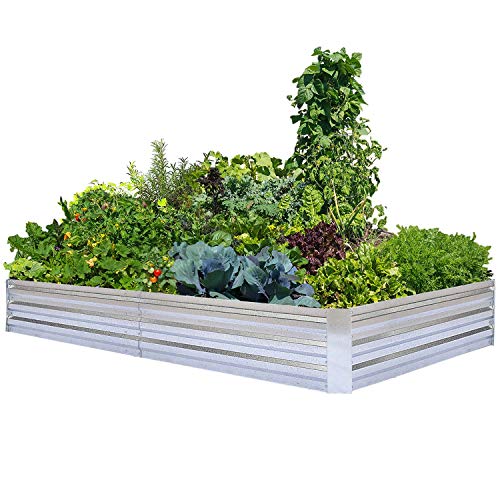
This wide rectangular steel bed suits gardeners who want a large metal planting area in a single kit. The 8 x 4 ft footprint gives room for several rows of vegetables at once, and the overlapping 4-inch panels with support bars help the long walls stay straight under the weight of wet soil. Galvanized steel resists rot and insects, so the bed keeps its shape season after season with little upkeep. It is a good fit for a main vegetable plot where you want the durability of metal and the space to grow a serious amount of food.
Specs
- Galvanized steel raised garden bed
- 8 x 4 x 1 ft size
- Overlapping 4-inch panels
- 4 support bars for wall stability
- Metal planter box for vegetables, herbs and flowers
Best for: A large main vegetable plot where a wide, durable metal bed earns its keep.
Watch out for: Check that the ground is level before assembly, since long steel walls show any slope and can shift as the bed is filled.
Which One Fits Your Situation
Starting your first vegetable garden
Pick the Land Guard oval kit if you are new to growing and want a low-commitment first bed. Its compact footprint fits almost any sunny spot, the galvanized metal needs little care, and the shallow depth is suited to lettuce, herbs and strawberries while you learn what grows well. You can add a taller bed later once you know which crops your household actually eats.
Building a permanent food garden
Choose the Vego garden 17-inch modular kit or the Greenes Fence cedar bed when the garden is staying put for years. The Vego kit gives deep soil and layouts that change as the garden grows, while the cedar bed offers natural timber that suits a traditional backyard. Both are built for the long term, so the higher effort of filling them pays off over many seasons.
Growing on a patio or balcony
Go with the Yaheetech divisible wood bed when space is tight and the bed may need to move. Splitting it into shorter sections lets it fit a narrow patio or sit against a wall, and the wood finish looks tidy beside outdoor furniture. Keep the depth in mind and grow salads and herbs that thrive in 11 inches of soil.
Feeding a household from one big plot
Take the FOYUEE 8 x 4 ft galvanized bed when you want maximum planting area in a single kit. The wide rectangle holds several rows at once, the support bars keep the walls straight under a full soil load, and the steel frame stands up to season after season of heavy use. Pair it with a tall Vego kit for deep-rooted crops.
Common Mistakes
- Buying a shallow bed for deep-rooted crops such as tomatoes and carrots, then finding the roots hit the base.
- Choosing soft untreated wood for a wet climate and replacing rotted boards after a few seasons.
- Placing a metal bed in full sun with no watering plan, so the soil dries out faster than expected.
- Ordering a large bed without measuring the fill volume, then running short of soil halfway through.
- Putting beds so close together that there is no room to walk, kneel or push a wheelbarrow between them.
Frequently Asked Questions
Which material lasts longest for a raised garden bed?
Coated steel and galvanized metal generally last longest, since they do not rot, and cedar is the longest-lived common wood because it resists decay naturally. Softer woods such as fir and pine break down sooner in damp soil. Lifespan also depends on drainage and climate, so a well-drained bed in a dry area outlasts the same bed sitting in standing water.
Is galvanized metal safe for growing vegetables?
Galvanized steel is widely sold for vegetable beds, and listings for garden use describe a protective zinc coating on the steel. Choose a kit listed for garden planting, check that the coating is intact when it arrives, and avoid beds with flaking or damaged finishes. Keeping the soil healthy and well fed also helps the bed perform well over time.
How deep should a raised garden bed be?
Around 11 to 12 inches suits lettuce, herbs, strawberries and most leafy greens. Go to 17 inches or deeper for tomatoes, peppers, carrots and other deep-rooted crops. If the bed sits on poor soil or hard ground, extra depth gives roots more room and holds moisture better through dry spells.
Does wood or metal warm the soil faster in spring?
Metal warms faster, so a steel bed can give seedlings an earlier start in cool spring weather. Wood insulates better and keeps soil temperatures steadier through hot afternoons. In a warm climate, a wood bed may suit heat-sensitive crops, while in a cool climate the extra warmth of metal is often welcome.