Key takeaways
- Compare five A3 pouch laminators for print shops by roller count, feed speed and maximum pouch thickness, with real Amazon listings and specs.
A print shop laminator earns its place on throughput and seal quality, not on how it handles one menu card. The real decision is whether the machine can run A3 pouches back to back all day, seal thick 10 mil stock without silvering at the edges, and clear a misfeed in seconds instead of swallowing a customer’s poster. Warm-up time, roller count and rated pouch thickness are the numbers that decide that, and they vary far more than the product photos suggest.
This guide is for copy shop owners replacing a worn desktop unit, print finishers adding an A3 line beside a roll laminator, and sign and poster shops that laminate in short, frequent batches. Every pick below is a genuine A3 pouch laminator sold on Amazon US, and every specification comes from the product title or the listing’s own technical details, so you can match the machine to the pouch stock you already buy.
Quick Picks
As an Amazon Associate we earn from qualifying purchases
| Product | Best for | Key spec from title |
|---|---|---|
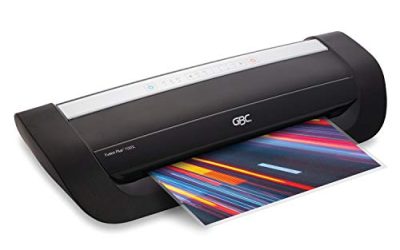
| GBC Fusion 7000L | High-volume counters running pouches all day | 6 rollers, 3 to 10 mil, 1 minute warm-up |
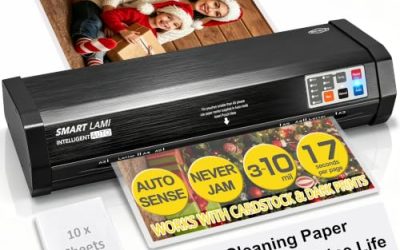
| SINCHI SmartLami C435H | Mixed jobs with no time to change settings | Auto Sense thickness detection, 3 to 10 mil |
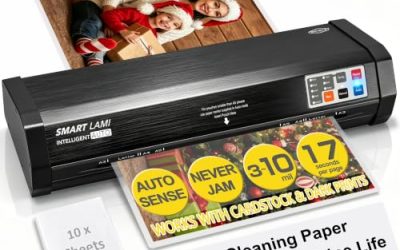
| SINCHI PowerLami LM350 | Heavy daily batches of cardstock and dark prints | 4 rollers, 48 second warm-up, 17 seconds per sheet |
| SINCHI ProLami F3410 | Shops that also apply toner foil finishes | 4 rollers, 3 to 10 mil, foil applicator mode |
| Apache AL13B10MV2 | A simple second machine for overflow work | 13 inch feed, 3 to 10 mil pouches |
How to Choose
Roller count and what it does to seal quality
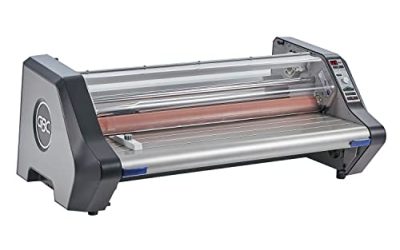
Rollers are the clearest quality signal on a pouch laminator. Two-roller machines heat and press in a single pass, which is fine for occasional letter work but leaves thick A3 pouches prone to cloudy patches and wavy edges. Four rollers add a second heated pair and a cooling pull pair, so the seal sets flat before the sheet exits. Six rollers, as on the GBC Fusion 7000L, push that further for continuous runs. For a print shop charging per sheet, roller count is the difference between handing work over and reprinting it, so treat four rollers as the floor and six as the high-volume choice.
Feed speed and warm-up, measured honestly
Manufacturers quote speed in inches or millimetres per minute, and the figures only compare cleanly when the pouch thickness matches. A machine rated at 40 inches per minute on 3 mil film will slow down on 10 mil stock, and some models, including the GBC, adjust speed automatically once they sense the pouch. Warm-up matters just as much in a shop that laminates in bursts between other jobs: a 48 to 55 second warm-up means the machine is ready before the customer reaches the counter, while a three or four minute wait quietly kills walk-in work. Check both numbers on the listing, not just the headline speed.
Maximum pouch thickness your stock actually needs
Most shop work sits between 3 and 5 mil, but the jobs that justify an A3 machine, such as rigid signage, reusable menus and mounting boards, often call for 7 or 10 mil pouches. Every machine in this guide is rated for 3 to 10 mil per side, which covers the full commercial range. The trap is buying a cheaper A3 unit capped at 5 mil and discovering the limit on the first thick order. Also check the maximum total item thickness if you laminate mounted prints, and remember that a pouch rated in microns converts at roughly 25 microns to 1 mil when you compare listings.
Jam recovery and duty features for counter work
A jam at a print counter is not an inconvenience, it is a customer’s job wrapped around a hot roller. Look for a release lever, reverse function or anti-jam feed design on the listing, and treat auto shutoff as a safety baseline rather than a bonus. Auto thickness sensing, offered by the GBC Fusion 7000L and the SINCHI C435H, removes the most common operator error, which is running a thick pouch on a thin setting. Finally, weigh the machine itself: heavier aluminium housings stay planted when staff feed large sheets quickly, while very light units walk across the counter.
The 5 Best Options
GBC Fusion 7000L

The Fusion 7000L is the closest thing here to a dedicated production machine. Its six rollers and automatic pouch thickness detection are built for counters that laminate continuously, and the listing quotes up to 45 letter documents in ten minutes, so A3 posters and signs move through without the stop-start rhythm of smaller units. The auto reverse function deals with misfeeds before they become wrapped rollers, and the one minute warm-up suits shops that power up at opening and stay hot. It is a large, heavy machine, so it wants a permanent home on the finishing bench rather than a shared desk.
Specs
- Feed width: 12 inches, sized for A3 pouches
- Rollers: 6
- Pouch thickness: 3 to 10 mil
- Warm-up: 1 minute
- Speed: up to 55 inches per minute per the listing
- Auto pouch thickness detection and auto reverse
- Includes 50 EZUse laminating pouches
- Item weight: 22 pounds
Best for: busy print and copy shops running A3 pouches throughout the day.
Watch out for: the 12 inch throat is narrower than the 13 inch machines here, so oversized pouches with wide margins leave less room for error when feeding.
ASIN: B074T4XV91
SINCHI SmartLami C435H

The SmartLami C435H removes the setting-guessing that causes most ruined pouches. Its Auto Sense system detects the combined thickness of pouch and document and sets the lamination itself, which suits shops where several staff members share one machine and jobs alternate between thin flyers and cardstock. The aluminium housing marks it out as the heavy-duty model in SINCHI’s line, and the patented anti-jamming feed structure is designed to keep a skewed pouch moving instead of wrapping. Warm-up is 50 seconds and a 3 mil letter pouch clears in about 17 seconds, so short walk-in jobs stay profitable.
Specs
- Feed width: 13 inches, laminates up to 11 x 17 inches
- Pouch thickness: 3 to 10 mil per side
- Warm-up: 50 seconds
- Speed: 40 inches per minute
- Auto Sense thickness detection with anti-jamming feed
- Housing: aluminium
- Includes 10 laminating sheets
- Item weight: 9.9 pounds
Best for: shops with rotating staff who need correct settings without training on mil charts.
Watch out for: the listing does not state a roller count, so if roller configuration is your deciding factor, compare it against the four-roller models below before ordering.
ASIN: B08MYNS5JK
SINCHI PowerLami LM350

The PowerLami LM350 is the workhorse pick: a four-roller, 13 inch machine with the fastest warm-up in this group at 48 seconds and a quoted 17 seconds per letter sheet. SINCHI positions it for cardstock and dark prints, the two jobs that expose weak machines, because dark, ink-heavy sheets absorb heat unevenly and show every sealing flaw. The no-jam design and commercial billing make it a sensible main machine for a small shop that cannot justify the GBC, and it still covers the full 3 to 10 mil range for rigid work. Ten starter sheets are included in the box.
Specs
- Feed width: 13 inches
- Rollers: 4
- Pouch thickness: 3 to 10 mil per side
- Warm-up: 48 seconds
- Speed: 17 seconds per letter-size sheet
- Heavy-duty no-jam design, works with cardstock and dark prints
- Includes 10 laminating sheets
- Item weight: 8.58 pounds
Best for: small print shops whose daily mix is cardstock, menus and dark, ink-heavy prints.
Watch out for: sheet size is listed as 12 x 18 inches, so confirm your largest pouch format against that figure if you run oversize A3 stock.
ASIN: B09DYG8K9M
SINCHI ProLami F3410

The ProLami F3410 does two jobs that print shops usually buy two machines for. As a laminator it is a four-roller, 13 inch unit running 3 to 10 mil pouches at up to 40 inches per minute after a 55 second warm-up. As a foil applicator it applies heat-transfer foil to toner prints, which opens up foiled invitations, certificates and premium business cards as a counter service. A single 3 mil letter pouch takes about 18 seconds, and the machine handles everything from ID cards to 13 x 19 inch posters. Auto shutoff and a supplied cleaning sheet round out a practical shop feature set.
Specs
- Feed width: 13 inches
- Rollers: 4
- Pouch thickness: 3 to 10 mil per side
- Warm-up: 55 seconds
- Speed: 40 inches per minute, about 18 seconds per page
- Dual function: laminator and foil applicator
- Auto shutoff, cleaning sheet included
- Includes 10 pouches
- Item weight: 6.38 pounds
Best for: shops that want foil finishing for invitations and certificates from the same machine.
Watch out for: foil results depend on toner coverage and compatible foil rolls, which are sold separately, so budget for consumables beyond the starter pouches.
ASIN: B09RZCNRWJ
Apache AL13B10MV2

The Apache takes the opposite approach to the feature-heavy machines above: a simple, compact 13 inch laminator rated for the same 3 to 10 mil pouch range, with a sheet size listing that covers A3, letter, legal and tabloid. Apache describes it as sealing 5 mil work reliably, handling thick projects in 10 mil, and even running multiple thin pouches side by side, which is genuinely useful when a batch of small cards lands at once. For a shop, its natural role is the second machine by the counter that absorbs overflow and small jobs while the main unit stays set up for A3 production work.
Specs
- Feed width: 13 inches
- Pouch thickness: 3 to 10 mil
- Sheet sizes: A3, letter, legal, tabloid
- Model: AL13B10MV2
- Item weight: 3 pounds
Best for: an affordable backup or overflow machine for small items and busy periods.
Watch out for: the listing publishes no roller count, warm-up or speed figures, so judge it as a simple backup rather than your primary production machine.
ASIN: B0FYKX4GDQ
Which One Fits Your Situation
You laminate A3 posters and signs all day
Choose the GBC Fusion 7000L. Six rollers, automatic thickness sensing and the highest quoted throughput here make it the only pick designed for continuous counter production, and auto reverse protects customer work when a sheet goes in crooked during a rush.
Several staff share one machine
Choose the SINCHI SmartLami C435H. Auto Sense removes the mil setting step entirely, so a new hire produces the same seal as your most experienced finisher, and the anti-jamming feed forgives the slightly skewed feeds that happen when the counter is busy.
Your bread and butter is menus and cardstock
Choose the SINCHI PowerLami LM350. It is specified for cardstock and dark prints, warms up in 48 seconds, and its four rollers hold a flat seal on the thick stock that menu work demands, all in a footprint a small shop can spare.
You want to sell foil finishing as an extra service
Choose the SINCHI ProLami F3410. The foil applicator mode turns toner prints into foiled invitations and certificates without a second machine on the bench, and the laminating side still covers the full 3 to 10 mil A3 range for everyday jobs.
Common Mistakes
- Buying an A3 machine capped at 5 mil, then turning away the 7 and 10 mil rigid sign work that pays best.
- Comparing headline speeds quoted on different pouch thicknesses, which makes a slow machine look faster than it is.
- Feeding pouches folded-edge last, the single most common cause of wraps and jams at a busy counter.
- Judging by warm-up claims alone and ignoring roller count, which is what decides seal quality on thick stock.
- Running one light desktop unit for a full shop day instead of keeping a cheap backup, so a single failure stops all laminating work.
Frequently Asked Questions
Can a 12 inch laminator really handle A3 pouches?
Yes, with a small caveat. An A3 pouch is just under 12 inches on its short side, so a 12 inch throat like the GBC Fusion 7000L accepts it, and GBC rates that machine for A3 work. A 13 inch machine simply leaves more margin for slightly skewed feeding, which matters when staff are working quickly.
How many rollers does a print shop machine need?
Four is a sensible minimum for paid work, because the second roller pair flattens and cools the seal, which shows on thick and dark prints. Six rollers, as on the GBC, suit continuous high-volume running. Two-roller machines are built for occasional home and classroom use and tend to produce more rejects on A3 stock.
What pouch thickness should the machine support?
Look for a 3 to 10 mil rating per side. Everyday documents use 3 to 5 mil, while menus, reusable signs and rigid display pieces commonly need 7 or 10 mil. All five machines in this guide cover the full range, so the choice comes down to speed, rollers and jam handling rather than thickness limits.
Is automatic thickness detection worth having?
For a shared shop machine, usually yes. The most common cause of a poor seal is a thick pouch run on a thin setting, and sensors on models like the GBC Fusion 7000L and SINCHI C435H remove that step entirely. If one experienced operator runs every job, manual settings are fine and can cost less.