Key takeaways
- Compare the best portable work lights for storm cleanup and repairs, from cordless tripod towers to corded dual-head stands, with specs and runtimes.
- Top Pick: DEWALT 20V MAX Cordless Tripod Light (DCL079B)
- Runner-up: Milwaukee M18 ROCKET Dual Power Tower Light (2131-20)
- Also consider: Makita 18V X2 LXT Cordless/Corded Work Light (DML809)
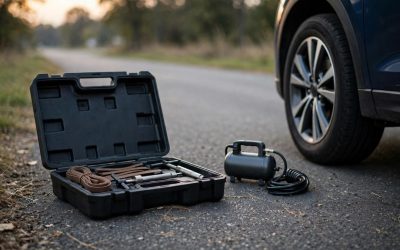
Storm cleanup and repair work rarely happens in good light. Crews clear debris at dusk, patch roofs under cloud cover, and run saws and pumps in basements where the power is still out. A portable work light on a stand solves the core problem: it floods a whole work area from above, keeps shadows off the task, and leaves both hands free for tools instead of a flashlight grip.
The five picks below cover the formats that suit cleanup and repair work. Two are cordless tripod towers built for battery platforms, one is a high-output cordless and corded area light, and two are corded or multi-power options for stationary jobs. Every output and runtime figure is the maker’s published specification, and each light is described by its power source, stand design, and stated ratings so you can match it to the way you work.
As an Amazon Associate, we earn from qualifying purchases.
Quick answer
For storm cleanup and repair work, a tripod or stand work light beats handheld lights because it floods a whole work area while both hands stay free. Cordless tower lights from DEWALT and Milwaukee suit sites without power, the Makita DML809 delivers the highest maker-rated output here, and corded dual-head models from LUTEC plus PowerSmith’s Voyager panel light cover long, stationary jobs.
DEWALT 20V MAX Cordless Tripod Light (DCL079B)

The DCL079B is DEWALT’s tripod light for the 20V MAX battery system, and it fits cleanup work where outlets are dead or too far away. The telescoping tripod raises the head high enough to light a room, a driveway work zone, or a section of fence line, then collapses for transport in a truck bed. The head rotates and pivots, so the beam can be aimed down at a repair or out across a yard.
DEWALT sells this as a bare tool, so it makes the most sense for readers who already own 20V MAX batteries for drills, saws, or the chainsaws used in storm cleanup. Output is adjustable across three brightness modes, which lets you trade brightness for runtime when a battery has to last through an evening’s work.
Specs
- Light output: up to 3,000 lumens (listing figure), 3 brightness modes
- Power source: DEWALT 20V MAX batteries; battery and charger not included
- Stand: telescoping tripod, extends to 7 feet, collapses for transport
- Head: rotating and pivoting, natural white LED
- Carry handle built into the housing
Milwaukee M18 ROCKET Dual Power Tower Light (2131-20)

Milwaukee’s 2131-20 takes a different approach to the same problem: it runs on an M18 battery or plugs into AC power, so the same light covers the first night of an outage and the long repair days after power returns. The mast extends for area lighting and folds down to a collapsed length of 44.8 inches for storage, and the head can be aimed independently of the base.
The three output modes step down from full brightness to a low setting that stretches a single battery charge across a long shift. That flexibility suits repair work that moves between a dark interior and an outdoor cleanup zone, because the light never has to wait for a charged pack when a cord is available.
Specs
- Light output: 2,500 lumens high, 1,100 lumens medium, 700 lumens low (maker-stated)
- Runtime with an M18 XC5.0 battery: 4 hours high, 8 hours medium, 13 hours low (maker-stated)
- Power source: M18 battery or AC cord (dual power); battery not included
- Stand: telescoping tower, extends to 7 feet; collapsed length 44.8 inches
- Weight: 22.97 pounds per the maker’s spec sheet
Makita 18V X2 LXT Cordless/Corded Work Light (DML809)
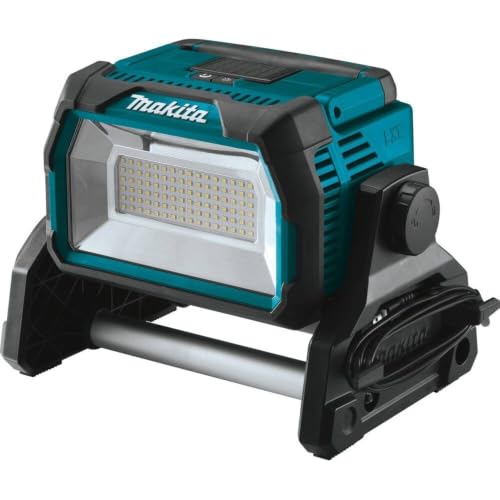
The DML809 is the output leader in this group. Makita rates it at 10,000 lumens on high, with medium and low modes for smaller spaces, and it runs either on two 18V LXT batteries or on the included AC power cord. That makes it a fit for big cleanup jobs — a flooded basement, a roof section, or a large yard — where a smaller light would leave the edges dark.
The housing holds two batteries but draws on one at a time, switching to the second when the first runs down, which extends cordless runtime without a mid-job swap. Makita’s manual rates the light IP65 on battery power and IP20 on AC power, so cordless use is the right mode for wet outdoor cleanup, while corded use belongs indoors or under cover.
Specs
- Light output: 10,000 lumens high, 4,000 lumens medium, 2,000 lumens low (maker-stated)
- Runtime with two 6.0Ah LXT batteries: 1.7 hours high, 4.5 hours medium, 8.5 hours low (maker-stated)
- Power source: one or two 18V LXT batteries, or AC via the included 2.5-meter cord; batteries and charger not included
- Ratings: IP65 on battery power, IP20 on AC power (maker’s manual)
- LEDs: 96; tripod mounting supported with an optional tripod
LUTEC 25000 Lumen Dual Head LED Work Light with Stand

For stationary work where a cord can reach, this LUTEC stand light puts two adjustable heads on one telescoping tripod. Each head can be aimed separately, which helps when a repair needs light from two angles to cut shadows — under a vehicle, along a wall, or across a workbench during a long indoor repair session. Six brightness levels let you dial output from a soft fill to the full maker-rated figure.
Because it is corded only, this is a light for garages, workshops, and generator-backed cleanup sites rather than remote work. The listing rates the housing IP65, and the 8.2-foot three-prong cord gives some freedom to position the stand away from the outlet, though most users will pair it with an extension cord.
Specs
- Light output: up to 25,000 lumens across two heads (maker-stated), 6 brightness levels
- Color temperature: 5,000K daylight
- Power source: corded electric, 8.2-foot 3-prong power cord
- Stand: telescoping tripod with flip locks; heads rotate for aiming
- Rating: IP65 per the product listing
PowerSmith Voyager 5000 Lumen LED Work Light (PVLP50A)

The PowerSmith Voyager takes a panel format instead of a tower. Two foldable, rotatable light panels spread light across a wide area, and each panel has its own brightness settings, so one side can light a work surface while the other fills the room. It mounts on a standard work light tripod, hangs from a keyhole slot, or stands on its own handle for smaller tasks.
Its standout feature is three-way power. The light runs on its included Voyager rechargeable battery, on AC power through its adapter, or on major-brand cordless tool batteries using adapters sold separately. For cleanup kits that already mix battery brands, that flexibility means the light keeps working with whatever charged pack is on hand.
Specs
- Light output: up to 5,000 lumens (maker-stated), two adjustable panels
- Brightness: 4 settings per panel
- Power source: included Voyager rechargeable battery, AC adapter, or tool batteries with adapters (sold separately)
- Mounting: tripod mount, keyhole hanging slot, detachable flex handle
- Warranty: 5-year warranty per the maker’s manual
How to choose
Start with power. If your cleanup work happens where outlets are out, a battery tower light from the platform you already own — DEWALT 20V MAX, Milwaukee M18, or Makita LXT — avoids buying into a second battery system. Dual-power models, like the Milwaukee 2131-20 and the Makita DML809, remove the runtime worry entirely by accepting a cord when one is available. Corded-only lights like the LUTEC cost less output per tier and never run down, but they tie you to an outlet or a generator.
Next, match output to area. Maker lumen figures are not measured the same way across brands, but within this group the step from roughly 2,500 to 3,000 lumens suits a single room or a focused repair zone, mid-range panel and dual-head lights cover a garage or driveway, and the DML809’s 10,000-lumen high mode is aimed at large spaces. Remember that runtime falls fast on high: most cordless lights here run only a few hours at full output, so plan on the medium mode for long jobs.
Finally, check the stand and the ratings. A telescoping tripod that reaches about 7 feet throws light over a work area instead of into it, and a head that rotates and pivots matters when the stand cannot sit where you want it. For wet work, treat IP ratings as label facts: the Makita is rated IP65 on battery power but only IP20 on AC, and the LUTEC listing states IP65, while the DEWALT and Milwaukee listings do not headline an IP rating, so give those two more shelter from direct rain.
Who should skip
Skip the bare-tool battery lights if you do not already own that brand’s batteries and charger; the added cost of a first battery kit changes the tier entirely, and a corded stand light will serve you better. Skip corded-only models if your cleanup work is mostly remote — fence lines, roofs, and roadside repairs — because a dead outlet makes the light useless. Skip the highest-output options if your work is mostly small indoor repairs, where a mid-range panel light is easier to move and less likely to glare. And if you only need light for walking, inspections, or tight spaces, a headlamp or handheld light is the right tool; stand lights are built for fixed work areas.
FAQ
Can these work lights run from a generator during an outage?
Yes. The corded and dual-power models plug into a standard outlet, so a home backup generator or a large power station can run them like any other corded tool. The battery models also work well alongside a generator, since packs can recharge while corded lights carry the load.
How long will a cordless work light run on one battery?
It depends on the mode. Maker figures in this group range from under two hours on the highest-output settings to around thirteen hours on the Milwaukee’s low mode with a 5.0Ah battery. Treat high modes as short-burst settings and plan long jobs around medium or low.
Are work lights safe to use in rain during cleanup?
Only within their stated ratings. The Makita DML809 is rated IP65 on battery power but IP20 on AC power, so it should be used cordless outdoors and corded indoors. The LUTEC listing states IP65. Where a maker states no rating, keep the light under cover and off wet ground where possible.
Is a dual-head light better than a single-head tower?
Dual heads help when one position cannot light the whole task, because each head aims separately and shadows soften. A single-head tower on a taller mast usually throws light farther across an open area. Choose based on whether your work is one wide zone or several angled surfaces.
Final verdict
For most cleanup and repair kits, the best portable work light is the one that matches the batteries and outlets you already have. DEWALT 20V MAX owners get a strong premium pick in the DCL079B, Milwaukee users get the flexibility of dual power in the 2131-20, and Makita’s DML809 is the choice when a large, dark space needs the highest maker-rated output in this group. If the work stays near power, the LUTEC dual-head stand delivers the most stated lumens in the mid-range tier, and the PowerSmith Voyager is the budget-friendly panel light whose three-way power keeps it useful across mixed tool kits.