Our Short List of 3

- Best for: Overnight essentials where low noise matters most.
- Starting watts: 2,200; running watts: 1,800
- Engine: Honda GXR120, 121 cc, 4-stroke
- Fuel tank: 0.95 gallon, gasoline
- Run time: 3.2 hours at rated load; 8.1 hours at quarter load

- Best for: A first generator for fridge, lights, and charging duty.
- Starting watts: 2,250; running watts: 1,800
- Engine: 79.7 cc, 4-stroke
- Fuel tank: 1 gallon, gasoline
- Noise: 53 dBA
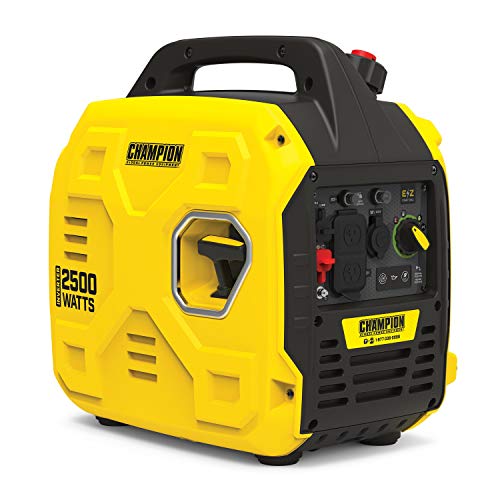
- Best for: One-person carrying and long light-load run time.
- Starting watts: 2,500; running watts: 1,850
- Engine: 79 cc Champion
- Fuel tank: 1.1 gallon, gasoline
- Run time: up to 11.5 hours at quarter load
All 4 Picks at a Glance
| Product | Specs | Action |
|---|---|---|
| Honda EU2200i |
| Check price on Amazon |
| WEN 56225i |
| Check price on Amazon |
| Champion 200951 |
| Check price on Amazon |
 Pulsar PGD40iSCO |
| Check price on Amazon |
Key takeaways
- Four portable inverter generators for storm outages compared by running watts, run time, noise and fuel, with sizing notes for fridges, pumps and furnaces.
When a storm cuts the grid, the real decision is not whether to own a generator but how much of the house has to stay alive, for how many nights, on fuel you can store in a garage corner. A refrigerator, a furnace blower, lights, and a medical device draw far less than a whole panel, yet their motor surges punish a machine that was sized by its headline number alone.
This roundup is for households preparing for outages that last from one night to several days, including anyone running a sump pump, a CPAP, or a trailer parked at home. Every pick is a portable inverter generator chosen from its Amazon listing, using the running watts, run time, noise figure, fuel type, and outlets the listing itself states, so the comparison rests on published figures rather than promises.
Quick Picks
As an Amazon Associate we earn from qualifying purchases.
| Product | Best for | Key spec from title |
|---|---|---|
| Honda EU2200i | Quiet overnight essentials | 1,800 running watts; 48 dBA at quarter load |
| WEN 56225i | A first storm kit that stores well | 1,800 running watts; fuel shut-off valve |
| Champion 200951 | Carrying by hand to a safe spot | 2,500 starting watts; 39 lb listed weight |
| Pulsar PGD40iSCO | A fridge plus one heavy circuit | 3,200 running watts; 30A RV outlet |
How to Choose
Start With Running Watts, Not the Box Number
Generators advertise two outputs, and the smaller one decides what stays on. Running watts are what the machine sustains for hours; starting watts cover the brief surge when a refrigerator compressor, sump pump, or furnace blower kicks in. Add the running draw of everything you plan to use at once, then leave headroom for the largest motor surge. In this class, roughly 1,800 running watts handles a fridge, lights, a router, and phone charging with care. Adding a well pump, a space heater, or a window air conditioner pushes you toward 3,000 running watts or a parallel pair.
Run Time Is a Fuel Storage Question
Listings quote run time at a stated load, usually quarter or half, and the figure falls fast as you add appliances. A small tank that lasts all night at quarter load may need a refill before dawn once a fridge and furnace blower cycle together. Before a storm, what matters is the fuel you can store safely and rotate: gasoline needs stabilizer and fresh cans every few months, while propane stores for years but needs a dual-fuel machine. A fuel shut-off valve also helps, because running the carburetor dry keeps old fuel from gumming it up between outages.
Noise Figures and Safe Placement
Noise is quoted in decibels at a set distance, often 23 feet, and at a light load, so two listings are only comparable when both state the same conditions. A machine that reads quiet at quarter load gets louder when a pump starts. Placement matters more than a few decibels: run any fuel generator outdoors, well away from windows, doors, and vents, with the exhaust pointed away from the house. Carbon monoxide has no smell and builds up fast in a garage or porch. Models with a CO sensor add a shutoff layer, but they never make indoor or garage running safe.
Outlets, Clean Power, and Growing Later
Inverter machines produce clean power that suits laptops, phone chargers, modern furnace controls, and medical devices, which is the main reason to choose one over a conventional frame generator. Check the panel against your plan: a 30-amp RV outlet feeds a trailer or one heavy circuit, duplex household outlets cover cords, and a 12-volt outlet handles small charging. Parallel capability is the other growth path, letting two small units share one load and run separately when demand is light. Confirm the parallel kit matches your exact model, because cords and kits are not universal across brands.
The 4 Best Options
Honda EU2200i
- Best for: Overnight essentials where low noise matters most.
- Starting watts: 2,200; running watts: 1,800
- Engine: Honda GXR120, 121 cc, 4-stroke
- Fuel tank: 0.95 gallon, gasoline
- Run time: 3.2 hours at rated load; 8.1 hours at quarter load
Overnight essentials where low noise matters most.
Gasoline only with recoil start, and the listing is the 49-state version, so confirm the variant and California eligibility before ordering.
The Honda EU2200i suits households that want the quietest path through an outage. Its listing pairs 2,200 starting watts with 1,800 running watts, enough for a refrigerator, a furnace blower, lights, and phone charging when loads are staggered. Honda publishes both a rated-load and a quarter-load noise figure, which makes overnight placement easier to judge than a single vague number. The GXR120 engine and Eco-Throttle stretch a small tank through the night at light load. It is gasoline only and recoil start only, so it asks for a steady hand and stored fuel rather than push-button convenience.
WEN 56225i
- Best for: A first generator for fridge, lights, and charging duty.
- Starting watts: 2,250; running watts: 1,800
- Engine: 79.7 cc, 4-stroke
- Fuel tank: 1 gallon, gasoline
- Noise: 53 dBA
A first generator for fridge, lights, and charging duty.
No CO sensor is named in the listing, so safe placement carries the whole safety load; check the outlet layout on the current listing before ordering.
The WEN 56225i covers the same core storm loads as the Honda on a simpler panel. The listing gives 2,250 starting watts and 1,800 running watts from a 79.7 cc engine, with a fuel shut-off valve that lets the carburetor run dry before storage, a habit that prevents most no-start surprises after months in a garage. It is parallel capable, so a second unit can join later if a well pump or bigger air conditioner enters the picture. Buyers give up the Honda’s published two-point noise data and dealer network, and should check the current panel layout before ordering.
Champion 200951
- Best for: One-person carrying and long light-load run time.
- Starting watts: 2,500; running watts: 1,850
- Engine: 79 cc Champion
- Fuel tank: 1.1 gallon, gasoline
- Run time: up to 11.5 hours at quarter load
One-person carrying and long light-load run time.
Gasoline only, with no propane option and no CO shutoff named in the listing, so keep it well clear of the house and store fuel carefully.
The Champion 200951 is the carry-it-anywhere pick. At 39 pounds listed weight it is the lightest machine here, which matters when one person has to move it from a shed to a safe spot in the yard while rain is falling. Output is 2,500 starting watts and 1,850 running watts, and the 1.1-gallon tank is listed for up to 11.5 hours at quarter load, long enough to sleep through. It stays gasoline only, with no propane option and no CO sensor in the listing name, so placement discipline matters more than with the dual-fuel machines.
Pulsar PGD40iSCO
- Best for: Bigger surge loads and RV outlet duty.
- Peak watts: 4,000; rated watts: 3,200
- Engine: 145 cc, 4-stroke OHV
- Fuel tank: 1 gallon, gasoline
- Noise: 59 dB
Bigger surge loads and RV outlet duty.
The 1-gallon tank means frequent refills on storm duty, and run time drops quickly once a heavy circuit joins the load.
The Pulsar PGD40iSCO is the step up when 1,800 running watts will not stretch far enough. Its listing states 4,000 peak watts and 3,200 rated watts from a 145 cc engine, yet the machine still weighs 47.3 pounds, close to the smaller units above. A 30-amp RV outlet joins the household outlets, so it can feed a trailer or a single heavy circuit without adapters. The trade is fuel endurance: the tank holds one gallon, so storm duty means more frequent refills, and at 59 dB it is the loudest listing here.
Which One Fits Your Situation
Keeping a fridge, lights, and phones alive overnight
Any of the three smaller machines handles this load if you stagger starts and let the fridge cycle. The Honda EU2200i and Champion 200951 stretch fuel furthest at light load, and their lower noise figures help when the unit sits near a bedroom wall. Keep cords short, heavy gauge, and routed so nobody trips over them in the dark.
A sump pump and furnace blower through a long storm
Motor starts dominate this picture. A sump pump and a furnace blower can surge together and stall a small unit that looked fine on paper. The Pulsar PGD40iSCO gives the surge headroom in a single machine, while two paralleled 2,200-watt units do the same job with redundancy. Never backfeed a panel; use an inlet box and transfer switch fitted by an electrician.
An RV or trailer serving as the backup shelter
If the family sleeps in a trailer during an outage, the outlet panel decides the pick. The Pulsar carries a 30-amp RV outlet, so one cord feeds the trailer without adapters. The Honda EU2200i pairing path also works where a 30-amp plug is fitted, but check the exact variant on the listing before ordering, because outlet layouts differ between versions.
A medical device that cannot lose power
For a CPAP or similar device, clean inverter output and overnight run time matter more than peak watts. The Honda EU2200i at quarter load is listed for up to 8.1 hours on its small tank, which covers a night for most single-device setups. Keep a charged battery backup beside the bed as well, because a generator can still run dry or trip a breaker.
Common Mistakes
- Sizing by the starting-watt headline and ignoring the running figure that has to carry the load for hours.
- Running the generator in a garage, on a porch, or under a window to keep it dry; carbon monoxide drifts indoors fast.
- Storing gasoline for a year without rotating it, then blaming the machine when stale fuel blocks the carburetor.
- Plugging in a space heater, a kettle, and a microwave together and tripping the breaker in the middle of the storm.
- Skipping the first oil change and a spare plug, so the second outage starts with a machine that will not start.
Frequently Asked Questions
Can one of these run a refrigerator and a furnace blower together?
Usually yes, if the two motor starts do not land at the same moment. A fridge and a modern furnace blower together often sit within 1,800 running watts, but their combined surge can exceed a small unit. The 3,200-watt Pulsar or a paralleled pair gives margin. Check each appliance plate for its listed draw before the storm, not during it.
How far from the house should the generator sit?
Follow the manual for your model and keep the machine outdoors, well clear of windows, doors, and vents, with the exhaust aimed away from the building. Twenty feet is a common working distance that also keeps noise down. Never run one in a garage, basement, or covered porch, even with the door open, because exhaust pools in enclosed air.
Is inverter power safe for laptops and medical devices?
Yes. Inverter generators produce a clean sine wave with low harmonic distortion, which is what sensitive electronics are built for. That covers laptops, phone chargers, modern TV sets, furnace control boards, and CPAP machines. A conventional generator can run the same loads, but its rougher output is harder on electronics over long outages, which is why this class exists.
Can I refuel while the generator is still running?
No. Shut the machine down and let the exhaust and engine cool before opening the fuel cap, because spilled gasoline on a hot muffler can ignite. The pause is also a good moment to check the oil level and clear leaves from around the unit. Plan refills around natural breaks, such as morning and evening, rather than topping up at random.