Our Short List of 3
All 3 Picks at a Glance
| Product | Specs | Action |
|---|---|---|
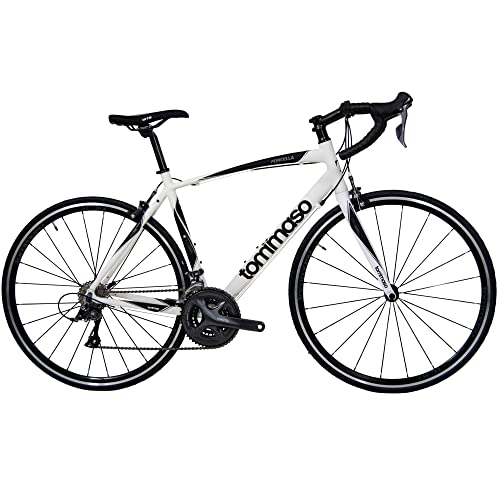 Tommaso Forcella — the endurance road option | Check price on Amazon | |
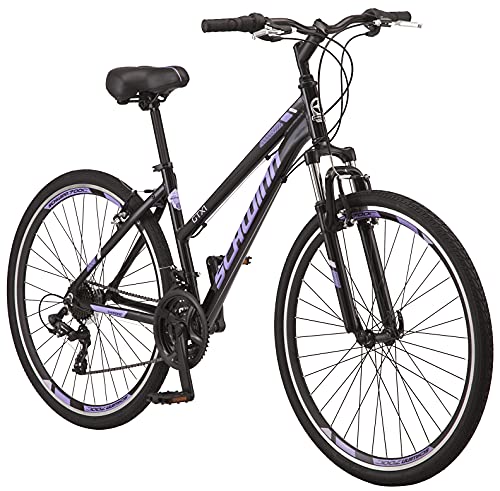 Schwinn GTX — the comfort hybrid option | Check price on Amazon | |
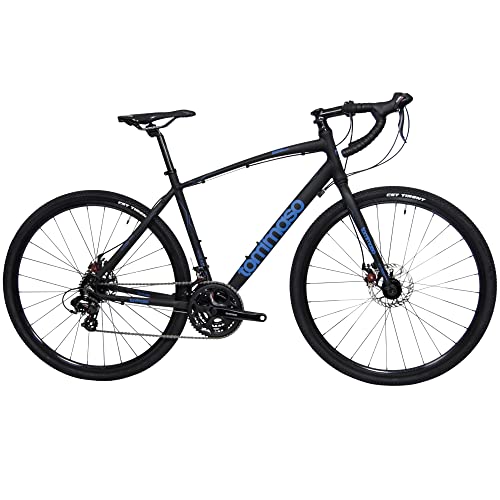 Tommaso Siena — the all-surface option, honestly framed | Check price on Amazon |
Key takeaways
- The best bike for speed and comfort pairs endurance geometry with a relaxed fit. Forcella, Schwinn GTX and Siena picks compared by road, town and path riding.
Speed and comfort pull in opposite directions on a bicycle, but they are not enemies. A pure racing bike is fast because it puts the rider low, stretched and stiff, and that is exactly why it beats you up over two hours. A beach cruiser is comfortable for twenty minutes and painfully slow everywhere else. The bikes that genuinely do both sit in the middle: endurance road bikes with relaxed geometry, comfort hybrids with efficient wheels, and all-surface machines whose wider tyres soak up the road so you can keep the pace up without paying for it in your hands, shoulders and back.
This guide compares three verified Amazon US listings that approach the speed-and-comfort balance from different directions, then explains the fit and setup details that matter more than any single component. If your riding is smooth tarmac and longer distances, the endurance road bike is the answer. If it is town riding, paths and mixed surfaces, the hybrid or the all-surface bike will feel faster in the real world because you will ride it more willingly.
Disclosure: As an Amazon Associate, this site may earn from qualifying purchases made through links in this article, at no additional cost to you.
What actually makes a bike fast and comfortable at the same time
Four things decide whether a bike feels quick without feeling harsh.
Geometry. Endurance road frames raise the front end and shorten the reach compared with race frames, so your weight is shared between saddle and hands instead of dumped onto your wrists. A slightly slacker head angle calms the steering at speed. On hybrids, an upright position trades aerodynamic efficiency for all-day ease, which is the right trade for rides under an hour.
Tyre volume. This is the cheapest speed-and-comfort upgrade in cycling. A wider tyre run at sensible pressure rolls over rough tarmac instead of bouncing off it, and a bouncing tyre is a slow tyre. Endurance road bikes that clear 28 to 32 mm rubber, and all-surface bikes on 38 to 45 mm rubber, hold speed on real roads better than a stiff race bike on narrow tyres.
Vibration control. A carbon fork on an aluminium frame is the classic budget combination because the fork is where most road buzz reaches your hands. Suspension forks on hybrids do the same job more bluntly and add weight, which is fine at town pace.
Gearing you will actually use. A compact or triple chainset with a wide cassette keeps your cadence comfortable on climbs. Grinding a too-tall gear is slow and exhausting; spinning a sensible gear is how riders stay fast at the end of a ride.
The picks
Tommaso Forcella — the endurance road option
The Tommaso Forcella (ASIN B0F4NTMP45) is the pick for riders whose speed and comfort problem is really a road-riding problem: long miles on tarmac, where an aggressive race position stops being fun after the first hour. The Forcella pairs an aluminium frame with a carbon fork, which is the combination that has defined the affordable endurance category for years — the frame keeps the structure stiff where power goes in, and the carbon fork takes the sharp edge off broken pavement before it reaches the handlebar.
The drivetrain is Shimano Claris R2000 in a 3×8 arrangement. A triple chainset sounds old-fashioned next to the compact doubles and 1x setups on newer machines, but for this job it makes sense: the spread of gears is wide, the steps between them are small, and there is always a comfortable cadence available whether you are cruising on the flat or winching up a gradient at the end of a long day. Claris also shifts from the hoods with proper road levers, so your hands stay in the relaxed endurance position instead of reaching for frame-mounted controls.
Choose the Forcella if most of your riding is on paved roads, your rides regularly pass the one-hour mark, and your discomfort shows up as sore hands, a stiff neck or a numb backside rather than a need to sit bolt upright. Confirm the current build and size run on the live listing before ordering, because entry-level road bikes change specification between production runs and the frame size matters more than any component on it.
Schwinn GTX — the comfort hybrid option
The Schwinn GTX (ASIN B08239VFK6) answers a different version of the question. For town riding, cycle paths, commuting and fitness loops on mixed pavement, the fastest bike is the one that does not punish you for riding it, and the GTX is built around that idea: an aluminium dual-sport frame, a suspension fork to flatten kerb edges and rough path surfaces, 700c wheels that roll efficiently once moving, and a 21-speed drivetrain with straightforward trigger shifting.
The upright riding position is the comfort story here. Your weight sits on the saddle, your head is up where you can see traffic, and your wrists carry almost nothing. The honest trade is aerodynamic: above a certain pace the wind resistance of an upright rider costs more speed than the bike can give back, and no hybrid fixes that. Below that pace — which is where commuting, path riding and most fitness riding actually happens — the GTX gives up very little and asks very little of your body.
Choose the GTX if your rides mix road, path and light gravel, if you want flat bars and simple controls, or if a drop-bar position has never agreed with your back. It is also the natural pick for riders returning to cycling, because everything about it is forgiving: the gears, the brakes, the position and the handling.
Tommaso Siena — the all-surface option, honestly framed
The Tommaso Siena (ASIN B077735F9M) is a gravel bike, and it belongs in this guide only with that stated plainly. It is not a road bike, and on smooth tarmac with a strong rider it will not match the Forcella. What it does is keep its speed where the Forcella cannot go: broken lanes, grit-covered back roads, towpaths and the kind of surfaces that make a narrow-tyred road bike slow down, tense up and rattle its rider apart.
The wider tyres are the mechanism. Run at appropriate pressure they float over washboard and cracked surfaces that force a road bike to brake, and the more relaxed gravel geometry keeps the handling calm when the surface changes mid-corner. If your local riding is a patchwork of decent tarmac and everything else, the Siena may be the fastest of these three bikes door to door, because it never has to stop being comfortable.
Choose the Siena if your routes leave good pavement regularly, if you want one bike for road and light off-road exploring, or if comfort on bad surfaces matters more to you than outright pace on good ones.
Fit and setup: where speed and comfort are really decided
Whichever bike you choose, these adjustments decide whether it delivers both halves of the brief.
Start with frame size. A bike one size too large forces a stretched reach that no stem swap fully fixes, and a bike too small cramps the position and overloads the hands. Use the maker’s height chart as a starting point and favour the smaller size if you fall between two — a longer stem is an easier correction than a shorter one.
Set saddle height before anything else. A saddle set too low tires the legs and feels slow; too high rocks the hips and causes the back and saddle soreness riders blame on the seat. The heel-on-pedal method gets most riders close: with your heel on the pedal at the bottom of the stroke, your leg should be nearly straight without your hip tilting to reach.
Use the tyre volume you paid for. Riders routinely over-inflate wide tyres to the number printed on the sidewall, which is a maximum, not a recommendation. Softer tyres within the maker’s range grip better, roll better on rough surfaces and remove most of the buzz that makes a bike feel harsh. A floor pump with a gauge makes this repeatable.
Contact points are personal. Saddle shape, bar tape thickness and glove padding change comfort more than frame material does. Budget a little time and money to adjust these after the first few rides rather than expecting the stock setup to be perfect for your body.
Living with the choice: commuting, hills and weather
The speed-and-comfort balance shifts with the riding you actually do, and it is worth testing your shortlist against your real week rather than an imagined one. For commuting, the hybrid’s upright view over traffic, flat-bar control and tolerance of rough surfaces usually beat the road bike’s extra pace, because the commute is decided by junctions, surfaces and confidence rather than cruising speed. The road bike claws the advantage back the moment the commute becomes a training ride on decent tarmac.
Hills expose gearing more than any other component. All three picks carry wide, forgiving gear ranges, and that is deliberate for this brief: the rider who can stay seated and spin up a climb arrives at the top still comfortable and still fast, while the rider forced out of the saddle by tall gearing pays for it at every subsequent mile. If your area is genuinely mountainous, treat the lowest gear as a headline specification when you compare the live listings.
Weather is the quiet factor. Wider tyres, like the Siena’s, keep their grip and composure on wet, gritty roads where narrow rubber feels nervous, and disc-free rim brakes on entry-level road and hybrid builds need earlier, gentler application in the rain. None of this disqualifies any pick here; it simply means the all-surface bike’s comfort advantage grows as conditions worsen, and the endurance road bike’s speed advantage grows as they improve.
Which one should you buy?
If your riding is paved, longer and pace-conscious, the Tommaso Forcella is the balanced answer: endurance geometry, a carbon fork and gearing that never leaves you grinding. If your riding is urban, mixed-surface and mostly under an hour, the Schwinn GTX is faster in the ways that count — you will ride it more, in more places, with less recovery between rides. If your routes regularly leave good tarmac behind, the Tommaso Siena keeps its composure and its speed where the other two have to back off.
All three listings should be checked live before you order: confirm the frame size, the current component build and that the listing is the model described here. Sizes and specifications on entry-level bikes change between seasons, and the right bike in the wrong size is the wrong bike.