Our Short List of 3

- Best for: A first outdoor or attic antenna for a suburban home adding free local channels beside AT&T TV.
- Maximum range: 70 miles
- Bands: VHF and UHF
- Supports 4K and 1080p HD smart TV signals
- J mount included for attic or outdoor mounting

- Best for: Suburban homes with towers in several directions that need one antenna to cover them all.
- Maximum range: 70+ miles
- Bands: UHF, 470-608 MHz
- Multi-directional reception with four patented loops
- 20-inch mast with reflectors included
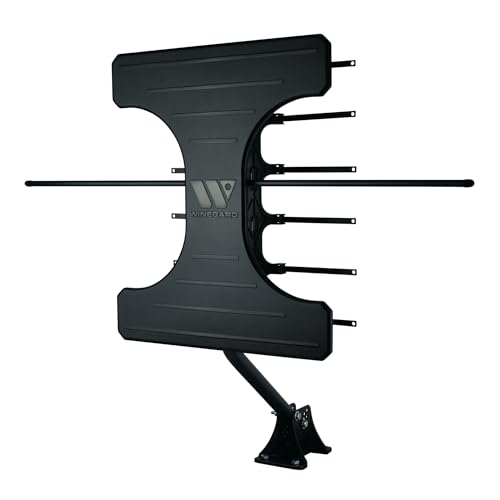
- Best for: Rural and fringe homes where weak signals need clean amplification to stay watchable.
- Maximum range: 70 miles
- Bands: High-VHF and UHF
- Embedded Boost ultra-low-noise amplifier with Clear Circuit technology
- 3 ft USB power cable with 110V adapter included
All 4 Picks at a Glance
| Product | Specs | Action |
|---|---|---|
| GE Outdoor HD Digital TV Antenna 29884 |
| Check price on Amazon |
| Antennas Direct ClearStream 4 |
| Check price on Amazon |
| Winegard Elite 7550 |
| Check price on Amazon |
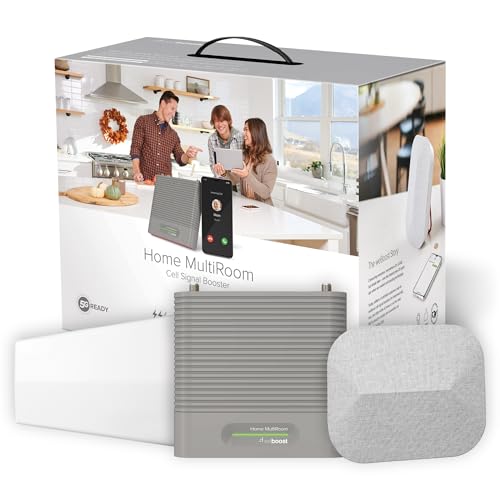 weBoost Home MultiRoom |
| Check price on Amazon |
Key takeaways
- The 5 best AT&T home antennas for November 2026: outdoor and indoor TV antennas that add free local channels beside an AT&T plan, plus a booster for weak AT&T signal at home.
An AT&T household usually has two separate reception problems, and they rarely share one fix. The first is television: an AT&T streaming plan covers national channels and on-demand libraries, yet local news, weather and sports often sit outside it or cost extra to add. The second is signal: a phone or an AT&T Internet Air gateway can struggle in a basement, a metal-roofed room or a house set back from the nearest tower. Both problems come down to what the air around the house actually delivers.
This guide covers both sides of that decision. The first four picks are over-the-air TV antennas that pull free local broadcasts into a home alongside an AT&T TV or internet plan, from a compact attic unit to a long-range amplified outdoor model. The last pick is a cellular booster that strengthens AT&T mobile signal indoors. Every product below was chosen from its name and specifications on its Amazon listing.
Quick Picks
As an Amazon Associate we earn from qualifying purchases
| Product | Best for | Key spec from title |
|---|---|---|
| GE Outdoor HD Digital TV Antenna 29884 | A first outdoor or attic install on a modest budget | 70-mile range, VHF/UHF, J mount included |
| Antennas Direct ClearStream 4 | Suburban homes with towers in several directions | 70+ mile range, multi-directional UHF |
| Winegard Elite 7550 | Weak or distant signals that need amplification | 70-mile range, embedded amplifier, VHF/UHF |
| weBoost Home MultiRoom | Weak AT&T mobile signal across several rooms | Boosts 4G LTE and 5G up to 5,000 sq ft |
| Antennas Direct ClearStream Eclipse Amplified | Renters and apartments that cannot mount anything outside | 50+ mile range, amplified indoor UHF antenna |
How to Choose
Start with a reception report, not a mileage claim
A box that promises 70 miles means little until the towers around the address are mapped. Free reception tools show the distance, direction and band of every local transmitter, and that report decides almost everything else. Towers clustered in one direction suit a directional antenna aimed once and left alone, while towers spread around the compass call for a multi-directional design. A house under 30 miles from strong transmitters often needs nothing more than an indoor panel, so checking the report first keeps a buyer from paying for range that will never be used.
Match the antenna to the bands the local stations use
Over-the-air broadcasts travel on UHF and on high VHF, and many antennas cover only one of them well. A home whose local channels include a VHF station needs an antenna with VHF elements, such as a dipole bar or a Yagi-style array, or that station simply will not appear in a channel scan. UHF-only models can be excellent in cities where every station broadcasts on UHF, but they leave a real gap elsewhere. The reception report lists the real RF channel for each station, so the band question has a factual answer before anything is ordered.
Decide where the antenna will live before choosing a model
Placement shapes reception more than any single specification. An outdoor or attic mount sits above most of the roof, walls and trees that weaken a signal, which is why the same antenna performs far better on a mast than behind a television. Renters, apartment dwellers and anyone who cannot drill into a roof need a flat indoor design that grips a window or wall instead. Attic installs sit in between: no weather exposure and no exterior work, but roofing material and foil-backed insulation still cost some signal strength.
Treat amplification as a tool, not a default upgrade
An amplifier helps when a long cable run or a splitter divides a weak signal among several televisions, and it is close to essential for fringe reception far from the towers. Near strong transmitters the same amplifier can overload the tuner and make reception worse, turning clear channels into broken ones. Homes close to towers should start with a passive antenna and add amplification only if channels drop out. When amplification is needed, a low-noise design matters more than a large gain number, because noise added at the antenna rides along with the signal.
The 5 Best Options
GE Outdoor HD Digital TV Antenna 29884
- Best for: A first outdoor or attic antenna for a suburban home adding free local channels beside AT&T TV.
- Maximum range: 70 miles
- Bands: VHF and UHF
- Supports 4K and 1080p HD smart TV signals
- J mount included for attic or outdoor mounting
A first outdoor or attic antenna for a suburban home adding free local channels beside AT&T TV.
The passive design has no amplifier, so a very long cable run or a splitter feeding several televisions can weaken the signal.
The GE 29884 is the sensible starting point for a household that wants an outdoor or attic antenna without committing to a large rig. Its compact Yagi-style body mounts on the included J mount, it covers both VHF and UHF bands, and it is rated for a 70-mile range, which covers most suburban and small-town addresses. Because it is a passive design with no amplifier to power, installation stays simple: mount it, aim it toward the towers, run coax to the television and scan for channels. It suits a first cord-cutting setup beside an AT&T streaming plan, where the goal is local channels at the lowest fuss.
Watch out for: The passive design has no amplifier, so a very long cable run or a splitter feeding several televisions can weaken the signal.
Antennas Direct ClearStream 4
- Best for: Suburban homes with towers in several directions that need one antenna to cover them all.
- Maximum range: 70+ miles
- Bands: UHF, 470-608 MHz
- Multi-directional reception with four patented loops
- 20-inch mast with reflectors included
Suburban homes with towers in several directions that need one antenna to cover them all.
This is a UHF-only antenna, so a local station broadcasting on high VHF will need a different model or an added VHF element.
The ClearStream 4 fits homes where the broadcast towers sit in more than one direction. Its four patented loop elements and reflectors give it a multi-directional pattern, so it catches stations spread across the horizon without constant re-aiming, and its 70+ mile range covers most suburban addresses with room to spare. The package includes a 20-inch mast with reflectors and mounting hardware, and the antenna works indoors, in an attic or outdoors. It is a UHF design, so it shines brightest where the local stations broadcast on UHF, and its NEXTGEN TV support keeps it relevant as broadcast standards change.
Watch out for: This is a UHF-only antenna, so a local station broadcasting on high VHF will need a different model or an added VHF element.
Winegard Elite 7550
- Best for: Rural and fringe homes where weak signals need clean amplification to stay watchable.
- Maximum range: 70 miles
- Bands: High-VHF and UHF
- Embedded Boost ultra-low-noise amplifier with Clear Circuit technology
- 3 ft USB power cable with 110V adapter included
Rural and fringe homes where weak signals need clean amplification to stay watchable.
Amplification can overload a tuner near strong transmitters, so homes close to towers should confirm the signal is genuinely weak before choosing an amplified model.
The Winegard Elite 7550 is the pick for addresses where the signal arrives weak and needs help. Its embedded Boost amplifier uses Clear Circuit technology to lift VHF and UHF signals while adding very little noise of its own, and the 70-mile range reaches towers that passive antennas miss. The compact housing mounts in an attic or outdoors, and an LTE filter helps keep nearby mobile signals from interfering with television reception. It suits rural and fringe households, and anyone whose channel scan keeps dropping the stations at the edge of the market.
Watch out for: Amplification can overload a tuner near strong transmitters, so homes close to towers should confirm the signal is genuinely weak before choosing an amplified model.
weBoost Home MultiRoom
- Best for: Homes where AT&T calls and data fade indoors but a usable signal exists outside.
- Coverage: up to 5,000 sq ft
- Boosts 4G LTE and 5G signals
- Works with all major U.S. carriers, including AT&T, Verizon and T-Mobile
- Model number: 470144
Homes where AT&T calls and data fade indoors but a usable signal exists outside.
A booster cannot invent coverage; if no AT&T signal reaches the outdoor antenna at all, this kit will not help.
The weBoost Home MultiRoom answers the other half of the AT&T home problem: mobile signal that fades indoors. It is a cellular booster kit built for a house rather than a car, with an outdoor antenna that pulls in the existing AT&T signal and an indoor antenna that rebroadcasts it across up to 5,000 square feet. That coverage suits a multi-room home, a home office or a basement where calls drop and data stalls. It works with all major United States carriers, so every phone in the household benefits at once. It does not create signal where none exists outside, so a usable outdoor signal is required.
Watch out for: A booster cannot invent coverage; if no AT&T signal reaches the outdoor antenna at all, this kit will not help.
Antennas Direct ClearStream Eclipse Amplified
The ClearStream Eclipse Amplified is the indoor answer for renters and apartment dwellers who cannot mount anything on a roof. Its flat, reversible panel grips a wall or window in black or white, and the built-in Jolt Switch USB amplifier lifts UHF signals across a 50+ mile range. A 12 ft cable gives room to place the panel where reception is strongest, which is often a window facing the towers rather than the wall behind the television. Installation is simple: stick it up, plug in the amplifier, connect the coax and scan. That simplicity makes it the right first try before committing to an outdoor mount.
Specs
- Maximum range: 50+ miles
- Bands: UHF
- Amplified indoor antenna with Jolt Switch USB amplifier
- Reversible black and white design
- 12 ft cable included
- Grips to walls and windows
Best for: Renters and apartment homes that need local channels without any outdoor mounting.
Watch out for: Indoor placement is at the mercy of walls, metal framing and nearby electronics, so the panel may need several positions tested before the channel scan settles.
Which One Fits Your Situation
A suburban home adding local channels to AT&T TV
Start with the GE 29884 in the attic or on an exterior wall. Its 70-mile range and VHF/UHF coverage handle most suburban tower layouts, and the passive design keeps the install simple. If the channel scan misses stations in a second direction, step up to the ClearStream 4 for its multi-directional pattern.
A rural home far from the towers
Choose the Winegard Elite 7550. Its embedded amplifier and low-noise design are built for exactly this case, where a passive antenna leaves fringe stations unwatchable. Mount it as high as the house allows, aim it at the weakest cluster of towers first, and keep the cable run as short as practical.
A renter or apartment with no roof access
The ClearStream Eclipse Amplified is the only pick here that needs no drilling and no outdoor space. Place it on a window facing the towers, try a few heights, and rescan after each move. If it still misses the main local stations, the address likely needs an outdoor antenna the building cannot provide.
A house where AT&T phones drop calls indoors
Pick the weBoost Home MultiRoom. It is the one product in this guide that addresses mobile signal rather than television, and its multi-room coverage fits a whole house rather than a single desk. Confirm a usable AT&T signal exists outside first, since the booster amplifies what the outdoor antenna can already reach.
Common Mistakes
- Buying by mileage alone without checking a reception report for the actual tower distances, directions and bands.
- Choosing a UHF-only antenna when a local station broadcasts on high VHF, then wondering why one channel never appears.
- Mounting an outdoor antenna indoors behind a television, where walls and electronics block the signal it was designed to catch.
- Adding an amplifier in a strong-signal area and overloading the tuner, which makes reception worse instead of better.
- Expecting a cellular booster to create coverage where no AT&T signal reaches the property at all.
Frequently Asked Questions
Do these antennas replace an AT&T TV plan?
No. An over-the-air antenna adds free local broadcast channels such as news, weather and network programming, while an AT&T streaming plan carries cable channels, sports packages and on-demand libraries. Most households use the two together, with the antenna covering locals and the plan covering everything else.
Will an antenna work with AT&T Internet Air?
Yes, in the sense that the two do not interfere. AT&T Internet Air delivers internet over a cellular connection, while a TV antenna feeds a television tuner through a coax cable. They serve different devices, so a home can run both side by side without conflict.
Can one antenna feed more than one television?
Yes, with a splitter, but every split divides the signal. A passive antenna feeding three or four televisions through long cable runs may need an amplifier or a distribution amplifier to keep every set watchable. Start with one television, confirm the channels, then add splits one at a time.
Does a signal booster need an AT&T subscription to work?
A booster works with the carrier signal already reaching the home, so the phones using it need active AT&T service. The booster itself has no subscription and no monthly fee. It simply takes the existing outdoor signal, strengthens it and rebroadcasts it indoors.