Key takeaways
- Find the best bike for boys with our size, safety, and fit guide. Compare 16-inch and 20-inch kids bikes for ages 4 to 12 and choose with confidence today.
The best bike for boys is the one that fits his height, matches his confidence, and suits where he will ride most. A bike that is too large is hard to control, a bike that is too small becomes uncomfortable fast, and the wrong brakes or tyres can spoil a simple ride to the park. This guide covers boys from about four to twelve, with a focus on 16-inch and 20-inch wheels, the two sizes that cover most of that range.
Quick answer: for a boy around four to seven, a 16-inch bike with training wheels, a coaster brake, and a hand brake is a sensible choice. For a boy around seven to twelve who can balance and pedal with confidence, a 20-inch bike is usually better, with a simple single-speed BMX-style bike for flat neighbourhood riding or a geared mountain-style bike for hills and rougher paths. Measure height and inseam first, check the saddle height range on the listing, and let fit decide the size rather than age alone. Confirm wheel size, colour, and included parts before ordering.
Quick Picks
Our Short List of 3
All 5 Picks at a Glance
| Product | Specs | Action |
|---|---|---|
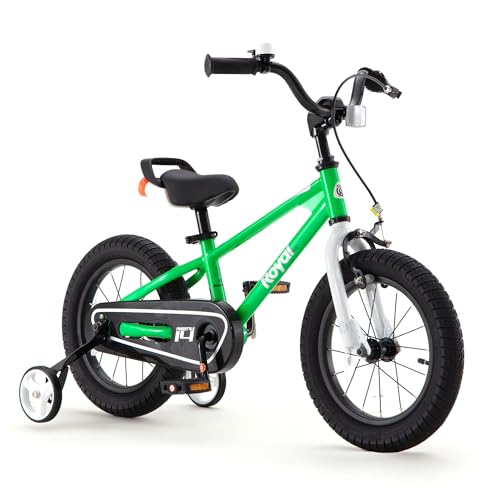
| RoyalBaby Freestyle Kids Bike, 16 Inch, Green | Check price on Amazon | |
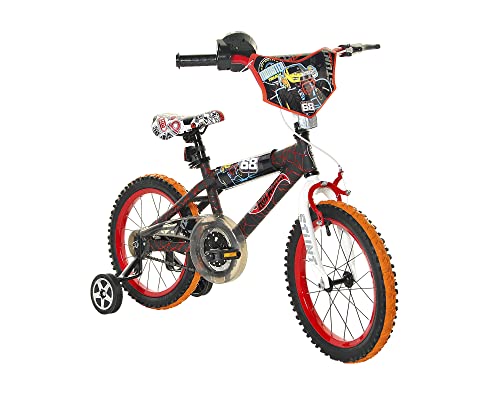
| Dynacraft Hot Wheels 16-Inch Boys BMX Bike | Check price on Amazon | |
 Fenbeli Kids Bike for Boys, 16 or 18 Inch, With Training Wheels | Check price on Amazon | |
 Schwinn Koen Boys Bike, 20 Inch, Blue | Check price on Amazon | |
 JOYSTAR Pluto Kids Bike, 20 Inch, Blue, With Training Wheels | Check price on Amazon |
How to Choose
Start With Height, Not Age
Age ranges are a starting point, but height and inseam are more reliable. Two boys of the same age can differ by several inches, and that difference is often enough to change the right wheel size. Measure your child standing in shoes, then measure inseam from the floor to the crotch, and compare both numbers with the saddle height and rider height ranges on the listing. When seated, the balls of the feet should reach the ground, and the knees should bend slightly at the bottom of the pedal stroke. If the saddle is at its lowest setting and your child still cannot reach the ground, the bike is too large.
Choose the Wheel Size
A 12-inch bike suits younger children still learning balance, a 14-inch bike suits many four- and five-year-olds, a 16-inch bike suits many four- to seven-year-olds, an 18-inch bike suits many five- to nine-year-olds, and a 20-inch bike suits many seven- to twelve-year-olds. These ranges overlap because children grow at different rates. For boys aged four to seven, 16-inch wheels are the most common choice: large enough to roll over small cracks and kerbs, and small enough to control. For boys aged seven to twelve, 20-inch wheels are the most common choice: more stable at speed, smoother over rough pavement, and suited to longer rides to school, the park, or a friend’s house.
Decide Between Single-Speed and Geared
A single-speed bike has one gear. It is simpler to ride, simpler to maintain, and often lighter than a geared bike of the same size. For flat neighbourhoods, parks, playgrounds, and paved paths, a single-speed bike is usually enough. A geared bike, usually with six or seven speeds, is better for hills, longer rides, and mixed surfaces. A low gear makes climbing easier, and a higher gear helps on flat stretches. The trade-off is more parts to look after. If most riding is on flat pavement, a single-speed bike keeps things simple.
Look at Brakes and Stopping Power
A coaster brake stops the bike when the rider pedals backwards. It needs no hand strength, which makes it a good first brake for younger children. A hand brake, usually a caliper brake on the front wheel, gives more control once a child can squeeze the lever with confidence. Many kids bikes combine both, so a rider has two ways to stop. Check that the brake levers are sized for small hands and within easy reach. A lever that is too far from the handlebar is hard to squeeze, and a child may rely only on the coaster brake as a result. Before the first ride, squeeze each brake lever, spin each wheel, and check that the wheel stops cleanly.
Check the Frame, Weight, and Tyres
Most kids bikes in this guide use a steel frame. Steel is durable, it handles knocks and falls well, and it keeps the bike in a family-friendly range. The trade-off is weight: a heavier bike is harder for a smaller child to lift, carry up steps, or control on a hill. Wider tyres, around 2.4 inches on some 20-inch models, give more grip and a more stable feel on grass, gravel, and uneven pavement. Narrower tyres roll more easily on smooth pavement. Knobby tyres suit grass and dirt paths, while smoother tyres suit paved streets and playgrounds. Choose tyres that match where your child will ride most.
Think About Training Wheels, Kickstands, and Extras
Training wheels help a beginner build confidence, but they are not needed for every child. A child who has already learned balance, or who is moving up from a smaller bike, may not need them. A child learning to pedal for the first time often benefits from them for a few weeks, then outgrows them. Removable training wheels are the most flexible option, because they can be taken off when your child is ready. Some 20-inch bikes include training wheels, while others, like the Schwinn Koen, are designed for riders who no longer need them. A kickstand lets your child park the bike without leaning it against a wall or laying it on the ground. A chain guard covers the chain and helps keep clothing and fingers away from moving parts.
Plan for Assembly and Safety Checks
Most kids bikes arrive partly assembled. Typical assembly includes fitting the front wheel, handlebar, seat, pedals, and training wheels, then adjusting the brakes and checking every bolt. The box usually includes basic tools, and the instructions explain the order of assembly. Allow time for this step, and do not rush it before the first ride. Before every ride, check that the tyres are firm, the brakes work, the handlebar does not turn loosely, and the seat post and wheels are secure. A helmet that fits well is essential, and it should sit level on the head, with straps that form a snug fit under the chin.
The Best best bike for boys Reviewed
RoyalBaby Freestyle Kids Bike, 16 Inch, Green
The RoyalBaby Freestyle is a BMX-style beginner bike for children ages four to seven, and the 16-inch green version is a good match for a boy who is learning to ride. It has a steel frame, a sporty BMX look, and features aimed at first-time riders: a shorter brake lever, a bell, reflectors, a water bottle with a holder, a kickstand, and training wheels. The saddle height range is about 20.5 to 24.4 inches, and the rider height range is about 43.7 to 51.2 inches. The bike uses both a hand brake and a coaster brake, so a new rider has two ways to stop. Note that this listing is shared across boys and girls, with colours including green, orange, blue, and red. The green version here is a neutral, sporty choice, but the bike is not styled as a boys-only model, so it is a partial fit for a boys-only search. The ASIN for the green 16-inch version is B00D3EW4NQ.
Dynacraft Hot Wheels 16-Inch Boys BMX Bike
The Dynacraft Hot Wheels 16-inch Boys BMX Bike is the most clearly boys-focused pick in this guide. It is a 16-inch bike for boys ages five to seven, with a black, red, and white Hot Wheels design, a racing shield, and a Turbo Revvin grip with light and sound. The frame is steel, the drivetrain is single-speed, and the bike uses a coaster brake and a rear caliper brake. Training wheels are included and can be removed once your child has learned to balance. The seat has an alloy quick-release fitting, so saddle height can be adjusted without tools. This bike suits flat neighbourhood riding, playgrounds, and paved paths. It is not a geared mountain bike, so it is not the best choice for steep hills or rough trails. The ASIN is B00E4G2ZDG.
Fenbeli Kids Bike for Boys, 16 or 18 Inch, With Training Wheels
The Fenbeli Kids Bike for Boys is a mountain-style bike for boys ages four to nine, available in 16-inch and 18-inch sizes. The 16-inch size suits ages four to seven, and the 18-inch size suits ages five to nine, so this one listing can cover two stages of growth. The bike has a steel frame, a front shock-absorbing fork, a rear coil-spring shock, and wide 1.8-inch all-terrain tyres, which help smooth out cracks, kerbs, gravel, and grass. Braking uses a front hand brake with a shortened lever for small hands, and a rear coaster brake that engages by pedalling backwards. Training wheels are included. The saddle height is adjustable by quick release, with a range of about 21.6 to 25.5 inches on the 16-inch model and about 23.6 to 27.4 inches on the 18-inch model. Note that the broader listing summary also describes this bike for boys and girls, so it is not a boys-only model. The ASIN is B0FX4NBJCL.
Schwinn Koen Boys Bike, 20 Inch, Blue
The Schwinn Koen is a 20-inch BMX-style bike for boys ages seven to thirteen, and it is the best pick in this guide for a confident rider who has outgrown training wheels. It uses Schwinn SmartStart design, which means the pedals are placed closer together, the seat position is set for proper leg extension, and the gearing is chosen for easy take-offs. The frame is alloy steel, the drivetrain is single-speed, and the bike uses a rear coaster brake with front and rear hand brakes. A chain guard, a kickstand, and a number plate are included. Fit guidance for the 20-inch Koen is for riders about 48 to 56 inches tall, with a minimum rider height of 48 inches on the listing, so measuring height before ordering matters. Note that the Koen shares a listing family with the Elm, the girls version of the same bike. The blue 20-inch Koen version covered here is the boys version, so choose the blue colour and the Koen style on the product page. The ASIN is B07K3PW65W.
JOYSTAR Pluto Kids Bike, 20 Inch, Blue, With Training Wheels
The JOYSTAR Pluto is a 20-inch BMX-style bike with light-up training wheels, a basket, a water bottle, a bell, and a kickstand. It is aimed at boys and girls ages seven to twelve, and the blue 20-inch version with training wheels is a good choice for an older beginner who still wants training-wheel support on a larger bike. Many 20-inch bikes assume the rider no longer needs training wheels, so a model that includes them fills a real gap for a child who is tall enough for 20-inch wheels but still building confidence. The frame is steel, the drivetrain is single-speed, and the brakes are a front caliper brake and a rear coaster brake. The seat is height-adjustable by quick release, and the listed weight is 26.7 pounds. If your child is ready to ride without training wheels, the Koen may be a better fit; if your child still wants extra stability, the Pluto is the better fit, and the training wheels can be removed later. Note that this listing is shared across boys and girls, so it is a partial fit for a boys-only search. The ASIN is B0CVX66J63.
What to Check Before You Buy
Before ordering, confirm the wheel size on the product page, not just in the title. Many kids bike listings share one page across 12-inch, 14-inch, 16-inch, 18-inch, and 20-inch sizes, and the wrong size can be selected by mistake. Check the colour too, because a shared listing may include colours aimed at boys, girls, or both. Confirm whether training wheels are included for the size you choose, because some sizes include them and others use a kickstand instead. Check the saddle height range, the rider height range, and the maximum weight recommendation, which are more useful than the age range alone. After the bike arrives, check the brakes, tyres, steering, and bolts before the first ride, and keep the instructions and tools for later adjustments.
FAQ
What size bike does a 7-year-old boy need?
A seven-year-old boy often fits a 20-inch bike, but height matters more than age. A boy around 48 to 54 inches tall usually fits a 20-inch bike well, while a shorter seven-year-old may still fit a 16-inch or 18-inch bike better. Measure height and inseam, compare them with the saddle height range on the listing, and use the fit check in this guide: when seated, the balls of the feet should reach the ground, with a slight bend in the knees at the bottom of the pedal stroke.
Are training wheels a good idea for a 20-inch bike?
Training wheels can help an older beginner who is tall enough for a 20-inch bike but still learning to balance and pedal. They give extra stability while a child builds confidence, and they can be removed when the child is ready. A child who can already balance and ride without support does not need them, and a bike without training wheels, like the Schwinn Koen, is a better choice in that case. Removable training wheels are the most flexible option.
Should I choose a BMX-style bike or a mountain bike for my son?
A BMX-style bike is a good choice for flat neighbourhoods, parks, and paved paths. It is usually single-speed, simple to ride, and easy to look after. A mountain-style bike is a better choice for hills, gravel, grass, and light trails, especially if it has gears and wider tyres. Think about where your child will ride most often. For mostly flat pavement, choose a BMX-style bike. For mixed surfaces and hills, choose a mountain-style bike with gears or suspension.
How do I know if a kids bike is the right fit?
Start with the rider height range and saddle height range on the listing. Then use a simple seated check. With your child on the saddle, the balls of the feet should touch the ground, and the knees should bend slightly at the lowest point of the pedal stroke. The handlebar should be within easy reach, without stretching or hunching. If the saddle is at its lowest setting and your child cannot reach the ground, the bike is too large. If the saddle and handlebar are at their highest settings and the knees rise high while pedalling, the bike is too small.
What safety gear does a boy need with a new bike?
A helmet that fits well is the most important item. It should sit level on the head, cover the forehead, and fit snugly with the straps fastened under the chin. Closed shoes protect feet from pedals and the ground. Reflectors help other people see the bike, and lights are useful for evening rides. Before the first ride, check the brakes, tyres, steering, and bolts, and let your child practise stopping and turning in a quiet area away from traffic.
Bottom Line
The best bike for boys depends on fit first, and on riding style second. For a beginner aged four to seven, the RoyalBaby Freestyle 16-inch and the Dynacraft Hot Wheels 16-inch are both good starting points, with training wheels, simple brakes, and a BMX look that many boys enjoy. The Fenbeli 16-inch or 18-inch bike adds a mountain look, suspension, and wider tyres for a boy who will ride on grass and gravel as well as pavement. For a confident rider aged seven to twelve, the Schwinn Koen 20-inch is a strong choice for neighbourhood and park riding without training wheels, while the JOYSTAR Pluto 20-inch is a better choice for an older beginner who still wants training-wheel support.
Disclosure: As an Amazon Associate, we may earn from qualifying purchases.