Key takeaways
- Our guide to the best handheld leaf mulchers compares corded 3-in-1 blower vacs and a dedicated shredder on mulch ratio, weight, bag design, and ease of use.
Every autumn the same problem returns: leaves pile up faster than you can bag them, the bags tear, and the curb fills with sacks. A handheld leaf mulcher changes the math. Instead of hauling whole leaves away, you shred them on the spot into a fraction of their volume, and the result is useful mulch for beds and borders. The best handheld leaf mulchers are light enough to carry for an hour and strong enough to chew through dry maple and oak leaves.


There is one honest complication: almost every handheld leaf mulcher is a three-in-one machine that also blows and vacuums, because mulching happens inside the vacuum path, where leaves are sucked in, chopped by a metal impeller, and deposited as shreds in a bag. Four of the five picks below are three-in-one tools, and one is a dedicated portable shredder. Every pick is a real Amazon US listing, verified through search results and cached listing data, and source disagreements are flagged, not smoothed over.
As an Amazon Associate, we earn from qualifying purchases.
Quick Picks
Our Short List of 3
All 3 Picks at a Glance
| Product | Specs | Action |
|---|---|---|
| WORX Trivac 3-in-1 | Check price on Amazon | |
| Sun Joe SBJ605E | Check price on Amazon | |
 TECCPO Leaf Vacuum and Mulcher | Check price on Amazon |
A Note on Verification Before You Buy
Amazon blocks automated checks of its product pages, so the listings here were verified through search results, cached listing data, and independent roundups rather than a live visit to each page. Before ordering, open the product page and confirm the model number, the seller, and the bag, tubes, and accessories shown. Where two sources disagreed on a specification, this guide says so instead of picking one number silently.
BLACK+DECKER BV6600
BLACK+DECKER 3-in-1 Electric Leaf Blower, Leaf Vacuum/Mulcher, Corded, 12-Amp (BV6600)
The BV6600 is the most recommended handheld leaf mulcher in this guide. It is a corded 12-amp tool that converts between blower, vacuum, and mulcher modes, with air speeds up to 250 miles per hour and variable speed from roughly 140 miles per hour up to full power. Full power clears matted leaves from a lawn, while the lower settings let you work around flower beds without scattering the mulch.
Mulching is where this model earns its place. A high-impact metal fan chops leaves as they pass through the vacuum tube, and most sources state a 16 to 1 reduction ratio, meaning sixteen bags of whole leaves become about one bag of shreds. One roundup states a 10 to 1 figure instead, so treat the exact ratio as approximate. Dry leaves shred finer and pack tighter than damp ones. The reusable EZ-Empty bag empties without wrestling it off the tube, and the kit includes blow and vacuum tubes plus a concentrator nozzle.
Weight is the specification where sources genuinely conflict. The manufacturer lists the tool at 8.1 pounds, light enough to carry for a typical cleanup session. A distributor datasheet lists 16 pounds, apparently a shipping weight, and one retail roundup lists a plainly wrong figure under two pounds. The 8.1 pound figure is the one to plan around. Noise is rated at 68 decibels, moderate for this category, though hearing protection is still sensible for a long session.
The BV6600 suits a standard suburban yard with lawn, beds, and patio. It is not the right choice far from an outlet, because the corded design needs an outdoor-rated extension cord, and it is not a chipper, so sticks thicker than a pencil should be kept out of the vacuum tube. For turning a weekend of fallen leaves into a bag or two of mulch, it is the safest first pick in this guide.
What stands out: 16 to 1 mulch ratio in most sources, variable speed, metal impeller that resists clogging, reusable bag, long track record.
What to watch: corded only; mulch ratio and weight figures disagree between sources, so confirm both on the product page.
MAXLANDER Electric Leaf Mulcher/Shredder
MAXLANDER Electric Leaf Mulcher/Shredder, 15-Amp, 8400 RPM, 18:1 Reduction Ratio
The MAXLANDER is the only dedicated shredder in this guide. It does not blow leaves and it does not vacuum them. You feed leaves into the hopper by hand and the machine shreds them, which makes it the right pick for someone who already owns a blower or a rake, or for a gardener who wants shredded leaves for compost and mulch beds.
Headline figures: a 15-amp motor, a shredding speed of 8,400 revolutions per minute, and an 18 to 1 reduction ratio with an adjustable dial for shred fineness. That dial is useful because compost and mulch want different textures: coarse shreds work well as surface mulch, while fine shreds compost faster. The listing includes safety goggles, leaf gloves, leaf scoops, and twenty cutting lines, a fuller accessory set than most competitors include. It is rated for wet and dry leaves, though dry leaves process faster and clog less.
Form factor deserves a note. This is a portable hopper shredder that you carry by its handle and set down to use, not a wand-style tool you wave across a lawn. If you picture a pile of raked leaves next to a shredder, feeding them in by the armful and ending up with a small heap of mulch, that is exactly what it does.
Two cautions. First, the US listing carries a different ASIN from the Canadian listing for the same product, so make sure the page you open is the US one. Second, the freshest cached copy of the US listing is several months old, so stock status and the exact accessory bundle should be confirmed live.
What stands out: dedicated shredding with no blower compromise, 18 to 1 reduction ratio, adjustable shred fineness, and a generous accessory bundle.
What to watch: hopper-style portable form, listing data months old, US and Canadian listings use different ASINs.
WORX Trivac 3-in-1
WORX Trivac 3-in-1 Electric Leaf Blower/Mulcher/Yard Vacuum
The WORX Trivac is built around vacuum power. Its headline airflow figure is 600 cubic feet per minute, high for a handheld tool, and the reason roundups recommend it for dense, deep leaf piles. The mulch ratio is stated at 16 to 1, matching the BLACK+DECKER, and the tool converts between modes without tools. A quick-release collection bag matters when the bag is full of dense shreds and a fiddly release would turn a five-minute job into a wrestling match.
The Trivac is a 12-amp corded machine, best understood as a vacuum-first tool. Its blower air speed is listed lower than the competition in at least one comparison, the trade-off for the high airflow in vacuum mode. In practice it excels at sucking up established piles and shredding them, and is merely adequate at blowing scattered leaves across a lawn. If your yard produces deep drifts against fences and under trees, that trade is worth making. If your main job is blowing leaves off a driveway and patio, a blower-first model is the better fit.
The Trivac has been sold for years, so replacement bags and parts are widely available. Confirm the exact model and the included accessories on the product page, because the Trivac name covers more than one configuration.
What stands out: 600 CFM airflow for dense piles, 16 to 1 mulch ratio, quick-release bag, long-running parts support.
What to watch: vacuum-first design, so blower performance is secondary; the Trivac name covers multiple configurations.
Sun Joe SBJ605E
Sun Joe SBJ605E Electric Blower/Vacuum/Mulcher
The Sun Joe SBJ605E is the budget pick in this guide, aimed squarely at small to medium yards. It is a handheld three-in-one tool, and roundups describe it as light, versatile, and well suited to routine cleanup of lawns, patios, and driveways. It makes sense when the job is a weekly tidy rather than a full autumn clear-out.
Set expectations honestly. It handles dry leaves and light debris well, and it struggles more than the heavier 12-amp models with wet, matted leaves and deep piles. That is a normal trade for the category: a small lot with a few trees is a good fit, while a large lot under mature oaks will be slow going. The corded design keeps the weight down and the power steady.
One data limitation is worth stating plainly. The sources that list this model confirm the handheld three-in-one design and its suitability for small to medium areas, but they do not consistently state detailed specifications such as the motor rating and the mulch ratio. This guide therefore does not publish those figures; check them on the product page.
What stands out: low cost, light and easy to handle, well matched to small and medium yards.
What to watch: specifications not consistently stated in sources; better suited to light cleanup than deep or wet piles.
TECCPO Leaf Vacuum and Mulcher
TECCPO Leaf Vacuum and Mulcher, 3-in-1 Handheld Blower/Vacuum/Mulcher
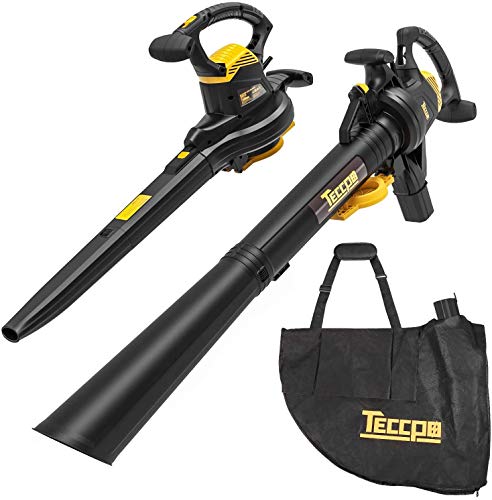
The TECCPO is the variable-speed pick in this guide. Its air speed adjusts from 170 to 250 miles per hour and its air volume from 280 to 410 cubic feet per minute, with a switch on top of the machine that cycles through the settings as you work. That adjustability is useful: low speed for leaves on mulch or in a flower bed, high speed for matted leaves on a lawn.
The tool is a handheld three-in-one design that blows, vacuums, and mulches, and roundups describe it as a strong value choice. TECCPO is a less established brand than BLACK+DECKER or WORX, so confirm the warranty terms on the listing, confirm that the collection bag and tubes match the model, and check recent buyer feedback for any recurring complaint about the bag attachment or the mode switch. The available sources do not consistently state a mulch ratio for this model, so none is published here.
What stands out: wide variable speed and volume range, three-in-one versatility, good value.
What to watch: less established brand than the top picks; no consistently stated mulch ratio.
Buying Guide
Corded or Cordless
Every pick in this guide is corded, and that reflects the handheld leaf mulcher market rather than an editorial choice. Corded machines deliver steady power for as long as the job runs and are lighter than battery tools of similar power. The trade is the extension cord: you need an outdoor-rated cord long enough to reach the far corner of the yard, and you need to manage it so it does not snag on shrubs or trip you. Cordless handheld mulchers exist, but they are rarer, heavier, and usually weaker at mulching.
Mulch Ratio
The mulch ratio is the most useful number when comparing these tools. A 16 to 1 ratio means sixteen bags of whole leaves become about one bag of shreds: a dozen trips to the curb become one. Ratios are measured on dry leaves under controlled conditions, so treat them as a comparison tool rather than a promise. Wet leaves shred coarser and pack less tightly. When a listing states no ratio at all, as with two picks here, that is information in itself: the manufacturer has chosen not to make the claim.
Weight and Handling
A handheld mulcher is carried, not pushed, so weight is a working specification rather than a footnote. Anything under about nine pounds is comfortable for an hour of use with breaks. Balance matters as much as weight: a tool that hangs well from its handle is easier to use than a lighter tool that pulls forward. The MAXLANDER is the exception here, since it sits on the ground while you feed it.
Bag Capacity and Emptying
The collection bag is where the shreds go, and its design decides how pleasant the job is. A small bag fills every few minutes, and a bag that is hard to detach turns emptying into a chore. Look for a reusable bag with a wide opening and a release that works with one hand or a simple zip. Disposable bag systems are tidy, but they add an ongoing cost and you need to keep spares on hand.
Wet Leaves and What Not to Shred
Dry leaves are the easy case for every mulcher in this guide. They shred fine, flow through the tube without clogging, and pack tightly into the bag. Wet leaves are harder: heavier, prone to clumping, and able to clog a vacuum tube or shredder hopper. If you mulch after rain, feed material slowly and stop to clear the tube rather than forcing it. Never feed sticks thicker than a pencil, stones, or wire into a mulcher, since hard objects can damage the blades.
Noise and Safety
Handheld electric mulchers are quieter than gas tools, but they are still loud enough to matter. The BLACK+DECKER BV6600 is rated at 68 decibels, moderate for this category. Other models here do not publish a consistent noise figure, so do not assume a quieter machine from a silent listing. Hearing protection is worth using for any session longer than a few minutes. Wear safety goggles and gloves whenever you run a mulcher, keep the power cord behind you, unplug the tool before clearing a clog or changing tubes, and never reach into the tube or hopper while it is plugged in.
Frequently Asked Questions
What exactly is a handheld leaf mulcher?
A handheld leaf mulcher is a tool you carry by hand that shreds leaves into small pieces, reducing their volume so they are easier to bag, compost, or spread. Most handheld models are three-in-one tools that also blow and vacuum: in vacuum mode, leaves are sucked through a tube, chopped by a metal impeller, and collected as shreds in a bag. A smaller number, such as the MAXLANDER here, are dedicated shredders with a hopper you feed by hand.
Can a handheld leaf mulcher handle wet leaves?
It can, but slowly and with more clogging. Wet leaves are heavier and they clump together, which makes them harder for the impeller to chop. Dry leaves are the ideal case for every machine here. If you must mulch wet leaves, feed them in small amounts, use a lower speed setting where the tool offers one, and stop to clear the tube before forcing more through. Letting a pile dry for a day in the sun often makes the job far easier.
What does a 16 to 1 mulch ratio mean?
A 16 to 1 mulch ratio means sixteen bags of whole, unshredded leaves compress down to about one bag of shredded material. It is why mulching is worth doing: fewer bags to handle, less space taken up, fewer trips to the curb. Ratios are measured on dry leaves under controlled conditions, so real results vary with leaf type and moisture.
Are blower-vac mulchers as good as dedicated shredders?
For general yard cleanup, a good blower-vac mulcher is usually the better buy, because one tool gathers, shreds, and bags in a single pass. For producing mulch and compost material, a dedicated shredder has the edge: it shreds more consistently and offers adjustable fineness. Choose the blower-vac for cleanup, and the dedicated shredder if you want material for beds and compost and already have a way to gather leaves.
How do I use shredded leaves in the garden?
Shredded leaves are useful in two ways. Spread a few inches thick over beds, they act as mulch that suppresses weeds and holds moisture. Mixed into a compost pile with green material such as grass clippings or kitchen scraps, they break down into rich compost over a season. Whole leaves mat together and rot slowly, which is why shredding matters: the smaller pieces let air and water through, so they decompose faster.
Conclusion
The best handheld leaf mulcher for most yards is the BLACK+DECKER BV6600, because it combines a strong mulch ratio, variable speed, a metal impeller, and a reusable bag. If you want a shredding-only machine for compost and mulch beds, the MAXLANDER is the dedicated alternative, with an 18 to 1 ratio and an adjustable shred dial. The WORX Trivac suits yards with deep, dense piles, the Sun Joe SBJ605E covers small yards on a budget, and the TECCPO offers the widest speed adjustment for delicate beds.
Whichever model fits your yard, remember the two checks that matter most. First, confirm the listing live before ordering: model number, accessories, seller, and stock status all change, and the data behind this guide came from search results and cached listings rather than a live visit. Second, match the tool to the job, not the headline numbers: a light machine for a small yard, a strong vacuum for deep piles, a dedicated shredder when mulch is the goal.