Key takeaways
- Compare five bed edging options by durability, height and ease of install, so garden beds stay tidy without edging that shifts or rusts over time.
The line between a lawn and a garden bed decides how tidy the whole garden looks. Grass runners push under a shallow strip, mulch washes across a low border after heavy rain, and a mower wheel catches an edge that was never anchored properly. Picking bed edging is really picking how that line will be held: a flexible coil that follows a curve, a rigid metal strip that stays straight, or a decorative piece that also frames the bed. The five options below cover those shapes, in plastic, steel-look plastic and aluminium, so the choice comes down to the bed, not the catalogue.


This guide is written for gardeners edging a first bed, homeowners tidying a formal lawn edge, and anyone replacing edging that shifted or rusted after a season or two. Each product is named with the measurements and materials stated on its Amazon listing, so you can match the kit to the length and shape of your own beds before you buy.
Quick Picks
As an Amazon Associate we earn from qualifying purchases.
| Product | Best for | Key spec |
|---|---|---|
| EasyFlex No-Dig Landscape Edging Kit, 100 ft | Long straight and curved runs in one coil | 100 ft recycled-plastic coil, 1.5 in tall |
| EasyFlex Stone-Look No-Dig Landscape Edging, 15 ft | A decorative stone finish on short borders | 15 ft kit of 12 stone-look pieces |
| EasyFlex Wrought Iron-Look No-Dig Landscape Edging, 15 ft | A formal look beside paths and front beds | 5 in tall pieces with a built-in retaining section |
| EasyFlex Aluminum Landscape Edging Project Kit, 48 ft | Crisp metal lines that will not rust | 8 aluminium pieces, 6 ft each |
| Amazon Basics Flexible Landscape Edging Coil, 40 ft | A taller flexible border for mulch beds | 5 in tall coil, 40 ft, with 10 stakes |
How to Choose
Measure the Run Before You Pick a Kit
Edging is sold by the pack, the coil or the piece, and almost every project stalls because the gardener underestimated the bed’s perimeter. Walk each bed with a tape or a garden hose laid along the border, add the runs together, then add a margin for corners, mistakes and the pieces you will cut. Pack coverage figures assume straight runs, so a curvy bed consumes more than the headline length suggests. Measuring first also settles the shape of the purchase: one long coil may cover a whole garden, while short decorative kits suit a single front bed and leave nothing spare for the next one.
Match Height and Depth to Your Grass and Soil
What happens underground matters as much as the visible line. Running grasses spread on runners that dive under shallow edging, so lawns with those grasses need a deeper barrier that sits well below the surface. Clay soil holds edging firmly but heaves in freeze-thaw cycles, gradually pushing shallow pieces upward, while sandy soil lets edging shift unless it is anchored at close intervals. A taller profile also holds mulch inside the bed during heavy rain. Check the height stated on the listing against the grass at your boundary, and treat anything under two inches as a line marker rather than a barrier.
Pick a Material for Your Climate and Your Mower
Plastic coils bend easily, survive damp soil and never rust, but they soften in strong sun and can creep out of shape on a hot slope. Aluminium strips hold a straight line for years, resist rust and take a clean cut, yet they need a firm anchor at every joint or they lift at the ends. Steel-look plastic gives a formal appearance without the weight of real metal, though its decorative profile is harder to trim to length. Think about how you mow, too: a low profile lets a mower wheel pass over the edge, while a raised decorative piece needs a clear gap between the blade path and the border.
Plan Separately for Curves, Corners and Joins
A bed that bends around a tree or follows a winding path needs edging that flexes without kinking, which usually means a coil or short interlocking pieces rather than a long rigid strip. Straight formal beds are the opposite: rigid pieces give the crisp line, and the joins are where the work happens. Look for a sliding connector or an overlapping tab system, and check how many anchoring spikes the kit includes before you assume it is complete. Corners deserve their own attention, since a piece forced around a tight angle will spring back, leaving a gap that grass finds within a season.
The 5 Best Options
EasyFlex No-Dig Landscape Edging Kit, 100 ft
This is the workhorse pick for gardeners who need to edge several beds at once and want one continuous run. The coil format bends around trees and curved borders, and the no-dig L-shaped design sits on the surface with tabs that hold it in place, so there is no trench to cut and no risk to shallow roots. At 1.5 inches tall it reads as a low, neat line rather than a fence, which suits lawns where the mower passes close to the bed. Made in the USA from recycled plastic, the kit is built to retain mulch, pine needles, lava stone, river rock and wood mulch inside the bed.
Specs
- 100 ft coil of recycled plastic edging
- 1.5 in tall profile
- No-dig L-shaped design with anchoring tabs
- Includes connectors and anchoring spikes
- Made in the USA from recycled materials
Best for: Gardeners edging several beds or one very long boundary in a single run.
Watch out for: The low 1.5 in profile will not stop running grasses on its own, so pair it with a deeper barrier where creeping grass is the main problem.
EasyFlex Stone-Look No-Dig Landscape Edging, 15 ft
For a short front border or a single flower bed, this kit trades length for appearance: twelve stone-look pieces link into a 15-foot run with a rustic finish that reads as masonry from a few steps away. The pieces flex enough to form a tree ring, and the patented no-dig L-shaped design means the edging sits on the surface without digging into tree and plant roots. Spiral anchoring spikes hold each piece down, and the interlocking tabs keep the line continuous without separate connectors. It is a straightforward weekend job, and the slate gray colour sits quietly against soil and mulch rather than drawing attention to itself.
Specs
- 15 ft kit of 12 stone-look edging pieces, each 15 in wide
- Includes 24 spiral anchoring spikes, 8 in long
- No-dig L-shaped design, flexible enough for tree rings
- Slate gray finish
- Made in the USA
Best for: A short decorative border or a tree ring where the stone look matters more than length.
Watch out for: Fifteen feet covers one small bed, so measure first and count how many kits a longer border will need.
EasyFlex Wrought Iron-Look No-Dig Landscape Edging, 15 ft
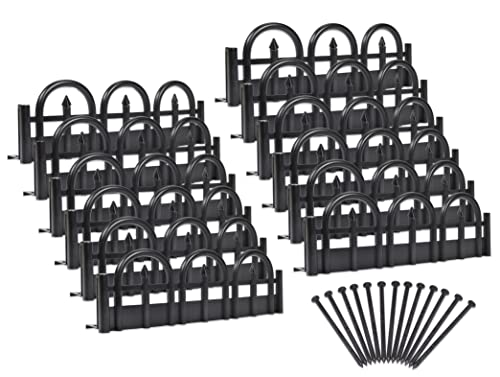
This is the pick for gardeners who want a formal, traditional border beside a path or a front bed without handling real metal. The wrought iron-look pieces stand 5 inches tall, and each one has a built-in retaining section designed to hold bedding materials in place, so mulch stays inside the bed instead of spilling onto the lawn. An overlapping post system and interlocking anchoring tabs create a seamless border with no connector pieces to lose. The kit installs on top of landscape fabric, which helps keep weeds down behind the border, and the black finish suits Victorian, traditional and historic-style gardens.
Specs
- 15 ft kit of 12 edging pieces
- 5 in tall profile with a built-in retaining section
- Includes 13 anchoring spikes, 8 in long
- Overlapping post system with interlocking anchoring tabs
- Plastic construction made in the USA from recycled materials
Best for: Formal front beds and path edges where a taller, decorative border is part of the look.
Watch out for: The 5 in height is a visible fence-like line, so it suits front beds and paths better than a lawn edge the mower needs to cross.
EasyFlex Aluminum Landscape Edging Project Kit, 48 ft

Aluminium is the choice when the priority is a straight, permanent line that will not rust, crack, rot or become brittle. This project kit supplies eight 6-foot aluminium pieces that join through a simple sliding connection system, with pre-drilled holes for the anchoring spikes, so the run goes together without special tools. The strips maintain straight edges but flex enough to bend for gentle curves, which covers most rectangular beds and the long straight borders beside driveways and patios. The black powder-coated finish gives a sharp contrast against light stone and gravel, and the 48-foot coverage handles several beds or one long boundary in a single purchase.
Specs
- 48 ft kit of 8 aluminium edging pieces, 6 ft each
- Includes 24 anchoring spikes
- Sliding connection system with pre-drilled spike holes
- Aluminium construction that will not rust, crack, rot or become brittle
- Black finish
Best for: Long straight borders and gardeners who want a metal edge without rust.
Watch out for: Aluminium strips hold a straight line well but need every spike seated firmly, or the ends can lift after the first season of soil movement.
Amazon Basics Flexible Landscape Edging Coil, 40 ft

This coil is the pick for mulch beds that need a taller border than the usual low plastic strip. At 5 inches tall it stands high enough to hold a deep layer of mulch inside the bed, and the brown recycled-plastic coil carries a faux woodgrain finish that blends with soil and bark instead of looking like bare plastic. The coil format bends for curves and straight lines alike, and the kit includes ten matching stakes for securing the border. Because it arrives as one 40-foot roll, it covers a medium bed or a pair of smaller beds without a join in the middle of the run.
Specs
- 5 in tall by 40 ft flexible recycled-plastic coil
- Brown finish with a faux woodgrain texture
- Includes 10 matching stakes
- Flexible format for curves or straight lines
- Model JC059
Best for: Mulch beds that need a taller flexible border with a natural wood look.
Watch out for: Ten stakes across 40 feet means wide spacing on soft or sandy soil, so add extra stakes where the coil needs to hold a tight curve.
Which One Fits Your Situation
You Want a Weekend Fix With No Digging
Choose the EasyFlex No-Dig Landscape Edging Kit in 100 ft, or the Stone-Look kit in 15 ft if the run is short. Both sit on the surface with anchoring tabs and spiral spikes, so there is no trench to cut and no root damage to worry about. Lay the pieces along the border, tap the spikes through the tabs, and the line is set before the afternoon is over.
Your Beds Run Straight Against a Formal Lawn
Choose the EasyFlex Aluminum Landscape Edging Project Kit in 48 ft. The rigid aluminium strips hold a crisp straight line, the sliding connectors keep the joins flush, and the black finish reads as a deliberate boundary against the lawn. It is the strongest choice where the edge itself is part of the garden’s design.
Your Beds Curve Around Trees and Planting
Choose the EasyFlex Stone-Look No-Dig kit or the Amazon Basics Flexible Landscape Edging Coil. The stone-look pieces flex into a tree ring, while the coil bends smoothly along a winding bed without a join at every turn. Both avoid the kinks and gaps that rigid strips leave on a curve.
You Need to Edge a Long Boundary in One Go
Choose the EasyFlex No-Dig Landscape Edging Kit in 100 ft, with the Aluminium Project Kit in 48 ft as the metal alternative. One coil covers the whole run without joins, while the aluminium kit covers nearly fifty feet with eight pieces and a single connector system. Measure the full perimeter first so the purchase matches the boundary.
Common Mistakes
- Guessing the length instead of walking the bed with a tape, then running short halfway along the border.
- Picking a shallow profile for a lawn with running grass, and watching runners dive straight underneath it.
- Spacing anchoring spikes too far apart on soft or sandy soil, so the edging lifts and shifts after heavy rain.
- Forcing a rigid strip around a tight curve instead of switching to a coil or short interlocking pieces.
- Butting two pieces together without an overlap or connector, leaving a gap that grass and mulch find within a season.
Frequently Asked Questions
How deep should bed edging sit?
Most of the barrier should sit below the surface, with only the profile showing. Running grasses spread on runners that travel just under the soil, so a shallow strip that only marks the line will not stop them. A taller profile such as a 5-inch coil gives more buried depth and holds mulch, while a low 1.5-inch strip works best where the lawn grass is clumping rather than running.
Does edging actually stop grass creeping into beds?
Edging slows grass down and gives it a line to respect, but it only stops creeping grasses when the barrier runs deep enough to block their runners. Shallow edging marks the boundary and holds mulch, while deeper edging blocks the runners themselves. Keep the boundary clear by trimming along the edge, and check each spring for runners that have slipped underneath.
Can edging follow a curved bed?
Yes, provided the edging is made to flex. Coils and short interlocking pieces bend around trees and winding beds without kinking, while long rigid strips suit straight runs and gentle arcs only. For a tight curve, anchor the edging at close intervals so the bend holds its shape instead of springing back into a straight line.
Which edging lasts the longest?
Metal edging lasts the longest when it is anchored well, because aluminium and galvanised steel resist rust and hold their shape for years. Plastic coils last well in damp soil and never rust, though strong sun can soften them over time. Whichever material you choose, the lifespan depends on the anchoring: edging that is spiked firmly and seated level will outlast edging that was laid in a hurry.