Key takeaways
- Compare live red wigglers and European nightcrawlers for raised beds, with pack counts, species notes and delivery checks for healthier garden soil.
Adding live worms to a raised bed sounds simple until the packs arrive: counts run from one hundred to several thousand, some worms feed near the surface while others burrow deep, and a colony that lands in dry, hot soil may vanish within a week. For a bed that has gone weedy and tired, the real decision is which species, and how many, will settle in, work the soil you actually have, and keep turning scraps and roots into castings season after season.


This guide is for raised-bed gardeners rebuilding soil life in vegetable and flower beds, whether the frame is brand new or years old. The four packs below are all live worms sold for garden soil and composting use, chosen from their Amazon listing titles and specification blocks: two red wiggler counts from Uncle Jim’s Worm Farm, that farm’s European nightcrawlers, and a red wiggler pack from NaturesGoodGuys, each with its count and species stated on the listing.
Quick Picks
As an Amazon Associate we earn from qualifying purchases.
| Product | Best for | Key spec from title |
|---|---|---|
| Uncle Jim’s Worm Farm 1000 Count Red Wiggler Composting Worms | Large beds and long runs | 1000 count red wigglers |
| Uncle Jim’s Worm Farm 500 Count Red Wiggler Composting Worms | A mid-size bed setup | 500 count red wiggler mix |
| Uncle Jim’s Worm Farm 100 Count Super Red European Nightcrawlers | Deeper soil aeration | 100 count European nightcrawlers |
| NaturesGoodGuys Live Redworms 600 Red Wigglers | A second breeder’s stock | 600 live red wigglers |
How to Choose
Species and the Layer They Work
Red wigglers are surface feeders. They live in the top few inches of a bed, under mulch and leaf litter, and they process fallen leaves, spent plants and kitchen scraps quickly, leaving castings where roots feed. European nightcrawlers are bigger worms that move between the surface and deeper soil, pulling organic matter down and opening channels as they go. A shallow bed fed with mulch suits wigglers; a deep bed with compacted lower layers benefits from burrowers. Many gardeners run wigglers first, then add nightcrawlers once the top layer is alive and covered.
Count Matched to Bed Size
Pack counts on these listings run from 100 to 1000 or more, and the right number depends on bed area and how fast you want the colony established. A single standard bed can take a 500 count pack comfortably, while long runs or several frames side by side justify 1000. Too few worms in a big bed means slow coverage and patches of untouched soil; too many in a small bed means the colony outruns its food supply and thins itself out. Worms multiply in a fed bed, so a moderate count grows into the space over a season.
Live Arrival and Delivery Timing
These are live animals shipped through the mail, so the delivery window matters as much as the species. Order when someone can bring the box indoors the day it lands, and avoid weeks of hard frost or heat waves if the listing lets you time the order. Uncle Jim’s notes on its listings that buyers should plan ahead to receive a live product as soon as it is delivered. Check whether the pack ships in bedding or bare, and have the bed watered and mulched before the worms arrive, so they can be released the same day.
What the Pack Actually Contains
Read the listing closely before ordering. Most of these packs are worms only, with no bin, frame or bag of castings included, which is fine for a bed that is already built and filled. Uncle Jim’s states that its red wigglers are harvested from worm beds that are decades old and may contain different earthworm species, so a pack can arrive as a mix rather than a single pure species. If you want one named species only, pick a listing that states the species plainly and treat mixed-bed packs as a general soil crew instead.
The 4 Best Options
Uncle Jim’s Worm Farm 1000 Count Red Wiggler Composting Worms
For a gardener stocking several raised beds at once, or one long run of frames, this is the pack built around volume. The listing describes red wigglers harvested from worm beds that are decades old, working all layers of the compost rather than only the top few inches, and raised in the USA. Spread across two or three beds, a 1000 count gives each frame a working colony from day one instead of a token handful, and the population can then be split further in later seasons as it grows into the food supply you provide.
Specs
- Unit count: 1000 live red wiggler composting worms
- Model number: 1000RW
- Harvested from worm beds described as decades old; pack may contain different earthworm species
- Listing states castings at 7 times richer in phosphates, 5 times richer in nitrogen and 11 times richer in potash than average lawn soil
- Worms only; no bin or bedding included
- Raised in the USA
Best for: Gardeners stocking multiple raised beds or one long run in a single order.
Watch out for: The mix may include other earthworm species, so it is not the pick for a single-species colony.
ASIN: B000Q5S7RM
Uncle Jim’s Worm Farm 500 Count Red Wiggler Composting Worms
A single raised bed, or a pair of small frames, is the natural home for this mid-size pack. It carries the same red wiggler mix as the larger count, harvested from the farm’s long-running beds, in a quantity that establishes a colony without overwhelming one bed’s food supply. The farm’s listing copy leans on its long history, over 50 years in business on over 40 acres, and on worms raised in the USA. For a first attempt at stocking a bed with live worms, 500 is the count that leaves room for the colony to prove itself.
Specs
- Unit count: 500 live red wiggler composting worms
- Sold for garden soil and composting use
- Harvested from worm beds described as decades old; pack may contain different earthworm species
- Listing states castings at 7 times richer in phosphates, 5 times richer in nitrogen and 11 times richer in potash than average lawn soil
- Raised in the USA by a farm listing over 50 years in business
Best for: One standard raised bed, or two small frames, stocked for the first time.
Watch out for: A cached copy of the listing showed other sellers rather than a featured offer, so confirm the current offer on the page before ordering.
ASIN: B00F0MB40S
Uncle Jim’s Worm Farm 100 Count Super Red European Nightcrawlers

Nightcrawlers answer a different problem than wigglers: soil that is heavy and compacted below the surface layer. The listing presents these Super Red European Nightcrawlers as 2 to 5 times larger than typical red worms, farmed in the USA, and sold for composting and garden soil aeration. In a deep raised bed they drag surface mulch downward and leave vertical channels that help water reach lower roots. A 100 count will not blanket a bed, but placed into a deep frame they work the depth that surface feeders rarely reach.
Specs
- Unit count: 100 live European nightcrawlers
- Listing states worms run 2 to 5 times larger than typical red worms
- Sold for composting and garden soil aeration
- Farmed in the USA
- Harvested from worm beds described as decades old
Best for: Deep raised beds with compacted lower layers that need burrowing and aeration.
Watch out for: Buyer questions on the listing report packs arriving smaller than expected, closer to red worms, so check the worms on arrival day.
ASIN: B07YVK42Q2
NaturesGoodGuys Live Redworms 600 Red Wigglers
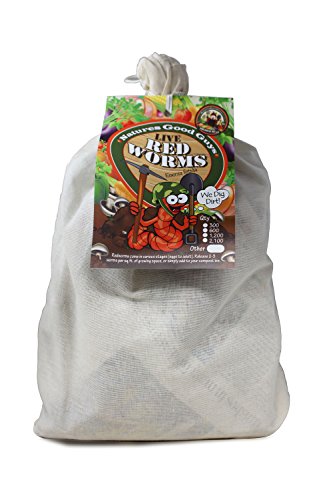
A second breeder gives buyers a useful comparison point, and this 600 count pack of live red wigglers sits between the Uncle Jim’s counts on size. The brand’s listing copy focuses on the worms’ core job: turning organic waste into nutrient-rich soil for the garden. For a gardener whose bed gets a steady flow of chopped leaves, spent plants and vegetable scraps, red wigglers are the species that process that material in place, and 600 is a workable founding population for one generous bed or a pair of smaller ones sharing the pack.
Specs
- Unit count: 600 live red wigglers
- Brand: NaturesGoodGuys
- UPC: 657994800491
- Listing copy describes the worms converting organic waste into nutrient-rich soil
- Sold for composting and garden use
Best for: One generous raised bed, or two smaller frames, with a steady supply of scraps and leaves.
Watch out for: The listing gives fewer pack details than the Uncle Jim’s pages, so confirm count and shipping terms on the page before ordering.
ASIN: B0169AXIQ2
Which One Fits Your Situation
A New Bed Filled With Fresh Mix
Fresh bagged mix is loose, clean and almost empty of soil life, a blank slate for a founding colony. The 500 count red wiggler pack suits a single new frame: water the mix, lay down mulch, release the worms under the mulch in the evening, and feed lightly for the first weeks while the colony settles into the top layer.
An Older Bed With Tired, Compacted Soil
A bed that has produced for years often has a lively top inch and a dense layer beneath it. Pair the two worm types: red wigglers to rework the surface and nightcrawlers to open the depth. The 100 count European nightcrawlers go into the deeper frame, while a share of the 1000 count red wigglers covers the surface. Give the burrowers buried leaf litter to pull down, and expect improvement to build across a full season.
Beds Beside a Kitchen Scrap Routine
If your household produces a steady bowl of vegetable peelings and coffee grounds, the bed can become the compost system. Red wigglers are the species that handle buried scraps in place, so the NaturesGoodGuys 600 count or the Uncle Jim’s 500 count both fit. Bury scraps in a different corner each week, keep the surface mulched, and skip citrus-heavy or oily waste. The worms process the rotation and leave castings through the root zone instead of a separate heap.
A Hot Climate With Risky Delivery Weather
Where summers run hot, the worms’ hardest day is the journey, not life in the bed. Order in spring or autumn when you can, time the order to a mild week, and have the bed shaded, watered and mulched before the box lands. Release the worms in the evening, under wet mulch, and check the top layer the next morning. A colony that survives its first week in a hot bed usually settles for the long term.
Common Mistakes
- Ordering live worms into a heat wave or freeze with nobody home to bring the box indoors the day it arrives.
- Releasing worms onto dry, bare soil at midday; they need moist soil and a mulch cover to dive into within minutes.
- Expecting worms alone to clear a weedy bed; they rebuild soil, but existing weeds still need pulling and the surface still needs mulch to block new growth.
- Burying a large load of fresh manure or oily kitchen waste right where the worms were released, which can heat up or sour the pocket of soil they are settling into.
- Judging the colony after one week; worms often hide deep while they adjust, and a bed shows their work over a season, not in days.
Frequently Asked Questions
How Many Worms Does One Raised Bed Need?
A mid-size pack of around 500 red wigglers is a workable founding colony for one standard raised bed. Smaller counts settle too, but coverage builds slowly, while very large counts suit several frames at once. Because a fed colony multiplies, a moderate pack released into a moist, mulched bed usually grows into the space over its first season.
Will Worms Stay in a Raised Bed?
Worms stay where food, moisture and cover are steady, and a mulched raised bed offers all three. They may wander after heavy rain or if the bed dries out and runs out of organic matter. Keeping the surface covered with leaves or straw, and the soil evenly moist, gives the colony little reason to leave, and most movement stays inside the frame.
Do Worms Help With Weeds in the Bed?
Worms do not eat growing weeds, and they will not clear a bed on their own. What they change is the soil beneath: better structure, more castings and livelier biology help your plantings grow densely, and a dense canopy plus mulch shades out many weed seedlings. Pull established weeds by hand, keep the surface covered, and let the worms handle the soil side of the work.
When Is the Best Time of Year to Add Worms?
Spring and autumn are the forgiving windows in most climates, since delivery trucks and porches stay moderate and bed soil is moist. Summer orders can work if the box is collected the day it lands and the worms go into a shaded, watered bed the same evening. Winter orders are the riskiest where hard frost reaches the mailbox, so wait for a mild spell.