Key takeaways
- The best strong raised garden beds hold their shape under full soil loads. Compare thick panels, cross bracing and rust-resistant coatings built to last.
A raised bed only earns its keep if it stays square once it is full. Wet soil pushes outward with surprising force, and a thin wall bows, a weak corner opens, or a cheap coating rusts through at the soil line within a couple of seasons. The real decision is not which bed looks best empty in the yard, but which one still holds its shape after three wet winters and a summer of heavy tomatoes.

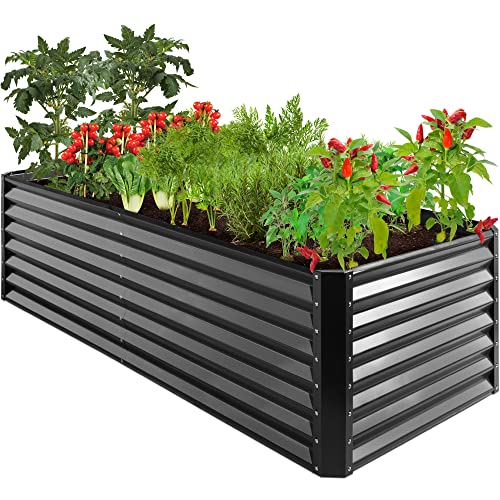
This guide is for gardeners who want to buy once and stop thinking about the frame. Every bed below was picked from its Amazon listing for a specific strength feature: coated steel thickness, cross bracing, dovetail joints, or a frame built to resist bowing. The five cover metal and cedar, shallow and deep, so you can match the structure to your soil, your crops, and how long you expect the bed to last.
Quick Picks
As an Amazon Associate we earn from qualifying purchases.
| Product | Best for | Key spec from title |
|---|---|---|
| Vego Garden 17-Inch 9-in-1 Modular Metal Raised Bed | A permanent bed you can reshape | Zinc-aluminum-magnesium coated steel, rubber edging |
| Best Choice Products 8x4x2ft Metal Raised Garden Bed | Deep roots and less bending | 24-inch depth, three stabilizing rods |
| Land Guard 8x4x1ft Galvanized Raised Garden Bed | Several beds on a tight budget | 0.78 mm galvanized steel, oval shape |
| Greenes Fence Premium Cedar Raised Garden Bed 4×8 ft | A natural wood look that lasts | 3/4-inch cedar boards, dovetail joints |
| FOYUEE Galvanized Raised Garden Bed 8x4x1ft | A big bed with extra bracing | Overlapping panels, 4 stabilizing bars |
How to Choose
Panel thickness and corrugation
A panel’s thickness decides how much soil pressure it can take before it bends. Metal beds list this in millimeters, and the number matters more than the word galvanized on the box. A sheet near 0.6 mm works when the corrugation is deep and the corners are rounded, because the folds stiffen the metal like a folded card standing upright. Thicker sheets near 0.8 mm resist dents from a shovel and hold a straight line on long runs. Cedar beds work differently: look for boards at least 3/4 inch thick, since thinner boards cup and twist as they dry. Whatever the material, ask how the wall stays flat under a full load.
Bracing and corner joints
Long walls need help. An eight-foot side filled with damp soil will bow outward unless something ties the two sides together, so check the listing for cross rods, support bars, or a center brace. The Best Choice bed in this guide uses three stabilizing rods, and the FOYUEE uses four bars across its long span. Corners matter just as much: bolted metal corners hold if the hardware is solid, while cedar frames rely on dovetail joints that lock into routed posts. Avoid a bed whose only connection is a thin screw through a single panel edge, because that joint carries the whole outward push every time it rains.
Coating and rust resistance
Steel only stays strong while its coating holds. Plain galvanized zinc works, but a zinc-aluminum-magnesium coating resists corrosion longer in damp soil, and a powder coat adds a second barrier on top of the steel. The weak spot is the soil line, where the wall stays wet and oxygen is plentiful, so a bed that looks fine in year one can show rust there by year three. Read the warranty with care: a two-year limited warranty that excludes corrosion from soil contact tells you more than a twenty-year lifespan claim. For cedar, the protection is the wood itself, since untreated cedar resists rot and insects without any coating to peel.
Height, footprint and soil volume
Strength and size trade against each other, because a taller bed holds more soil and puts more pressure on its walls. A 12-inch bed suits lettuce, herbs, and strawberries, and it needs the least soil to fill. Around 17 inches covers most vegetables, including tomatoes and root crops. A 24-inch bed cuts bending and suits deep roots, but it can need more than 60 cubic feet of fill, which costs far more than the frame. Measure your space first, then count the fill: a standard 1.5 cubic foot bag covers only a small slice of an 8 by 4 foot bed, so plan to bulk out the bottom with logs and leaves.
The 5 Best Options
Vego Garden 17-Inch 9-in-1 Modular Metal Raised Bed
The Vego 9-in-1 is the bed to buy when you want one frame that stays put for years and still lets you change the layout. Its panels use a zinc-aluminum-magnesium coating under paint, which is the most corrosion-resistant finish in this group, and the corrugated shape plus rounded corners do the stiffening work even though the steel itself is thin. Nine layouts come from a single kit, with the long 8 by 2 foot rectangle as the headline size, and rubber edging covers the top rim so you can lean on it without catching a sharp edge.
Specs
- 17 inches tall, 8 x 2 feet in the long rectangular layout, one of 9 layouts
- Zinc-aluminum-magnesium coated steel panels with a painted finish
- Panels about 0.6 mm thick with deep corrugation and rounded corners
- Rubber safety edging along the top rim
- 23 cubic feet of soil capacity in the 8 x 2 foot layout
- 2-year limited warranty
Best for: A permanent vegetable bed you may want to reshape later.
Watch out for: The 2-year warranty excludes corrosion from soil contact, so the long-life claim rests on the coating, not the warranty. Assembly can take up to two hours.
Best Choice Products 8x4x2ft Metal Raised Garden Bed
This is the deepest bed in the group, and depth is where its strength story lives. At 24 inches tall with an 8 by 4 foot footprint, it holds up to 64 cubic feet of soil, so the panels carry a heavy load and the three stabilizing rods across the span are doing real work. Powder-coated steel panels bolt together with wingnuts, which means no tools are needed and a rod can be tightened again if the sides ever start to drift. Rubber edging runs along the top, and the wood-look finish keeps the tall frame from looking like a stock tank.
Specs
- 96 x 48 x 24 inches, 8 x 4 foot footprint
- 64 cubic feet of soil capacity, up to 478 gallons
- Powder-coated steel panels
- Three stabilizing rods across the long span
- Tool-free assembly with wingnut bolts
- Rubber edging along the top rim
Best for: Deep-rooted crops and gardeners who want to stand rather than kneel.
Watch out for: Filling 64 cubic feet costs far more than the bed itself, so plan a log and leaf base layer. Some owners report paint peeling inside the bed and panels flexing during assembly before it is filled.
Land Guard 8x4x1ft Galvanized Raised Garden Bed
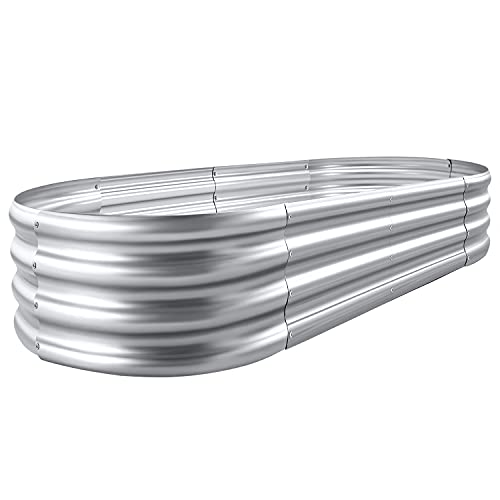
The Land Guard is the cheapest way to get a large bed above poor ground, and its strength comes from honest thickness rather than clever design. The Q195 galvanized sheet averages 0.78 mm and reaches 1.56 mm at the thickest points, which is the heaviest steel in this guide, and the double-layer galvanizing protects it from rust. The oval shape helps too, since the curved ends spread soil pressure instead of concentrating it on a square corner. It is light, quick to assemble, and holds 28.56 cubic feet, the smallest fill in this group.
Specs
- 96 x 48 x 12 inches, oval shape with an open bottom
- Q195 galvanized steel sheet, 0.78 mm average thickness, up to 1.56 mm
- Double-layer anti-corrosion galvanizing
- 28.56 cubic feet of soil capacity
- Drainage hole listed as a special feature
- Open base for drainage and root growth into the ground
Best for: A first bed, or several beds at the lowest cost per square foot.
Watch out for: The panel edges are sharp where pieces join, so wear gloves during assembly. The long sides flex until the bed is filled, and an empty bed can shift in strong wind.
Greenes Fence Premium Cedar Raised Garden Bed 4×8 ft

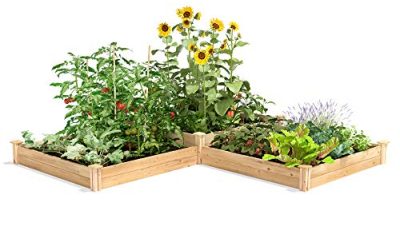
Cedar earns its place here because thick wood fails differently from thin metal: it does not bow suddenly, and its joints are the strongest part of the frame. This Greenes Fence kit uses smooth, sanded boards 3/4 inch thick locked into 2.5-inch square corner posts with dovetail joints, a connection that tightens as the wood swells slightly with moisture. The 17.5-inch height suits most vegetables, the frame holds up to 46.7 cubic feet, and the untreated North American cedar needs no coating, so there is nothing to peel or flake into the soil.
Specs
- 4 x 8 feet, 17.5 inches high
- Untreated North American cedar, chemical-free
- Smooth, sanded boards 3/4 inch thick
- 2.5-inch square corner posts with dovetail joints
- Tool-free assembly, stackable and expandable with extra kits
- Up to 46.7 cubic feet of soil capacity
- Made in USA
Best for: Gardeners who want a wood bed with joints that outlast the boards.
Watch out for: Cedar is untreated, so the color will silver with sun and rain; that is normal aging, not damage. The kit is a single 4 by 8 foot rectangle, so a different shape needs another kit.
FOYUEE Galvanized Raised Garden Bed 8x4x1ft
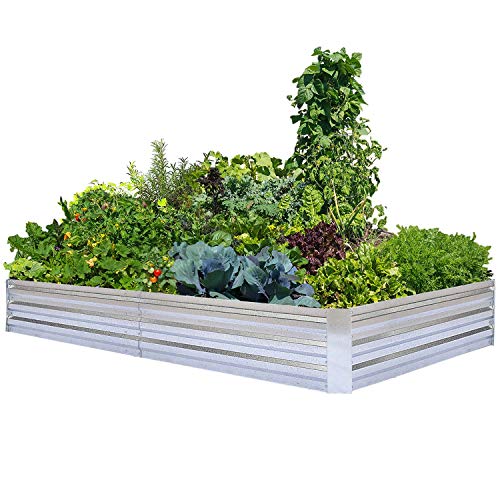
The FOYUEE is built around one idea: overlapping panels plus bars, so the long walls cannot bow. Each side panel overlaps the next by four inches, and four stabilizing bars tie the two long sides together, which is the most bracing in this guide for a 12-inch bed. The galvanized alloy steel carries a rust-resistant finish, the open bottom drains freely, and the 8 by 4 foot frame holds 32 cubic feet. It has been sold since 2019, and the same overlapping design appears across the brand’s larger sizes.
Specs
- 96 x 48 x 12 inches, rectangular shape with an open bottom
- Galvanized alloy steel with a rust-resistant finish
- Overlapping 4-inch side panels
- 4 stabilizing bars across the span
- 32 cubic feet of soil capacity
- Drainage hole listed as a special feature
- Model HYX-18055-XXL30
Best for: A large, low bed where the long walls must stay straight under a full load.
Watch out for: The listing’s weight figures conflict across sources, so do not plan transport or lifting around them. Check that all four stabilizing bars are in the box before you start, since the bracing is the whole point of this bed.
Which One Fits Your Situation
You want one bed that lasts many seasons
Pick the Vego Garden 17-inch 9-in-1. Its zinc-aluminum-magnesium coating is the most corrosion-resistant finish here, the corrugated panels and rounded corners keep the frame rigid, and the nine layouts mean the same kit can change shape if your garden plan changes. The 2-year warranty is short, but the coating and the edging are what carry the bed through wet winters.
You grow deep-rooted vegetables or hate kneeling
Pick the Best Choice Products 8x4x2ft bed. Its 24-inch depth gives carrots, tomatoes, and other deep roots room to grow, and the standing height takes the bend out of daily tending. Three stabilizing rods hold the tall walls straight, and the wingnut assembly means you can re-tighten the frame without tools.
You need several beds without spending much
Pick the Land Guard 8x4x1ft bed. The 0.78 mm galvanized steel is the thickest in this guide, the oval shape spreads soil pressure, and the 28.56 cubic foot fill is the smallest here, so each bed costs less to set up and to fill. Buy two or three and you still spend less than one premium kit.
You prefer wood and a natural look
Pick the Greenes Fence Premium Cedar bed. Its 3/4-inch boards and dovetail joints lock into solid corner posts, the untreated cedar resists rot without any coating to peel, and the 17.5-inch height suits most vegetables. It will silver with age, but the frame itself stays sound over time.
Common Mistakes
- Buying by height alone and ignoring panel thickness, bracing, and corner joints.
- Filling a deep bed entirely with bagged soil instead of layering logs and leaves underneath.
- Skipping gloves when assembling galvanized beds with sharp panel edges.
- Choosing a plain galvanized coating for wet, acidic soil without checking the warranty exclusions.
- Placing a bed where the long side faces prevailing wind before it is filled and anchored by soil weight.
Frequently Asked Questions
How thick should raised bed panels be?
For metal, look for a listed thickness in millimeters, not a gauge number, since brands define gauge differently. Sheets near 0.6 mm work when corrugation is deep and corners are rounded, while sheets near 0.8 mm resist dents and hold a straight line on long runs. For cedar, boards 3/4 inch thick with solid corner posts are the standard for a frame that stays square.
Do strong raised beds need cross bracing?
Yes, on any bed longer than about six feet. Wet soil pushes the long walls outward, and a cross rod or support bar ties the two sides together so they cannot bow. Beds in this guide use three or four bars across the span, and the rods can usually be tightened again later if the sides drift.
Will a galvanized raised bed rust?
It can, usually first at the soil line where the wall stays damp. Coatings slow corrosion but do not stop it, and a zinc-aluminum-magnesium coating resists it longer than plain galvanized zinc. Keep soil pH above 6, avoid piling fresh manure against the walls, and mulch to keep the soil cooler and drier at the edges.
How much soil does a strong raised bed need?
More than most buyers expect. An 8 by 4 foot bed at 12 inches deep holds around 29 to 32 cubic feet, while a 24-inch bed of the same footprint holds about 64 cubic feet. Fill the bottom half of a deep bed with logs, sticks, and dry leaves, then top it with garden soil and compost, and expect the fill to settle a few inches in the first season.