Key takeaways
- Shopping for the best bike for 10k 2? Compare flagship-tier carbon road, gravel and trail bikes, component levels, sizing and fit tips before you buy.
Introduction
Finding the best bike for 10k 2 is less about chasing a single model and more about deciding what kind of riding deserves the biggest share of a generous budget. A 10k budget puts you in reach of carbon frames, electronic shifting, hydraulic disc brakes and wheelsets once reserved for professional race bikes. The short answer is that the best bike for 10k 2 for most riders is a full-carbon road bike with a current-generation Shimano 105 or electronic Di2 groupset, because it blends low weight, precise shifting and all-day comfort. Mixed-surface riders should look at a carbon gravel bike instead, while dedicated trail riders get more from a carbon hardtail.

This guide frames every pick by component tier rather than by sticker, so you can compare what actually changes as you move up the range. A mechanical 105 groupset shifts beautifully and is simple to service anywhere, while Ultegra Di2 adds electronic precision at the next tier, and T1000 carbon appears on the lightest flagship builds. Each bike below has a verified Amazon US ASIN. Dealer-only flagships from Trek, Specialized and Cannondale are named separately, since they are not sold through Amazon. Check fit before ordering: the wrong size is the most common regret at this level.
Quick Picks
Our Short List of 3
All 3 Picks at a Glance
| Product | Specs | Action |
|---|---|---|
| SAVADECK A7L Carbon Road Bike — Best All-Round Road Bike | Check price on Amazon | |
| SAVADECK Carbon Gravel Bike — Best for Mixed Surfaces | Check price on Amazon | |
 TRIFOX Carbon Fiber Mountain Bike 29er — Best Trail Hardtail | Check price on Amazon |
How to Choose
Match the Bike to Your Riding
The first decision is the simplest and the most important: where will you actually ride. A road bike is the fastest choice on pavement, with narrow tires and drop handlebars. A gravel bike keeps the drop bars and adds wider tires, roomier clearance and a more relaxed position, so it handles dirt roads and rough pavement. A mountain bike trades drop bars for flat bars, adds suspension and knobby tires, and is the only sensible choice for singletrack, roots and rocks. Be honest about the split of your riding time and let that decide the category before you compare components.
Frame Material and Carbon Grade
At this budget, carbon fiber is the expected frame material, and for good reason. Carbon lets engineers tune stiffness for power transfer and compliance for comfort. T800 carbon is the most common grade in this class and strikes an excellent balance of strength, weight and durability. T1000 carbon appears on the lightest flagship builds and trims further grams, but the difference is modest for most riders. Check whether the fork, seatpost and handlebar are carbon as well, because a full-carbon build saves weight in several places at once. Also confirm the frame warranty and maximum rider weight listed by the seller.
Groupset Tier: Mechanical, Electronic and Everything Between
The groupset is the drivetrain, shifters, brakes and crankset working as one system, and its tier is the clearest marker of where a bike sits in the range. Shimano 105 is the benchmark mechanical road groupset, with crisp 2×12 shifting and hydraulic disc brakes in a package that any bike shop can service. Shimano 105 Di2 adds electronic shifting, which trims shift effort and holds adjustment longer. Ultegra Di2 sits one tier higher, with lighter materials and a semi-wireless layout. On gravel bikes, Shimano GRX is the equivalent range, with clutch derailleurs that keep the chain quiet and secure over rough ground. On mountain bikes, Shimano Deore 12-speed is the dependable trail standard, with a wide-range cassette for steep climbs. Weigh electronic convenience against mechanical serviceability.
Brakes: Hydraulic Discs Are the Standard
Every bike in this guide uses hydraulic disc brakes, and that is no accident. Hydraulic discs stop consistently in wet weather, need less hand force on descents, and modulate better than rim or mechanical discs. Larger rotors dissipate heat better on descents; smaller rotors save weight. Check that the brake calipers and rotors are named components from a known maker rather than unbranded parts, because braking is the one system where a weak component has real safety consequences. Pads are a wear item, so confirm replacements are easy to find, and mountain riders should look for rotors with cooling fins, which resist fade on long descents.
Wheels, Tires and Rolling Weight
Wheels are the single biggest influence on how a bike accelerates and holds speed, and they deserve as much attention as the frame. Carbon wheels are lighter and stiffer than aluminum, and deep-section rims add aerodynamic benefit. For gravel riding, tire clearance matters more than rim depth: room for 40 mm tires, or wider, lets you run lower pressures for grip and comfort on loose surfaces. Mountain bikes need tubeless-ready rims for lower pressures and self-sealing punctures. Check the tire brand and model as well as the size: a good tire transforms a bike. Budget for a second set of tires if you ride in more than one season.
Fit and Sizing: The Decision That Matters Most
No component tier compensates for a bike that does not fit. Road and gravel bikes are sized in centimeters, mountain bikes in inches or S, M and L labels, and each brand measures its frames slightly differently, so always compare the geometry chart rather than assuming your usual size transfers. Stack and reach matter most: stack sets handlebar height, reach sets how far you stretch. Between sizes, smaller suits agility and a lower front end; larger suits a taller, relaxed position. Arrange a professional fit after the bike arrives, and measure your inseam and current bike before ordering.
Assembly, Support and Warranty
Mail-order bikes arrive mostly assembled, with the handlebar, front wheel, seatpost and pedals to fit, and the quality of that final assembly shapes the first ride. A torque wrench is essential for carbon parts: over-tightening can crack a seatpost or handlebar. Check what the seller covers: frame warranty length, crash replacement policy and whether a local bike shop can handle warranty claims. Some direct-to-consumer brands provide generous return windows, while others charge for return shipping on a large box, so read the policy before you commit. Keep the original packaging for a few weeks, and book a safety check after the first few rides so cables, bolts and spoke tension can be rechecked.
The Best best bike for 10k 2 Reviewed
SAVADECK A7L Carbon Road Bike — Best All-Round Road Bike
The SAVADECK A7L is the most balanced road bike in this guide, pairing a T800 carbon frame with a Shimano 105 R7100 24-speed groupset and hydraulic disc brakes. The 2×12 drivetrain gives a wide gear range for climbing and flat speed work, and the mechanical shifting keeps servicing simple at any bike shop. The carbon frame, fork and wheelset keep the build light, and integrated cable routing cleans up the front end. This is the pick for riders who want one road bike that handles fast group rides, long weekend routes and the occasional race without demanding electronic shifting or a dealer-only frame.
The A7L suits riders who value a proven mechanical groupset over electronic gadgetry, and the 105 R7100 generation is the current mechanical benchmark. Hydraulic disc brakes provide confident stopping in wet conditions, and the 700C carbon wheelset rolls efficiently on smooth pavement. The main limitation is that 105 is one tier below Ultegra Di2, so riders chasing the lightest electronic build will want to look at the named-only flagship section below. For most riders, the A7L is the sweet spot where frame, groupset and wheels all sit at a high level.
SAVADECK Carbon Gravel Bike — Best for Mixed Surfaces
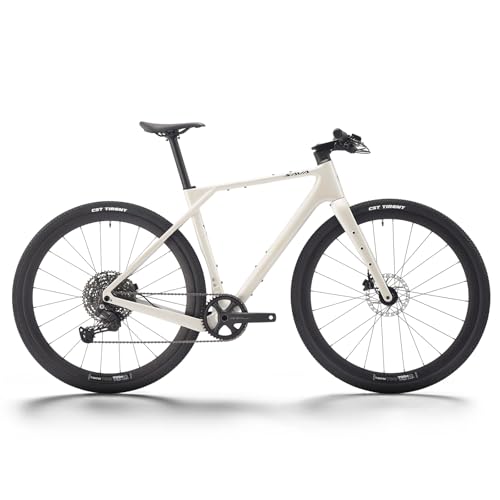
The SAVADECK Carbon Gravel Bike takes the same T800 carbon construction off the pavement, with a Shimano GRX U6000 11-speed groupset, hydraulic disc brakes and 700Cx40 mm all-terrain tires. GRX is Shimano’s dedicated gravel range, and its clutch rear derailleur keeps the chain secure over washboard and rutted surfaces where a road derailleur would bounce and slap. Wider tires and roomier clearance allow lower pressures for grip, while drop bars keep an efficient position on pavement. This is the pick for riders whose routes mix asphalt, gravel and towpaths, or for anyone who wants one bike that covers both road rides and light off-road exploration.
The gravel build trades some outright road speed for versatility, and that trade is worth making if your riding is genuinely mixed. The 11-speed GRX drivetrain is simpler than a 12-speed road setup and the single chainring up front removes the front derailleur entirely, which is one less part to adjust after muddy rides. Hydraulic disc brakes are essential here, since gravel descents are often loose and unpredictable. Check the frame size carefully: gravel geometry runs more relaxed than road geometry. Carry a spare tube and plug kit even with tubeless tires.
TRIFOX Carbon Fiber Mountain Bike 29er — Best Trail Hardtail
The TRIFOX Carbon Fiber Mountain Bike is a 29er hardtail built around a T800 carbon frame and a Shimano Deore M6100 12-speed groupset, with an air fork and hydraulic disc brakes. The 29-inch wheels roll over roots and rocks more easily than smaller wheels, and the 12-speed Deore drivetrain pairs a wide-range cassette with a single chainring for simple, reliable shifting on the trail. The carbon frame and integrated handlebar keep weight down for long climbs. This is the pick for trail riders who want a light, efficient hardtail for cross-country routes and flowing singletrack.
A hardtail trades rear suspension for pedaling efficiency, climbing better than a full-suspension bike while asking more on rough descents. The air fork can be tuned to rider weight and riding style, and the lockout lets you firm it up for smooth climbs. Sizes run 15.5, 17 and 19 inches, so measure carefully. The main limitation to note is that Deore is a mid-tier trail groupset rather than a flagship XT or XTR build, so this bike is a partial fit for riders seeking the very top component tier. It earns its place here on frame quality and overall balance.
SAVADECK Carbon Fiber MTB — Best Value Trail Bike
The SAVADECK Carbon Fiber MTB pairs a carbon frame with a Shimano U6000 10-speed drivetrain and MT200 hydraulic disc brakes on 29-inch wheels. The 10-speed setup is simpler than a 12-speed, with fewer gears to index and a robust chain that tolerates mud. The carbon frame keeps the build light for a mountain bike, and the hydraulic brakes deliver reliable stopping power on descents. This is the pick for riders who want a carbon trail bike with dependable, easy-to-service components, or for a second bike that covers trail riding without demanding the most expensive groupset in the range.
The 10-speed drivetrain is the honest limitation here: the gear range is narrower than a 12-speed Deore setup, so steep climbs ask for stronger legs or a smaller chainring. That is a fair trade for simplicity and durability, and many trail riders prefer fewer gears that shift cleanly over more gears that need constant adjustment. The MT200 brakes are Shimano’s entry-level hydraulic model, effective and reliable but without the tool-free reach adjustment and heat management of higher-tier calipers. Confirm fork travel and tire clearance on the exact listing before ordering. Flagged clearly, this is a partial fit for a top-tier brief: premium frame, mid-tier drivetrain, suited to riders who prioritize the frame over the groupset.
Named-Only Flagships: Dealer Bikes With No Verified Amazon Listing
No guide to the best bike for 10k 2 is complete without the dealer-only flagships that define the top of the market, and they are named here without Amazon links because they are not sold through Amazon. The Trek Madone SLR, the Specialized S-Works Tarmac SL8 and the Cannondale SuperSix EVO LAB71 are the benchmark race bikes at this level, each pairing a flagship carbon frame with electronic shifting. Dealer purchase brings professional fitting, assembly and ongoing service. A SAVADECK Ultegra Di2 road bike, sold under names including the Falcon 8.0 Di2, the Blade R8 and the SD8.3, is the closest Amazon-listed equivalent, but its ASIN could not be verified before the web-search quota for this task was exhausted, so it is named here rather than listed as a reviewed pick. If electronic shifting is a priority, confirm the exact ASIN and component list on the live listing first.
What to Check Before You Buy
Before ordering any bike in this class, work through a short checklist that catches the mistakes most buyers make. First, confirm frame size against the geometry chart using height and inseam, and compare stack and reach with a bike you ride comfortably. Second, confirm the exact component list, since brands sell similar models under near-identical names. Third, check the maximum rider weight and the frame warranty. Fourth, plan assembly: a torque wrench, grease, carbon paste and a pedal wrench cover the essentials, or book a local shop. Fifth, inspect on arrival: check for shipping damage, spin both wheels, squeeze both brakes, shift through every gear. Sixth, budget for essentials rarely in the box: pedals, helmet, floor pump, multi-tool, saddle bag with tube and levers, and lights. Finally, keep the box for a few weeks: a return without it is far harder to arrange. A careful hour of checks before and after delivery protects a purchase of this size far better than any single component choice.
FAQ
What makes a bike worth a 10k budget?
A bike earns a place at this level through the combination of its frame, groupset, wheels and brakes rather than any single part. Look for a full-carbon frame, a current 105 or Di2 groupset, hydraulic disc brakes and a carbon wheelset. Fit matters as much as components: a well-fitted mechanical bike rides better than a poorly fitted electronic one.
Is electronic shifting worth it over mechanical shifting?
Electronic shifting trims effort, holds adjustment longer and shifts cleanly under load. Mechanical shifting is simpler to service, easier to fix on a remote ride and lighter on the wallet, and a current 105 mechanical groupset shifts very well. Choose electronic for long rides and precision, mechanical for simplicity and easy servicing.
Can one bike cover road and gravel riding?
A gravel bike is the best single-bike answer for mixed riding, because its wider tires and relaxed geometry handle dirt while its drop bars keep road speed respectable. A road bike with clearance for wider tires is the next best option. A dedicated road bike will always be faster on pavement, so the choice depends on how much of your riding is actually off-road.
How do I choose the right frame size when ordering online?
Use the geometry chart on the listing and compare stack and reach with a bike you already ride, rather than relying on height charts alone. Measure your inseam and check standover clearance, then confirm the saddle height range covers your position. Between sizes, go smaller for agility and larger for a relaxed position; a professional fit can fine-tune the rest.
Do I need a professional assembly for a mail-order bike?
A careful home assembly is possible with a torque wrench and the manual, but a professional check is strongly recommended for a bike at this level. A mechanic will confirm torque on carbon parts, check wheel trueness and spoke tension, adjust the gears and brakes, and spot any shipping damage. Many shops provide assembly and safety checks as one service.
Bottom Line
The best bike for 10k 2 depends on where you ride, but the shape of the answer is consistent: a full-carbon frame, a current Shimano groupset, hydraulic disc brakes and a careful fit. The SAVADECK A7L leads on the road, the SAVADECK gravel bike leads on mixed surfaces, and the TRIFOX and SAVADECK mountain bikes cover trail riding. The dealer-only flagships set the benchmark at the very top and are worth a test ride before you choose a route. Whichever you choose, confirm the size and component list, and book a professional fit and safety check. A generous budget buys excellent equipment, but fit and setup turn it into a bike you love riding.
Disclosure: As an Amazon Associate, we may earn from qualifying purchases.